Episode Transcript
[00:00:00] Speaker A: Hello and welcome to the Mic'd UP Show Season 4 where every mortgage has a story.
This is the ultimate hub where the hidden stories behind the mortgage industry come to life. I am Michael Kelleher and good afternoon.
[00:00:13] Speaker B: I am Michael Zhao.
[00:00:14] Speaker A: And in every episode, the Mike's dive deep into the entrepreneurial spirit, the strategic insights and the breakthrough innovations that built the world's greatest mortgage companies. So whether you're advancing your career, scouting for industry leaders or exploring opportunities in fintech and prop tech, you're in the right space.
Get ready to unlock the story behind every mortgage.
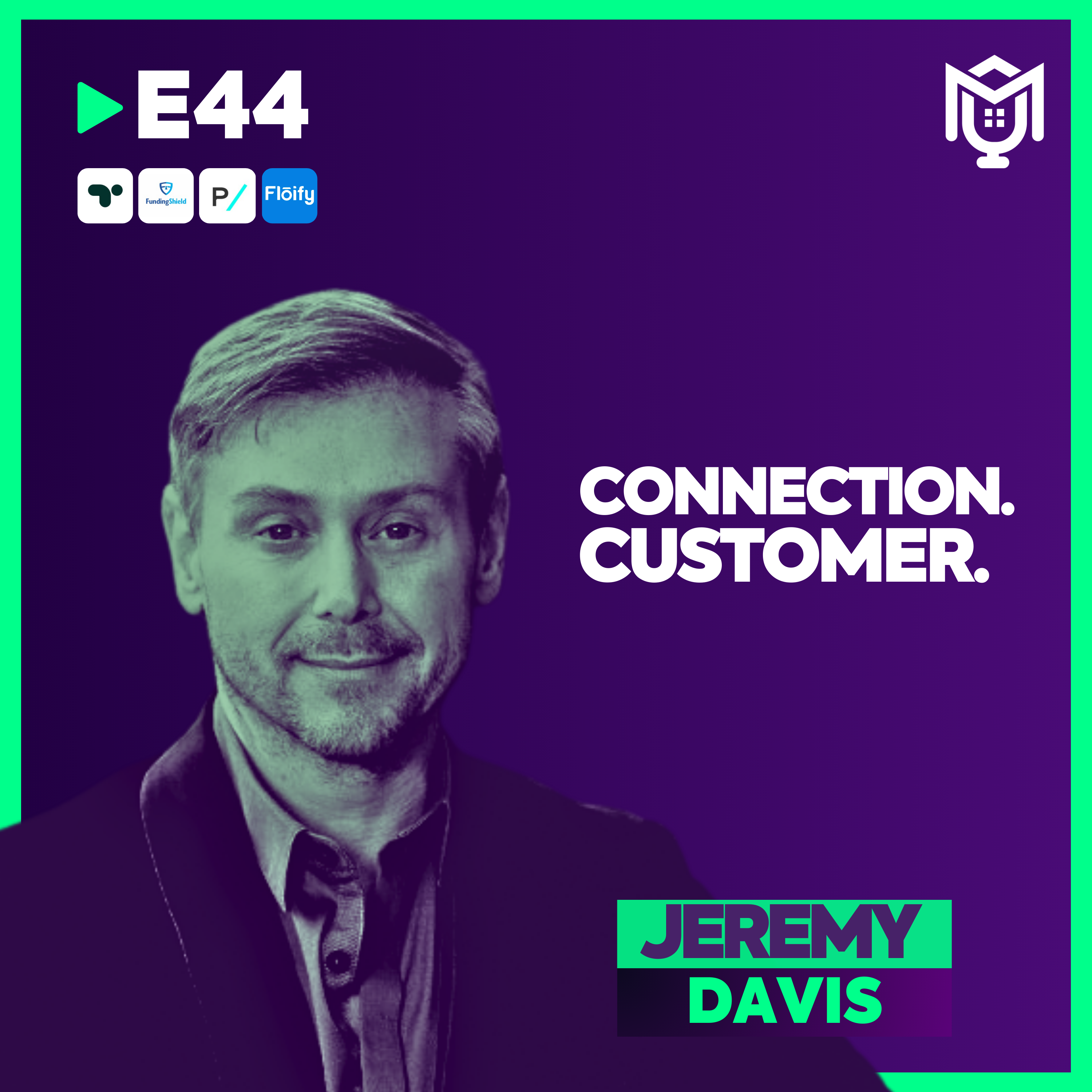
Let's dive in today with Jeremy Ray Davis. He's an award winning housing industry executive. He's recognized for building modern outreach and culture based customer acquisition strategies that strengthen trust and grow markets. He able to do it in a storytelling way and articulate it where it relates into our backyard. He talks a lot about and I now say it off the show and in the neighborhood when he's not around.
It is amazing that the cities have their own CRMs in the barber shops that you go to, the bodegas and also in the the places of worship. Those people tend to be the ones that actually know when somebody has a child coming, child graduating, somebody got a new job. And so he had these compelling stories. We had him on a guest. We will link to that last show so you can hear his story and we'll touch upon it a little bit today.
As president of mortgage at Southern Bancorp, which is a $5 billion CDFI, he balances margin with mission improves every day that you can grow a business and expand homeownership at the same time.
He is a Vanguard winner too, which is one of the most esteemed awards you can get and you really have to be out there. I think one of the secrets to that award is you have to be out there in the industry. And Jeremy Ray Davis certainly has grown there.
Jeremy, thank you and welcome for coming back on the show. One of our repeat guests.
It had such a big pop, we had to have you back.
[00:02:14] Speaker C: Thank you so much. It's quite a pleasure to be back.
[00:02:17] Speaker A: And then he came to the New England conference shortly after the show and absolutely brought the energy. So if you're looking for a speaker at any of your conferences, I can tell you he's great to have throughout. Somewhere in the day where they need a little bit of pick me up. Especially if maybe you don't want to invest in that coffee cart later in the day you can just invest in Jeremy Ray Davis and he'll take Care of it. I think our subject today is everybody's kind of balance in between.
Do I get more customers by recruiting? Do I get more customers by marketing like Rocket? Do I get more customers? And I think you talked about the last show by being in the community more and sponsoring things. At what point did you look at customer acquisition and see maybe that it's become disconnected from human connection and maybe in banking itself and who's benefited from that shift?
[00:03:14] Speaker C: Oh, wow, great, great, great way to start out. You know, I think for, for myself, I think I always knew that, that something we don't talk enough about in our industry is the disconnection has really become a quiet infection.
People feel disconnected from institutions, from brands even and especially inside their own organizations. Teams are disconnected, leadership is disconnected from the communities they're trying to serve. And for me, when disconnection shows up, trust starts to break down.
Decisions happen more slowly, growth gets harder and harder. And that's one of the reasons I believe connection isn't just a value. Connection is the new customer acquisition strategy.
When you really use connection and trust as a system and not a slogan, I believe growth becomes more human and more sustainable at the same time.
You know, customer acquisition kind of has been separated from that human connection in recent years and I think it's a function of just avoidance of the relationship or lack of buy in into those relationships. I don't think connection disappeared, I think we just lost ownership of it. I think our opportunity now, and I know we're going to talk about this today, is not going backward. But integrating customer acquisition into your whole acquisition system and strategy, your culture building, if you will, really connection works best when it's designed into the acquisition, not kind of bolted on afterward.
[00:04:59] Speaker B: I think there's a, there's a certain period of time over the course of the last six years that whether money's not emotional, people are.
And when we. Right. And when we have this willingness, especially over the course of the last six years, to have this hustle culture across the board in all facets of business.
There also is this desire for not only connection to the activity and to the money itself, but for the connection for community.
So that there's meaning behind the work and there's meaning behind the money and as a result of that creates the community connection of what you are aspiring to accomplish for. For what? For what the banking community needs at the moment.
[00:05:54] Speaker C: Yeah, I think that's right. You know, I would, I would phrase that as like purpose driven or mission driven organizations. And you know, you'll Hear me say a lot that, that being mission driven is a margin strategy. In my career I have found that who believe in something bigger than just the work. They understand how the work that we do. You know, our industry I believe is a noble industry. There are few industries that have the distinct position that housing and mortgage have in terms of changing the trajectory of families lives generationally. Right.
So what I have found is that teams that are mission driven will work harder, they'll work longer and also they'll stay with you longer if they have that purpose driven like the why, if you will, behind the work that they do every day.
[00:06:51] Speaker A: Some people say community banks correlate really with the middle class able to give opportunity for homeownership in their programs that tend to be really ingrained in the community. And you've seen over the last couple years or last for the last while, a lot of mergers and a lot of big banks. I heard we're spoiled here in Massachusetts, kind of New England. But as you get into different parts of the country, there's not as many community banks. There's a lot of those big names.
How do you see community banks managing their customers? Or is it managing the, the customers keeping them from leaving? Is it avoiding accidentally leaking those customers away?
What does that look like for a community bank?
[00:07:40] Speaker C: You know, I really think, I really think it's, it's, it's all of the above. You know, I think culture and connection have, they do have to be managed.
But also I think you have to exude it in, in everything that you do right Internally and externally. Every, every meeting, your culture, your connection inside that meeting has to ooze out of you with every decision that you make, with every plan that you form with your team. Culture and connection really is the internal customer acquisition strategy as well as external.
Like I said, teams that feel connected create customers who feel confident in the product and the service or even the brand over and above just the program that you're, you're using.
To me, culture is how consistently the organization behaves under pressure.
So as that gets managed and, and permeates throughout an organization, you have a better ability to scale that connection into customer acquisition. You don't scale connection externally if you haven't systemized it internally.
[00:08:59] Speaker A: If I can just ask, quick follow up. How do you like, what is the progression these days from community banks center of gravity being that brick and mortar institution sitting in that community too. Like what you're talking about brand and how do you see that has evolved especially around mortgage to tell the community you can come here for mortgages whether you've been denied other places or to create generational wealth. But where has brand changed over the years outside of the walls of the bank people are used to, you know.
[00:09:33] Speaker C: I think, I think over the years the, the, where the business happens has shifted. Right.
So one thing that, that I feel pretty strongly about is that communities never really existed inside of a bank branch trust. Never.
Trust was never built inside that building with that gigantic marble countertop with tell sellers behind it.
I believe that brands and trust and community have always started inside community institutions of trust. Places where that trust already existed in that community. Right. Play, you mentioned my series barbershops, pulpits and corner stores AKA Sorry, I lost my thought. But in those institutions of trust, you know, relationships happen kind of as a byproduct of the business that's happening. And I think that's what our industry as a whole is experiencing. So we have a lot more remote workers both out in the community and inside our own organizations. So it becomes more and more important that our, our cultures are on display out in the communities that we're serving so that, so that we can build that trust. But also we have to be a part of those communities. Presence is always better than a marketing p.
If you're present in the community, if you show up in that community before you're trying to sell something, you know, I talk, I always say, like just go in the community and listen first and then come back to your team and strategize about how to provide the products and services that are needed based on what you heard from the community in person.
But I also believe that you got to take those in person community meetings that you have the Q and A's that you do. If you do a home buyer seminar, you get real questions from real community members, record those sessions, do a follow up afterward one on one with the people who ask those questions and frame that as content for the larger digital audience that you can access via social media and other platforms. Because that really is where the true conversation happens. And that, because if, if people are asking those questions in person in small rooms and small gatherings, these are the same, likely the same question questions that people in the larger, you know, social media stratosphere are also asking themselves and would like real educational answers to those questions.
[00:12:15] Speaker B: It's interesting right now, you know, we're, I think this, this past week was the, the IMB for this for the NBA and of course next week and then next week we have the commercial multifamily for the NBA show coming here in San Diego. And throughout both those events, you're going to have golfing events. They're tee times. But in, but in the banking community or in the branches of banks, you're going to have, especially if you have the local barber or the beauty person or the local gossip, you have, as my daughter would call it, it's tea time.
It's the gossip time. And actually it's those gossip periods that. This is the way I'm going to say it, that actually ask the most amount of questions of what people want to know for financial literacy. Oh, did you hear that?
But whatever, this person's dating here, this person's getting married, this person had an affair, business. It's those tea times actually that create opportunities for salespeople at the local branches to say, hey, you know what? This is a learning opportunity to learn about money as a result of the. Because whenever you have drama situations in families or friends, inevitably it's going to meet at somebody's house and then it's going to lead up to somebody's party or graduation and marriage and then buying a house or whatever. Those are all those opportunities.
And I think that again, for the mission, for what you're looking to accomplish, how do you, how do you lead as a leader to say we're creating emotional moments through these tea times so that it can be more questions to be asked so that the gossip gets good and ultimately leads to education. How do you lead your, how do you teach as a leader to your sales staff to do that?
[00:14:14] Speaker C: What a great question. Thank you for that.
You know, one of the things that we talk a lot about on our team is that education is our marketing piece.
Education is where all of, all of our real strong content is going to come from.
But we talk a lot about storytelling.
Being open and transparent ourselves really helps encourage the conversation.
And when you describe me coming into, you talk about how I teach a lot of philosophies or principles telling stories. So I'm going to treat you to one right now. So barbershops, pulpits and corner stores came from my lived experience as a child. I share, I have shared many times publicly that I spent many years of my childhood growing up in public housing. So I really do understand what having that community input can mean. Having that hand up not just for an individual, but for an entire community, whether it comes from another individual or it organization. But that is, is exactly how relationships in my community were built.
And, and one good example of that is growing up, my PA Bill used to take me to the barber shop with him on a regular basis. My Paul Bill was bald.
So we should not have. We should not have been in that barber shop more than just a few minutes because not. Not like the whole sexy ball that that guys are doing today where they just clean it all off, right. He had no hair up here and just hair around the edges, right. So he needed his ears, you know, trimmed up. Should have taken five months, five minutes, but we would be in that barber shop for hours. And you're exactly right. That barber shop, just a bunch of men waiting to get their haircut. Most of them have had a shave or a haircut hours before. They're still sitting there sharing stories, sharing their lives. They were. They were serving tea. They didn't call it that back then, of course, but that's what they were doing.
And I learned that lesson at a very young age because I watch, you know, grown men that, that I never infrequently saw being vulnerable and talking about real challenges in their lives. But inside that barber shop, I watched a whole community of people from all different backgrounds talk about issues they were having. And. And occasionally somebody would get super specific and vulnerable. And then I got to watch all of those people in that room step up to provide sol.
Offer help, to offer an introduction.
And that's kind of what the philosophy that my team uses for how we get people to open up and give the tea, if you will, is you have to open up, too.
And I think that's true of leaders who need to wipe out the disconnection between them and the people working on their teams.
As leaders, we have to show that side of ourselves too. We have to open up, be honest, transparent, dare I say it, be vulnerable, maybe even be a little emotional at times when we share our own stories, our own whys, because it will help our teams to open up. And that's what teaches our teams to go into the communities and be able to facilitate the community opening up to express to us the questions, the curiosity, the dreams, if you will, and also what they perceive as the challenge that is stopping them, the barrier from stopping them from achieving those dreams. I mean, one of the things our whole industry is still responsible for is that the majority of people who have never owned a home, possibly no one in their family has owned a home, they still have this conception that they need 20% or more as down payment to buy a home. Even though that hasn't been true for so long, there is still an education gap there. And our industry is responsible for bridging that Gap that and in fact, pardon my, my reach here. I was just reading an article today from the, some data that Redfin just, just put out. And I know for all of us, you know, we know we're in, in the news, there's all this talk about how the average age of new homeowners has, has moved up so much to almost 40 or around 40 years old. But I found it so interesting reading this Red Redfin data just released in that Gen Z. And it was basically data on first homebuyers that were Gen Z and millennials and gaps between racial ethnicity. And I was very, I was shocked to see that the homeownership gap nationwide as we know, there's about a 30 point gap between white families and their black or brown counterpart families.
But it's not double. Right? But when we start looking at millennials who are that 29 to 44 years old age where they should be buying their first house, Millennials, white family, millennial families are 66% of them own a home versus black millennial families at 32% less than half.
That gap is huge. And what it shows us is the gap there is growing communities are not impacted by economic changes the same they do. They do not need the same economic resources. They need specialized resources.
And the same is true when you go to a little bit younger age group. You know, Gen Z's 31% of white Gen Z families own a home and only 14% of black or brown Gen Z families own a home. I was just really surprised by that data. Well, I wasn't surprised, but disappointed by it. Because what it says is that the challenges we face in our industry for the last 50 years are continuing and appear to be poised to continue into younger generations, which to me, as a leader who hopes that my team will have longevity, that we will be able to connect in a way that builds. I mean, that is our customer acquisition strategy.
But it makes it such a solid point that if you're leading, if your vision into the future includes home lending, young people and first time home buyers are going to be the largest chunk of that business for the next couple of decades. And that data right there tells you exactly where your investments in community and culture connection need to be in.
[00:21:03] Speaker A: Yeah, sure, we both want to comment on that one.
I'll go, I'll go first and then you can go Mike. Then I'll ask the question.
One, that's sad because those two age groups, you know, they bought at a time where home values appreciated more than ever. And when you hear about it, it, when you, the loss of generational wealth, if you did not participate in the last six years is so significant and will affect really ripple effect for multiple generations. And to see that I think is very magnified there.
Mike, did you have a point? I have one more, but I'll let you go next.
[00:21:44] Speaker B: I think it's interesting because for me growing up and with my kids and for those who don't know, I teach fiscal literacy classes. I've been teaching them for the last 15, 16 years here in San Diego. And for my kids, they're talking, and they're in their 20s right now, they're early 20s and they all recently graduated from school, college school. And we're talking about homeownership, we're talking about, you know, they're not even 25 yet and we're talking about how do you know they all have 401, not 401k. They all have IRAs, savings and that's going to be their down payment for their, potentially for their next home or in addition to their investments that they make, they're going to be doing that. And it's because we started as parents and adults talking about financial literacy.
And it, it's a travesty, it's a cultural and social travesty that money is not openly talked about. It's like, oh no, don't talk about this person's money. Don't talk about mom and dad's money. And oh no, don't, don't tell me what to do with my money.
I'm like, I'm not telling you what to do. I am actually trying to figure out how we can work together in concert. And I, and I think that's something that culturally speaking that we, that we lack as a society. So, so thank you for sharing that. But I'm just saying that because, number one, I'm Asian. You're talking about, you know, whites versus Browns, blacks and others.
And, and the cultural demographic that I have seen between Asians, whites, Browns, Jewish people, whatever. And I think that there's a, there's a cultural and race issue beyond that as well. Thank you for sharing that.
[00:23:27] Speaker C: Yeah, I think, and I also think it's, it's, it's income based, right? Your level of income kind of equals out to the amount of educational resources you're going to have, but also the systemic, right, like if your parents owned a home, you're more likely to own, own a home yourself. If your aunties and uncles own homes, then you, you likely to want and believe that you can own a home too. Well, I grew up in a place where people did not own homes. You know, like I lived in public housing for a while.
There are other parts of our lives. We lived in a travel trailer. This, we lived in a travel trailer for a couple of years. Where a travel trailer. You know what that is? Big silver. You know, we had an inch extension cord that went out the back window of that trailer. I'm pretty sure this was illegal. And it plugged into my grandmother's, my grand Ariba's back. Patty, you know, she had a utility room on the back of her house. And that orange extended shore went out that trailer window and into her house window and plugged into her utility room. That's what powered our house.
And this industry changed that in my life. I think I shared this, Michael, the last time that we talked last summer. But my first job was a summer job between high school and college. It was supposed to be a summer job. It was as a gopher. That was my official title gopher. And it also was the job description, frankly. I worked for a producing loan officer and my job was to go for things. Go for, you know, I, at that point in time I could take a bar researcher walk into a bank branch and they give me bank statements. So go for this, go for that. That was my job. But that taught me about homeownership in a way that I had no access to before that. I ended up buying my first house at 21. It changed the entire trajectory of my financial future.
It, it shifted completely. This industry did that in my own life. So I not only feel a great responsibility to this industry because of that, but also I understand the responsibility our industry has to communities out there that have been left behind and continue to lack the education and resources. And again, it all just, it. This is a swirling circle of connection, connection, connection, connection. How do we connect to the communities? How do we connect to teams and teach them how to go connect to the communities?
When I think we've all seen it the last decade, we just seem to be becoming more, more and more disconnected from our actual in person communities.
And, and all the online communities are great. It's a great way to spread information. But are we really connecting there either?
I'm, I'm just not so sure.
[00:26:11] Speaker A: And one way to connect is.
One way to connect is transparency.
And we want to thank you for being transparent and vulnerable and sharing that story on the last episode. We certainly think that anybody will gain great value on hearing that journey. It was the first time you had Spoken about it. And you chose our platform, you know, very appreciative of you doing that.
[00:26:36] Speaker C: Well, you, you've created a great platform here that actually, I think you speak in real langu.
You, you allow people the, the space to tell stories and, and it makes, it makes for a comfortable setting where, where again, you're creating an environment that makes that connection possible. Right. That's exactly what we're talking about doing in communities, doing it in boardrooms, doing it on your team sales meetings, like, create that community. Create that connection and you will be. Bet you'll be better for it. I 100% believe it. And I believe it because of lived experience, the success that we've had in the work that we've done over the last several years up to a decade.
It's because of that connection. It's because of being able to provide. Be in environments where that feels safe.
People don't take risks if they don't feel safe.
So thank you for creating a safe space where I felt like, okay, this seems like a natural part of what we're going to talk about today. And we did appreciate that.
[00:27:39] Speaker A: I want to put a bow on this first half and then. And hear from our sponsors real quick. It's. It's under a minute. But my last question would be.
The other point I was going to make is our industry does a lot of qualifying over the last. Since everything seems to be backed by Fannie and Freddie. And when it used to be more of your own products, there was more teaching and so less qualifying, more teaching. You use the acronym CDFI on the last episode. You went into it a little bit. Could you just tell the viewers that maybe don't know about it, what it is, and then how you use it and how the banks you work with use it as a teaching tool in the barber shops when they're, you know, when they're telling those stories. How do you make CDFI visible? Or is it supposed to not be visible?
[00:28:27] Speaker C: No, I think it's supposed to be visible completely. So a CDFI is a community development financial institution. These are specific institutions that are chartered to provide economic resources to underserved communities.
That is true of all lines of business at the company that I work with, Southern Bancorp, whether it be our business, our commercial, our retail banking, but as a mortgage unit, you know, that, that shows itself for us, providing expanded access to affordable housing to, to responsible and sustainable home ownership.
And, and it shows itself in ways like the way that we show that is, you know, we go in and we do Events in these community trust, for example, you know, we actually have gone into corner stores and neighborhoods, set up a table for the day.
And basically what we did was we told the corner store manager, listen, we'll run a tab today if somebody comes in that, you know, is a person in need of help, you know, they're buying a bag of chips when really they need bread and milk and sandwich meat and cheese, if you know that person. Because the store, the corner store clerk people, they know everything. The bodega clerk, they know everything, right? They know all the people. So we set up, they let us talk to people about homeownership, talk to them about their beliefs, about their desires that whole day. And we ran a tab that whole day. So if a single mom came in and, and that person knew, like, this is a mom in need, this is somebody who needs extra support, they would ring up that extra food or drink on our tab for the day.
And we just stood there and had conversations and we were asked questions. And then outside of that, we then took all of those questions, we answered it, answered them in a video and, and kind of series, instructional series, and put it on social media so that other people could experience that same atmosphere of kind of of education and vulnerability, but just genuine concern, genuine feed.
And then as a leader, I brought that feedback back to my team, to my board, and we created products and services that would help bridge the gaps that we specifically heard from those communities. To me, that is what community banks can do better than any other institution. That's what CDFIs can do. And specifically we're chartered to do before getting our commercial.
[00:30:58] Speaker B: One last question in response to that. How do you teach the celebration of the steps from saying from someone going from, I just, I'm going to make the decision to buy a house. And then all of a sudden, oh yeah, we got our finances together. As far as our documents go. How do you. And then actually that should be a celebration just to. Or just to say they brought in twos of tax returns and two banks. I mean, like for some people, oh yeah, I just have it on my computer. I just email it over, over to you. But actually it's a big deal to gather for some families. Just to say, I have two years of tax returns, I actually kept two months of bank statements. Actually kept.
And pay stubs. I mean, some people just throw them away because it's done. And so how do you teach the celebration of each step? Saying, I gathered my documents, I sent them in to the originator, the originator gave me the update. Congratulations on even getting your document. How do you teach? Celebration of every step along the way. So that becomes. So it becomes a teaching point on every step, rather than just part of. Oh, yeah, this is a standard operating procedure.
[00:32:00] Speaker C: That's right.
For me, I think it's a, it's. It's all about culture building. Right. Every leader has the responsibility and, and of ownership of their culture. For me, that, that question comes 100% down to culture. It starts with who you bring onto your team. So in my opinion, for the work that we do, I specifically want to recruit people that come from the communities. They resemble the communities that we're trying to serve.
So it starts there, where with knowing your common language, common, common heritage can sometimes be a part of being a part of that community.
And, and it permeates all through your culture. So when we have sales meetings every, every week, we have what we call the wolf pack town hall. My team, we call ourselves the wolf pack. We can talk a little bit more about that after the break. But, but in every sales meeting, we start the sales meeting out with. Tell me about the impact that you've made in communities recently. What events have you been to? Who have you talked to? What larger scale do you have out that you have that you have been able to be a part of? And then that, that it permeates all the way through to results and how we talk about results. So we. You could talk about results in terms of units and volume. In our business, we have to. That's how we pay the bills. Right. But, but we make sure that we talk about results in, in terms of changing lives. Number one, I say that all the time. I'm sure if you follow me on social media, you hear me say that when. Let's change lives together. Let's change lives together. But we talk about.
And we don't talk about, I close to $300,000 loan or I close $150,000 loan. We talked about, what did you do in that family's life? And this, when you sit across from somebody who just bought their first home, who is, let's just say, one that's on the top of my mind, a single mother of three, a nurse, no one in her family had ever owned a home. When you sit across from her and she's talking about my kids who have shared one room, three kids, one bedroom for years, will now all have their own bedroom and they can have a pet for the first time in their lives because we've got a backyard that can, that can accommodate Having a dog that they have asked me for since they were babies. Right. When you sit across and you hear that story, whether you're there in person or you're hearing somebody on your team, a colleague, tell that story about how that is, you just changed that family's life. Not only the trajectory, but you changed there right now. It only takes a couple of times of understanding the feeling, the fulfillment that you get from that. Mission accomplished, man. That is culture to me. That's when the culture permeates. That's how you teach the celebration of every milestone in that step. That's how you get your team to understand that every one of those small milestones is actually a huge success worthy of celebration. Because that means that that that family finally believed, even just a little, that it was possible for them too.
That's the nobility in the work that we do. That's the nobility of our industry on full display.
[00:35:19] Speaker A: That is amazing. It'd be part of that wolf pack.
We're gonna go to a quick commercial break. We call it a commercial. We're always looking for sponsors. There's are mortgage related right now, and hopefully our listeners see value. And we're always looking for new sponsors and new sponsors to bring new guests. So let's see what our sponsors have to say.
Let me see if I can do it.
All right, we'll hold off on the sponsorship then for a second and we'll get to it.
We got plenty of questions. So, Mike, did you have a question?
[00:36:04] Speaker B: Yeah. So, you know, we've talked a lot about the big picture of connection and the culture that you had.
But what is it?
Is it. Okay, Mike, if we lead into community Reinvestment act fair lending and the CDFI strategy? Can we go into that?
[00:36:24] Speaker A: That sure.
[00:36:26] Speaker B: Great. So what if. What if CDFI just wasn't a compliance function, but actually the growth strategy not just for banks, but actually IMBs as well?
How do you think that that could change the entire face of lending? Because when I talk to, in the past, when I've spoken to area managers for FDIC insured banks, banks, cra, fair lending, comedian lending, it's like we don't want to do that because that's not. I mean, we have to do it because we're a bank, but it's just.
[00:37:00] Speaker A: Not profitable or, or like there's a lot of talk about these home buyer accounts that are, are coming out.
I mean, that'd be another example of where legislation might make them like a 401k or you can contribute like a, a, a CVS card. Do you think there'll be some more activity using these vehicles to make it more accessible for, for mortgage or is it still just really slow moving on the banking side?
[00:37:34] Speaker C: I, I'm hopeful. I think that's, it's completely possible. I think that's a hopeful piece of information that, that's being talked about a lot lately. I'm also hopeful that changes in credit bureau availability that we've heard over the last several months. I'm also because in reality, the closer that we can get to actually giving people the benefit of their actual payment history, even if that payment history doesn't fit in the box, that was never built for most communities because let's face it, the credit box, the scoring system, the mechanism behind it, it wasn't built for underserved communities. Right? So the more we can make small changes like that, that the combined, the, you know, the combination of those changes really can signal a paradigm shift in how, how we function.
But from a CDFI perspective, back to the original question about CDFIs, like, I, I think, I think a lot of people see mission as the enemy of margin, right? Like how do you do what's right and still make money? But I would just, I, I would just challenge that entire belief structure because as far as I am concerned, being mission driven is part of my margin strategy. And I know from total, from results that I have seen even in the last three years since the launch of our mortgage division here at Southern, my team works harder because they believe in the mission. They believe in the work that we do. My team will stay longer, they will work harder and smarter. They will take the right risks because they understand our mission is this.
They understand that mission drives, drives the margin strategy. For me, like, I mean, I haven't lost a producing loan officer in over two and a half years. If that's not a margin strategy, I don't know what is.
[00:39:38] Speaker A: Yeah, and then they, the longer they're with you, the longer the brand, the more the trust happens in the community. Community. And I don't from going locally to the State House or you know, we have the advocacy conference coming up in April. You hear a lot about that on this show.
It seems the focus isn't so much on the banks themselves in, in those words, but it's really around zoning and affordability and how do we unlock more affordable homes so that people can actually live where, where they've grown, grown up. And I think the common theme is no one has the right like the actual solution yet. Everybody's just working hard on making 3% of something, you know, attainable.
Do, do you find the same in your areas where it's just hard to find a entry level home?
[00:40:34] Speaker C: Yes, in some areas it really is.
And, and, and to be honest like for me I think the strategy has to be the kitchen sink approach. Right? I mean this is so dire right now. Throw it all at the problem.
It's not just about what banks can do but there is a responsibility that local and state municipalities have to this problem. This is going to create a tax revenue problem for them down the road as well. So throw in the kitchen sink. Let's update zoning laws. Let's, you know, if something is zoned for one to two, you know, just let's, let's make it zone for four. Why not? Why is that, why is that something that struggling cities that cannot, that do not have a ample affordable housing? Why is that not something that, that can be done and be done quickly?
You know, even small things like parking, parking regulations and elevator regulations. Like we need, in my opinion we all, we need to be looking at all of these options because it is going to take a kitchen sink approach to really battle affordability crisis that has started in our country.
[00:41:47] Speaker A: We'll throw it all.
We have two vendors here that want to be part of throwing that kitchen sink. Let's hear about them and then we'll come back with some real hard hitting questions.
[00:41:59] Speaker B: Verifying income for all your applicants means you need roughly 23 different vendors and waste hours and hours of your team's time.
[00:42:09] Speaker C: But with True work, it's just a single place for all your income verification needs.
[00:42:14] Speaker B: So you get the most advanced voie solution. Truer combines all major verification methods into a single easy to use platform to give you a completion rate of 75% cutting your cost by up to 50%.
[00:42:29] Speaker C: And getting real results for your team. TrueWerk, your one stop shop.
[00:42:33] Speaker B: For incoming verification click Verify repeats where the company can do the configurability. So we have no code on this so they can go in their settings, they can set it up all the way down to the loan officer if they want to. We also have a customer support team that's assigned to each account. They, if they want, they can overhaul everything if they wanted to. They have a new product especially dynamic apps. With dynamic apps we can fit multiple, we can fit the Fannie Freddy loans, we can new construction one time clothes, Heloc, you know whatever those workflows are, they can design that workflow for each individual app. Now what's going to take it to the next level is the AI and the OCR piece.
[00:43:15] Speaker C: Cyber and wire fraud can you afford the risk? Today's automation and technology based trends demand solutions to fraud threats. Funding shield provides lenders and investors real time transaction level for verification. Certified wire fraud protection to protect loss of funds at closing due to cyber based and other threats. We help improve your bottom line through fraud prevention, risk management and validating the parties and documents involved in mortgage closings. Prevent fraud and theft on your closings.
[00:43:44] Speaker B: All right, I do have a question regarding CRA and I'm going to talk about this because Mike Kelleher will talk about zip code marketing or owning your zip code code. But one of the things I find very interesting that is uninformed in the loan officer community and underserved is census tract lending. Because if you talk to a loan officer and say hey, do you know the census tract that you're putting it out to? And they'll just go what is that?
Right?
But yet census tract lending is actually more granular than zip code lending because you can actually figure out what is the income level. And actually for like for example here in San Diego there's a census tract where around the entire area are between, and this is not even an exaggeration, two to six million dollars homes, but inside of the census tract you can find 200 to $500,000 homes.
And I think that when, when there's an education around knowing not only your zip code but understanding the census tract and what's available in those types of lending areas, then it becomes an education moment. Not just for the consumers and people who want to live in areas when they thought they couldn't and also for the lending community because they can be educated into that.
What would you say could be a strategy for, for understanding zip code or census tract ownership so that people who thought they couldn't actually can.
[00:45:17] Speaker C: I I really think this comes back to culture and, and making sure that our teams, especially our teams on if their boots are on the ground, you as a leader, as a company want to make sure that the boots on the ground are properly educated and professionals in our industry. Right?
And I can say with certainty if you ask any member of my Wolfpack about a census tract, they know exactly what you're talking about. They know how to find the details of your census tract and they'll go a step further and let you know. Did you know that there are a lot of products and programs out there that are available based on the particular census tract you live in or might be buying in and many of them we've created ourselves. So I feel very certain my Wolfpack will absolutely know how to deal with that. But, but I think it is a, it's a cultural question, right? It's about education, training, it's about coaching and, and I do think a lot of banks, you know, invest lots and lots and lots of money in training their teams and coaching their teams. And I, I do think that we are as an industry kind of missing the importance of, of that educational piece of our, of our sales reps. Like we got to make sure we, if we're telling people to go on their zip code, they need to know what makes up that zip code.
And you can't know that without knowing the breakdown of the communities, the demographics and the census tract data of where those communities are coming from.
Median income that we use for down payment assistance programs throughout this country, the vast majority of them calculate whether or not a customer qualifies for those resources based on the percentage of income they make make as a comparison to other people in that census tract.
So, so as, as we do more drill downs into first time home buyers, we, we build as an industry better structures to support first time home buyers. Census tract data has to be a huge part of it.
[00:47:16] Speaker A: In a world where AI automation and call centers calling in from, from the outside and I'll even go further like fintechs bring this idea of digital and faster and click.
What do you tell the wolf pack? It seems to me it's more important than ever. We can't let up any month because we can't have this exodus of institutional trust that we've built over the years in our zip code.
How do you, how does the wolf pack wake up every month and remind themselves that this is a constant, that we have to keep the fire going and can't let distraction stop us.
[00:48:03] Speaker C: Well, I, I think, you know, I think the, the, the first step of that is to build an organization where you understand that, that the people on your team that are out in the communities, boots on the ground, they are the, the purveyors connection on your team. It's not a marketing flyer, it's not your social media account. It is the people on the ground. There is no logo that will ever be able to build a connection and trust the way a human being can, can build that.
And that will be true in an AI world as well. So for me in terms of community banks, I think what community banks do better than most is, is connection. Connection is almost the most remote if you will. It's what it is built all around every community that community banks and CDFIs are really trying to assist, to serve.
I believe local knowledge informs better decision making.
It informs the ability to take risks that make sense from a safety and soundness perspective. I believe technology supports, supports connection when it respects the context of those local markets, of those zip code by zip code knowledge base. I believe the future belongs to the institutions that can combine that automation with human understanding.
And I think that is where like the future of zip code ownership is going.
[00:49:41] Speaker B: What do you think that the CEO of today should invest in when it comes to customer or in this case community investment, of owning that area for mortgages?
Are you going to invest into the talent of the originator, the technology of just marketing in general?
And why do you think it should be either in the technology and the marketing or in the talent and the connection into the community?
[00:50:18] Speaker C: For me, and I really would advise other leaders like myself on this as well, but I am going to invest in my talent, in my team first.
For me, that is an investment in connection because. Because I believe that the boots on the ground, our teams, our talent, they are the purveyors of that connection. They are the builders of the trust that equals the results that we have. So I would invest first in the talent and how the talent shows up. I mentioned earlier about intentionally recruiting talent that resemble the communities that you're serving.
That's a great starting point. Connection is really the foundation. It determines how your technology is used and whether or not that technology pushes the connection and trust you've built in your brand. Or does it isolate and separate that that really for me, the talent, the connection is the strategy that aligns all of the other pieces that you just mentioned.
And a lot of people think that, you know, building trust, building connection, it's too expensive, it takes too long. But the truth is connection isn't an expense. It's most efficient acquisition strategy we have. Period.
[00:51:40] Speaker B: Wow.
[00:51:40] Speaker A: And that's why Jeremy Ray Davis, you know, won I think three National Mortgage Banker Leadership Awards in 2024. We're at the end of 2025. We'll see how many more awards he piles up.
He won for market outreach strategies. I know your reputation is built on real work, not these glossy campaigns, but I gotta admit, you do have a flashy way of making them stick, tick and certainly up in my brain.
What any final thoughts on what playbook you have for 2026? How you're going to blend innovation with genuine community trust? How you're going to put into action all the things that you educated us today.
As for our listeners, as a final.
[00:52:24] Speaker C: Thought, yeah, I would say for me going into 2026 and beyond, I I believe the next generation of growth won't come from louder marketing or f all of that's coming. We have it. I believe that our growth in the future and across the board, the next generation of growth is going to come from institutions that design connection as their primary culture builder and customer acquisition strategy. Across all of the other platforms and resources that they have available, that connection is really going to be the Connection and Culture are going to be the true pieces that push successful results results.
[00:53:06] Speaker A: Well, you can tell you care and I hope our audience sees that there are many like you in the industry that are really caring about how we can help build future generational wealth.
Thank you for joining us on this journey into the heart of mortgage innovation.
Remember, every mortgage has a story and we're here to help you write yours. If you enjoyed today's insights, please subscribe, share with your your network and connect with us on social media.
Until next time, keep pushing the boundaries and uncovering the stories that drive our industry forward.