Episode Transcript
[00:00:00] Speaker A: Hello, and welcome to the Mike Dub show, season four. This is the ultimate hub where the hidden stories behind the mortgage industry come to life. I'm Michael Kelleher.
[00:00:10] Speaker B: Good morning. I am Michael Zhao.
[00:00:12] Speaker A: And in every episode, Mike and I dive deep into the entrepreneurial spirit, the strategic insights, and the breakthrough innovations that build the world's greatest mortgage companies.
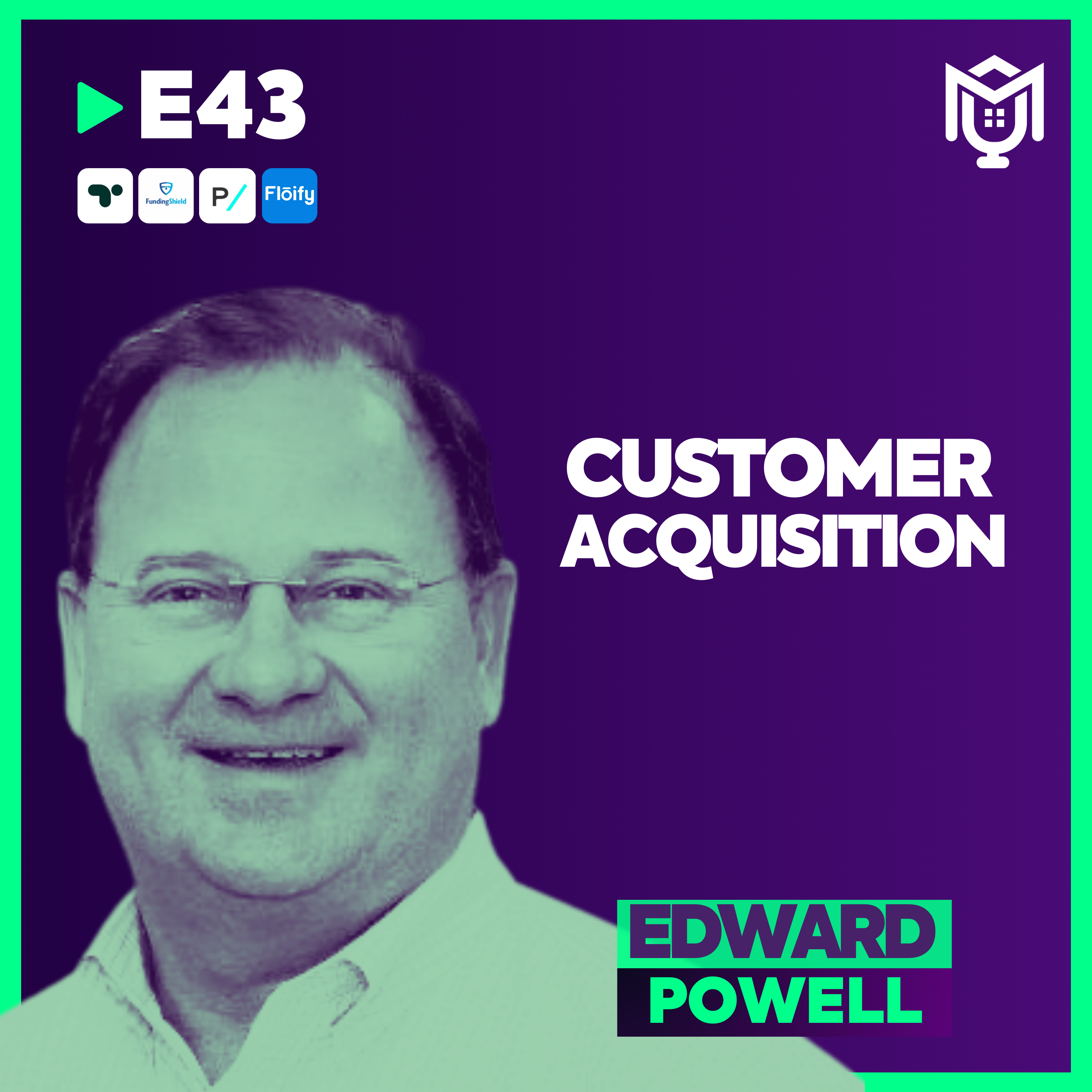
So whether you're advancing your career, scouting for industry leaders, or exploring opportunities in fintech or prop tech, you're in the right place. So get ready to unlock the story behind every mortgage. Let's dive in. Today we have Ed Powell, svp, Senior Vice President of Consumer Direct at Angel Oak.
And him and I actually met on. I have been traveling across the country having these dinners that bring some of the industry Illuminati, really just a funny way to say some of the best industry minds together in a way where they're not getting pitched. And we were having one in Charlotte, and Ed came along, and I really got to get to know him more and understand that not only is he running a successful division in a. I want to call it a niche, but a vertical that I am bullish and very interested in. But you have a deep breath of industry experience, and you.
Your stories are, say, larger than the room in some ways, and you can tell that you been around the industry. Do you want to just introduce yourself and maybe tell us a little bit about your journey in mortgage so our audience knows who we're hearing from?
[00:01:39] Speaker C: Yeah, Mike, thanks for having me. I'm excited to be here. And I think part of what you're saying in a very gentle way, is that I'm old, and that's okay.
You know, most of the people I got into the business out of college, so I went to college at Davidson, which, besides myself, is famous for Steph Curry, as Michael and I were just talking about.
And, you know, at that point in time, a lot of people were going to go work for AT. Then it was NCNB and First Union. And I grew up in Washington, D.C. and I didn't want to be, you know, in a smaller town. And so I went back to D.C. and I stumbled into a job with a company called B.F. sOL Mortgage Company, which was a subsidiary of Chevy Chase Bank. And the irony is, is I'd say 90% of the people that I work with on day one are still in the mortgage business.
My last year at Chevy Chase bank, we had a new guy coming in to run home equity. Some guy named Bob Brooks met or something.
So he's now the head of the NBA you know, lots of the people I worked with went into other companies and did, you know, great things over time.
I did originations. I was a feed on the street loan officer for seven years and just thought that I was not refining my professional career. So I went back to business school.
There's another story behind it. But I went to school at night and then I went for a weekend and I ultimately went to Duke full time and got my mba, got out of business school, came to Charlotte, took a job, and then heard about this company that had raised $10 million called LendingTree.
And I went and interviewed there and I thought it was a pretty big company because I interviewed four people which turned out later to be two married couples, and they only had eight employees at the time I interviewed. So I kind of hit that one early and I was there for seven years.
It was great run. You know, lots of things happened. And honestly, that's where I met most of the people in the industry that I still talk to today as Lenny. She was building out its network and growing.
And then I did a standard hsbc.
Then I had my own software company where we sat between lead providers and lead buyers.
Our timing could not have been worse as we came out in 2008, right when everything was going downhill. And then I'd say from 2010 on, I've been working in direct consumer sales at a bunch of companies that people have heard about. Some are still around, some are not. Roundpoint, Pacific Union, Good Mortgage. And then I ran sales at Ally before coming over to Angel Oak about six years ago.
[00:04:04] Speaker A: Can you walk us through, just for context, the evolution of the word consumer direct? Because I know it could be lead buying, could be lead creation through marketing, could be just anything that's cold calling.
Where do we stand today on consumer direct and is that terminology evolved and as we use it in reference for this podcast, how do you see consumer direct?
[00:04:28] Speaker C: Absolutely. So I would say that the legacy term that was used was call centers.
And if I go back to, you know, sort of, even though Lenny Tree started in 1996 and kind of made money and raised money in 98, really didn't start until 2000 in the year that they went public. And that's when you had a lot of these companies that were coming on, particularly on the home equity side, the bank side, you know, they had call centers already. And this just was another channel they were adding to a customer acquisition channel. So I think the original term or the terminology that we used initially was call centers.
And, you know, you had your retail where you have the street, feet on the street, people going out and calling on real estate agents.
You have the correspondent channel, which everyone's pretty familiar with. And then you had this new channel which I say what initially was thought of as a telemarketing or a call center.
And then I think over time that perception has changed a little bit and evolved so that it's more customer acquisition and honestly more outbound than it was inbound. So to me, the call center terminology and thought process, and it was true. Like First Union had a big operation here. There's still companies around Charlotte that have them. It's a lot of inbound calls. But Consumer Direct really was the moving from an inbound to an outbound and a customer acquisition. So I think that's the real sort of shift that has happened over the last 25 years. Is it going from being an inbound, handling. Handling inbound calls, existing customers, to becoming an outbound and customer acquisition channel?
[00:06:07] Speaker B: How does that work for you being outbound? Are you now trying to go directly to the consumer, hence the term consumer direct, via the database that you have or is it through Realtors or how does that work as a consumer direct?
[00:06:22] Speaker C: Yeah, yeah, great cross question, great question. We're in a little bit of a niche in that we are a non QM lender and by that we really are focused on two primary consumers. The consumer who's self employed and needs a bank statement loan because they make the money, they know they've got the money, they have good credit, but their tax returns might not lend themselves to a Fannie or Freddie lendable situation.
And then our second big product is, is our DSCR product debt service coverage ratio for private real estate investors. In fact, it's been interesting in some of my group chats with my buddies, they all think that like this proclamation from the president about not letting institutions buy rental homes is going to like be big deal. And I'm like, I think they're like 2% of the business. It's almost a not, you know, a nothing burger and, and you know, that's the other big group that we try to serve and then, and then we do home equities as well. And the home equity product is actually probably the newest or newer product for us where we're lending to a lot of our existing or past customers or customers that have low First Trust loans, particularly self employed, that there's not a robust home equity market out there, at least not yet. It's becoming more so to help them tap into the equity when they're self employed and again show very little taxable income when they go to apply to a normal bank to get a loan.
[00:07:44] Speaker B: And that's for second trustees or Correct, correct, correct.
[00:07:48] Speaker C: And sometimes there's first. You'd be surprised.
We're doing some that are first trust loans. You know the people on their property free and clear and need I need to tap into their cash of the equity in their home to get tax the equity in their home via cash are doing what I call cash out refis but are really home equity lines of credit their first, their first lanes.
[00:08:08] Speaker A: This industry has a lot of new in order to survive and thrive in the future I think you have to take advantage of a lot of these new products being consumer Direct where you crunch KPIs and I'd like to touch on that later.
How do you balance that with actually giving education to the consumers on these new programs and call length and that type of approach?
[00:08:31] Speaker C: Yeah, well, so there's kind of coming back to Michael's question about how we find them. A big part of our marketing strategy, candid is buying keywords where the consumer is searching for the type of loan that we offer.
And you know we're somewhat unique in that we have a national coverage and a fairly big appetite for those types of consumers. So I'd say like some of those people are out there looking for it and so they know what they want and oftentimes they've actually been turned down or you know, been told that they're not eligible and they sit them to themselves and they go I know that I make enough money, I know that I have enough money or enough equity. I know that I should be able to qualify for a loan. I just need to go find it. So I'd say that's one cohort of the people we talk to.
And so we don't, I don't want to say we don't need to educate them. They kind of know what they're wanting. If you think about who a self employed person is, they're very much a self starter. They go research us on the Internet. They, they have an idea what they want, what they need. They call us and they go this is what I need. There's another part of it which are very frustrated because they can't figure out why they're not eligible or qualified. And, and those people. There is a lot of education going on particularly on DSCR because you'd be amazed or I'm amazed how many people that are private real estate investors that had not heard of this product before, and, and, you know, it's been around for a while, but some of these people, even real estate agents, are surprised. Oh, I didn't know this existed. So that's a. That's. I'd say something that's sort of like maturing, but has been around for a while. But there's still a lot of education and knowledge transfer that needs to occur, that that product exists and that people can qualify for it, even if they might not be showing positive cash flow. You know, on an individual basis.
[00:10:13] Speaker B: It doesn't really sound like you guys are really going into your database, and it sounds like you guys are more going outbound.
[00:10:21] Speaker C: Yeah, I mean, we are customer acquisition. We are reactionary to our existing customer base.
There's lots of guardrails, limitations on what we can and can't do with them, but if they're in the market for a new loan, we'd like to talk to them. And, you know, loan officers, our loan officers, I think, do a pretty good job of staying with their past customers.
I would tell you right now about 20, 25% of my business is repeat customers.
And it's the same property. So I wouldn't say it's refinances that much, is that these people bought a house, put a lot of money down.
They've got a pretty good rate. They've got equity and they want to tap into it. So we're doing. You know, I'd say most of those are home equity loans that I'm doing to people when they bought the house two and three years ago, and the property is appreciated and they've got a pretty good rate.
[00:11:10] Speaker B: I disagree with you, Ed. In, in one aspect. I don't think loan officers are actually very good at maintaining their database. I think that most of them are hoping that they're going to call them right back, but that's not right or wrong. I think it's just. I think the. The naturally the origination system is broken because loan officers don't reach back to their client.
[00:11:30] Speaker C: Oh, I completely agree with you. So that's not a debatable point. I think you're absolutely right. I'm just saying for me personally and I think for our company, again, we're small, so our sample size is not that great, but we do a fair amount of business, particularly our top two or three loan officers. A healthy portion of their business is repeat or referral customers.
[00:11:50] Speaker B: And to follow up on that one, when there's a payoff that's ordered through Angel Oak, is someone out from Your division also reaching out to them.
[00:12:00] Speaker C: Payoffs we feel like are too late.
It's a proverbial, the cow's already out of the barn. So shutting the door at that point is not probably work. We had that for a while and had almost limited success with that.
But again, also not a lot of our existing customer base is closing, is paying off. So I don't know if we revisited that, if that would be a good thing. But historically we found that tended to be too late in the process to try to hold on to a customer. Which gets to your point. Right. The loan officer didn't keep in touch with them and the consumer went to get another loan and they never called us or never called them back. And at that point, you know, the opportunity was lost.
[00:12:43] Speaker A: I'd be curious maybe on this theme, your lending trade days, what did you learn lenders did wrong that didn't have much experience trying to get into buying leads and where did that take them? Down the wrong path.
[00:12:59] Speaker C: Yeah, so, so I would say, you know, brand mattered 10 or 15 years ago. And so if you were a large brand name bank and you know, I don't want to, you know, do anything harm to anyone, but you know, some of the bigger brand names bank could really rest on the laurels of their brand.
And if they called their customer and the customer's bank banking with them many and their rates were in the ballpark, that was generally enough the customer, they made it easy for the customer. They have the customers, you know, bank statements and ink, they had a lot of this already in their possession. That made those loans easy. However, the brand banks also tended to treat it like a call center. Right. And they were not. They, they just presumed that the customer was going to go with them. And then you started to have this influx of Internet centric lenders and I'll use that home equity. And so the banks were more, I would say in the early days, more home equity and less first trust mortgage.
And then they treated it more like a call center and inbound and felt like that they were customer service responsive and they were not good about making outbound calls, sending emails before text became a thing. Like they were more responders and reactors. And then you had, as LendingTree came along, you had a lot of these lenders that came out that were much more aggressive and proactive and reaching out and sending videos and some of the questions you guys were asking, they would explain the process, they would explain how you work with them. Reviews became a big thing at one point. Right. You know, like you get your lender reviewed. And I remember there was times, you know, 10 years ago when a negative review would just like we'd all be all hands on deck to call the customer and figure out how we could fix it, because we didn't want to see that negative review up on the website or, or on, on a review or rating site. So, I mean, that was something else that the banks in particular did not really want to spend a lot of time, energy and effort on. I would say some of them got better. I would say Ally, when I was there was really good at responsive to like ratings and reviews.
But some of the other banks, they've got some of the other things involved in the air. It's, you know, the range reviews about their home equity division is probably low.
[00:15:08] Speaker B: On the totem pole for the team that you guys are managing right now. Are they across the entire United States or are they mainly out there in North Carolina?
[00:15:16] Speaker C: No, it's a good question. I mean, we were bigger when we were part of the retail division. The retail vision wound down about, I'd say now about three years ago.
And some guys went to cross country and some went to another company and then sort of people scattered. And then we ultimately kind of wound down a whole lot of our consumer direct division and shuttered what was considered Angel Oak Home loans. And then several of us got rolled under Angelo Mortgage Solutions. And as a result, and then, you know, you had Covid on top of that, we are all, for the most part, we now have two physical offices. We have one in, in Charlotte and one in Atlanta. And then a majority of our loan officers work remote.
We have one in Missouri, one in New Jersey, one in Florida, one in California, one in Nevada, and then a two more in Charlotte or North Carolina and then a few in Georgia. So, you know, we are more like this. We're working, working remotely from homes or small offices. I have an office that I work in, you know, for purposes of, you know, kind of sanity more than anything else, and licensing.
But we're for the most part remote.
[00:16:29] Speaker B: Can I ask you what kind of volume you guys are doing as a consumer director?
[00:16:34] Speaker C: Yeah, I mean, I think last year we did a little over 250 in the little small shop that we've got. And we've got goals to grow that this year and the year after. And you know, the year before it was half that and the year before it was half that. So we've. We've kind of just inched up a little bit year after year and done it. So profitably which has probably been the most important thing to our parent company.
Marginally so.
[00:17:00] Speaker A: But profitably in consumer direct is the way you grow hiring more dialers or is it buying more keywords and leads?
[00:17:11] Speaker C: It's, it's kind of, it's kind of the inverse of what you said. And that is as we add people, our ability to deliver leads to them becomes more difficult. Right. So I think it was fairly easy to go from 4 to 8 year before last and then 8 to 16 this past year.
It's going to be more difficult to go to 16 to 30.
And part of that is, is to get enough good quality leads to 30 loan officers is somewhat difficult. I mean it's not that hard when you're small. It becomes increasingly harder as you start to scale. It's not honestly finding the loan officers. I feel like there's good loan officers and between Eric and Amico, my, my partner down in Atlanta and I, we've been in this business for a long time and we know a lot of people, we feel like we can get good people's loan officers.
And a lot of my focus on a go forward basis is as we talked about customer acquisition is what are other channels?
And I can't speak for other non QM lenders, but I will tell you the old tried and true, just dial up LendingTree or bank grade or Zillow doesn't really work in our model and maybe it's our company, I don't know.
The race to the consumer doesn't really matter in the non QM space.
Generally we almost want to be on the ricochet or rebound of that consumer already talking to someone and being told no or that it's going to be difficult and then we're able to provide them with a solution.
But at least for the moment it's less commoditized in non QM and more solution based.
So we're selling a solution, not a product or price. Or I guess we're selling a product but we're not selling a price.
And so being the first one to the consumer is less important. I'm not going to say it's not important, that would be naive. But it's less important in non QM than it would be in say, you know, Fannie and Freddy type shops.
[00:19:02] Speaker B: Are you also helping the Flippers and RTL or only focusing on the non qms?
[00:19:07] Speaker C: Yeah, so we really don't have. So the good news about what we do is that we've got really good control of the process from start to finish.
But we have a limited product set, so we don't really have currently a fix and flip product. And that's sometimes frustrating to some of the consumers that we talk to.
I think some of the product development that we have on the horizon for this year is going to be construction to perm and maybe higher LTVs for short term rentals.
But for the most part we are not as we don't have a full product set to offer, it's probably the best way to answer that.
[00:19:46] Speaker B: Michael, that's a great, great answer for that, for the question. Thank you for doing that.
[00:19:50] Speaker A: I have a question and I found it sort of fascinating on the evolution of just where technology has been in Consumer Direct. Before you could like automate bank statements and automate a point of sale.
It does make sense that it's just easier to go to the bank and print it out. They didn't need core integrations that now don't, don't integrate. So you can go everywhere.
How are other ways you've seen and here's a question here, but I'll just open it from our audience.
Oh, since we're also an audio podcast, Joe Dahleen, a frequent listener and why we say everybody should show up to this because you actually get your questions up here on it's great branding, but are you leveraging the servicing softball to discover clients before the payoff request happens? Now, some of our audience might not even know what that is. So I'll make it a broader question for you. What type of software have you seen over the last five years and you can touch on this if you want or not that you think is starting to change the game in Consumer Direct or separate the haves from the have nots.
[00:20:51] Speaker C: Well, so let me kind of answer your question and Joe's question at the same time. So we do have, we work with our servicer at a third party on hard pulls, not soft pulls. So we are not using a soft pull. We are using a hard pull. And I would tell you, even using a hard pull, inevitably we call that customer and they're like, I'm applying for a car loan. Why are you calling me?
So we have some of that. It's not a perfect science, but we do do that. And then kind of coming back to your question, I mean, I've heard of things and I don't want to name vendors negatively or positively that have said they're tracking consumer behavior and they have buying signals. And we're interested in, you know, perhaps leveraging the technology that they have, particularly with our existing Database of customers that are exhibiting buying signals that might indicate they're back in the market.
The other example I would use, which we have had limited success with to date, has been MLS listings of our portfolio. Right. Meaning they put the house on the market.
You know, we've not seen a whole lot of success with that. We try, we email them, we call.
That's not been a real game changer.
We've had, I'd say, good success with the portfolio retention efforts. But again, they are reactionary, they are not proactive. And again, there's some reasons for that from a legal compliance and contractual obligations that we can't reach out to customers.
So we have to honor those. And we do.
But. So that's a balance right now. That doesn't mean loan officers, kind of coming back to Michael's question, maintain a relationship with their borrowers and so that you don't have to at the hundred thousand foot level, worry about that if your foot shoulders are doing their job. And those, they keep in touch with their customers, their customers always come back to them.
We've been fortunate that we haven't had a lot of turnover in the last two to three years. But, you know, we were a small number. So it's not. That's nothing really impressive. You know, at one point, if we lost one person, it was 25% of our sales force. So, you know, we're calling our way back up to profitability and scale.
[00:23:05] Speaker B: How do you bring somebody in? Can somebody come off the street and go. And then you teach them how to do things right? Because non qm, by and large, on a broader national scale, actually it isn't really the most popular product. And here you are specializing it. And so how does the. How do you train somebody? Maybe they have an animal license for the last 15 years, they're doing agency loans and then you throw them into this. Well, throw whatever. However, how do you train them to do non QM when all they know is I need two years of tax returns versus 24 months of.
[00:23:40] Speaker C: So we had a pretty good pipeline of people, I'd say, in 2020 that we brought in, trained, had them start out as loan officer assistants, do set up, start taking both non QM and conforming. And I'd say that's half of our salesforce. Now. The other part of it is our seasoned people. And honestly, other places that, I mean, there are a number of non QM account executives that actually have a pretty good understanding of the product and more times than not, had been loan officers themselves previously and that that's really who we've found. We've had the most success with recruiting and bringing on board with us.
[00:24:19] Speaker A: That's great. And we have mentioned technology a little bit here. We do want to say what helps our show run is technology vendors. We are in a new year so we're looking for some new vendors to sponsor and we are looking to really tell our audience about the existing vendors that help a lot of these lenders become who they are.
That includes Poly and their pricing, product and eligibility engine. They are a proud sponsor of the Mic'd up show.
Just want to point that out. Seen a lot of companies moving their way and they're not the only sponsor. We are going to jump over to a couple sponsors and come back on the other side to have a couple more questions for Ed including another one from the audience.
[00:25:03] Speaker D: Verifying income for all your applicants means you need roughly 23 different vendors and waste hours and and hours of your team's time.
But with true work it's just a single place for all your income verification needs. So you get the most advanced voie solution. Truark combines all major verification methods into a single easy to use platform to give you a completion rate of 75%, cutting your cost by up to 50% and getting real results for your team. TrueWerk your one stop shop for income verification click Verify Repeat where the company.
[00:25:42] Speaker E: Can do the configurability. So we have no code on this so they can go in their settings. They can set it up all the way down to the loan officer if they want to. We also have a customer support team that's assigned to each account if they want. They can overhaul everything if they wanted to. They have a new product especially dynamic apps. With dynamic apps we can fit multiple, we can fix the Fannie Freddie loans, we can new construction, one time close HELOCs. You know whatever those workflows are, they can design that workflow for each individual app. Now what's going to take it to the next level is the AI and the OCR piece.
[00:26:19] Speaker F: Cyber and Wire fraud Can you afford the risk? Today's automation and technology based trends demand solutions to fraud threats. Funding Shield provides lenders and investors real time transaction level verification. Certified wire fraud protection to protect loss of funds at closing due to cyber based and other threats. We help improve your bottom line through fraud prevention, risk management and validating the parties and documents involved in mortgage closings. Prevent fraud and theft on your closings.
[00:26:48] Speaker A: All right, some great sponsors there and we have a great question again from the audience.
This is from Peter Zomick, who's VP over at Arrival Home Loans. So right there in Charlotte and friend of yours.
[00:27:03] Speaker C: Peter and I work together, so I know Peter well. I know Peter's silicon. His chops is. His Ohio State team got destroyed in the playoffs, but I hope he's. He's recovered from that.
Yes. So. Good question.
And at the outset, as, as Mike, Michael and I were talking about this call, one of the big focuses.
[00:27:22] Speaker A: You want to read the question or should I? Just for the people.
[00:27:25] Speaker C: Oh, yeah, I'm sorry, I'm say Apple.
[00:27:27] Speaker A: Amazon and the gauntlet.
[00:27:29] Speaker C: All right, I apologize. Are you using any type of AI to help your LOS be more efficient or handle more leads loans that they could on their own? The answer to that is yes. And as we were talking about in the pre show sort of conversation, one of our big focuses this year, even though I've talked to Michael and some of our questions have been about consumer direct being outbound, we're trying to make it so that our loan officers are not spending as much time chasing down customers, making five calls, emails and texts after the first couple. And I don't know if that number's 1, 2, 3 or 4, but it's probably not 6 or 7 because then as a loan officer, it just bogs you down. And you know, some of you may know I jumped back into originating two years ago and I really been sitting in this seat for the last two years and really feel a lot of the pain that the loan officer go through on a given day. So there are certain lead types where your ability to contact the consumer is very difficult, but it doesn't mean the consumer's not interested. It does mean it might not be a viable lead source. But spending loan officers time to smile and dial and make a hundred calls is probably not the highest and best use of their time. So one of the things that we've been working on is using AI to make outbound calls to a customer consumer who's filled out a form and then getting them on the phone, getting their basic information, transferring them if someone's available, setting up an appointment if that's possible. But if nothing else may be validating, you know, their name, their phone number, their email, and their situation. And then that lead is more enhanced so that the loan officer now is calling a much more enhanced lead than if they were trying to call 10 of a particular lead type and only get in touch with, you know, one of those people.
[00:29:16] Speaker A: If, if I can just ask real quick, do you? Jeremy Potter and I Go back and forth on this. Do you think the AI agent should pretend it's a. A person or should it say I am an AI agent on behalf of Edwell? No right answer here.
[00:29:30] Speaker C: So. So I listen to a lot of these calls and I think the consumer sometimes is irritated by it being an agent. So the fact that it identifies itself as an automated agent is probably a good thing, I think. I mean, I've just, I've listened to enough these calls. I actually think that it sets the expectations properly and we worked on them with the scripting. So the consumer knows, hey, basically this is something to collect your information, to verify, validate, and then we're going to have someone call you live. And you know, inevitably the consumer says, can I talk to a live agent now? And they try to transfer them or they are oftentimes, you know, which we've got to work through some of the nuances of this. They schedule it, you know, they'll schedule an appointment for someone to call them back. So the answer to your question, Mike, is I think letting the consumer know. I'm a big fan of transparency. This is what we do and this is how we do it. And I think the consumers appreciate it and some of them hang up right away. But the ones that go through, I mean, it works for us and you know, we get them. I had one yesterday where they called. I actually saw it happen because I was on the phone and I couldn't get over in time. It rolled to the third party partner and I'll give them a little plug. So we work with Castle AI and Castle AI has been a great partner with us as we've evolved with them. And so it goes over to them, their rep, the virtual agent, talks to the consumer, captures the information and then it kicks it back to me and I called the person five minutes after they called in and it was a million dollar loan in Connecticut. I mean, it was worth the call and I couldn't get it when it came to me. And we're lightly licensed in Connecticut, so it's me and one or two other people. So if the two of us are on the phone, you know, that was a much better outcome, I think, than, I don't know, it would have used to be. We used to have it go to a third party company, would answer it, just take information. And those were staffed by live people, so they were fine.
This just seems to be working just as well at a fraction of the cost.
[00:31:27] Speaker B: From a, from a customer service standpoint, Ed, when you're talking to the Potential borrower. What is the difference in what you do versus the AI? Excuse me, AI bot in gathering information so that for you as a human being offer more value than the AI bot in general. Just gathering info.
[00:31:50] Speaker C: Yeah, I mean I would say we don't ever want to get and cross into the compliance world where the AI bot is doing anything that would be viewed as license activity. So let me use that as a starting point.
Our AI bots are really just capturing, capturing consumer information. What's your name? What's your phone number? What's your email address? Where's the property located? How much are you looking to borrow? Is this for purchase or refinance or home equity?
Literally just question answering data inputs and then we use that for the loan officer. Then it really gives off to a good starting point. It's also a good thing to start with your scripting. Hey Michael, just want to confirm a couple points here. You're in Connecticut. This is a refinance. You're looking for a bank statement loan. You think your property is worth X, blah, blah, blah. Great. So like it's a good opener and a grounding of. And sometimes those things are wrong. Right. So one of them I got came back was New York. It was Connecticut because the area code of the phone number was New York. So it got, you know, marked that way. So things like that, you know, just sort of level setting. Those are good, I think, I think AI is good for making outbound calls, being a backstop for inbound calls if we're busy, and then collecting data and information that can be utilized by the loan officer. And I don't think that at least our company, most companies are going to get comfortable in doing much more than that, at least for now from a compliance standpoint. But that to us again, instead of me calling the same lead, say I have 10 leads, I have to call five times to try to get in touch with them. So that's 50 phone calls. Now let's say that the AI agent does that and reaches like, you know, two of them. Now I make two calls instead of 50. And now I'm spending my time selling instead of just hunting and calling up. And that's a big focus of ours. And the utilization is trying to make the phone ring inbound or the loan officer spending time selling and not trying to hunt.
[00:33:42] Speaker B: If you remember back in the 70s and 80s when you were able to pick up a phone when you were, you know, hey mom, I got it. You know, remember those days?
Is there, is there a moment in your world where AI is talking, but you actually can interrupt the AI and then now you're. Now you're taking over the conversation, or do you have to wait?
[00:33:59] Speaker C: I think we have that functionality or capability right now. I don't think that we have that as a bandwidth.
We don't have the staffing for us to be able to do that now. I think that's something we'd want to do. And, you know, we're working to a new lead management system where we can do whisper and some other things so that we can interrupt or take more active involvement as necessary.
Again, our utilization of it now is more as an extension of our existing business and as a backstop for inbound calls that we're not able to field and after hours. So the other thing is, you know, we're open Internet, we're open 24 7, but we're not staffed 24 7. And we have limitations on our ability from our loan officers to make outbound calls or texts, you know, that are outside the DNC hours.
[00:34:46] Speaker A: Yeah, that's some great insight. I actually have a question regarding or close to that. Before I do, we just want to give a shout out to one of our listeners, Mark Squires.
The second My Eyes are Going, I was called. He. He wrote this, which is nice insight for our listeners and everybody.
He talked about an experience he had where he was called a few times by AI trying to lead him into the refi flow. He said it sounded human enough such that I did not know until it kept avoiding my questions. I asked if it was AI and it acknowledged that it was AI. The major issue I had is that when I asked the name of the company that was calling, it would never tell me. I think that's obviously case by case basis and tech by tech basis. But it is interesting to hear this story now and what we'll hear five, ten years from now.
My question, Ed, is when I was in a call center in the new tech, at one point, it was the voip where they could track every single minute and call.
That's voiceover Internet protocol.
[00:35:53] Speaker C: Yeah, yeah.
[00:35:55] Speaker A: My question is, when we were calling, we had a long lunch break because we would call people at night, we would get them on their home phone. Might kind of. I mean, remembering that, right.
I'm long out of the game to act like an expert, but maybe after this answer, I'll be able to be an expert again. Are people texting now? Are they answering their cell phones at work? Are they answering their cell phones after hours? Are people still in different parts of the country answering home phones. Can you just give us some without giving away your secrets? What's going on?
[00:36:28] Speaker C: Well, let's start with so, and this has been pretty consistent every place I've worked, right?
Leads drop at the top of the hour in the morning. So east coast leads drop and become available at 8am Eastern. And you know, if you're a smart loan officer, you've got your coffee, your breakfast and you're sitting down, you're ready to go. And depending your lead distribution rules are you don't have anything that prevents you from getting leads when they become available at 8. And you probably have a sprint for 20 to 30 minutes. Mondays it might be a sprint for an hour because there's some weekend leads that are sitting there at 8 o' clock in the morning on Monday. And then, then you, and you take a break. It happens again at 9 as, as it becomes 8 o' clock in the central, you take a break at 10, it becomes 8 o' clock in the mountain, although the mountain's the most, the least populous state, so there's not that big a deal. And there's the other lift again at 11 Eastern when the Pacific time zone comes. I would say, I would say most, most of the phone numbers that we're using nowadays are mobile. And as a result our recommended protocol is to make a phone call, send an email and send a text.
And, and we debate over which order they should be.
You know, sometimes an email first so that when you call they, they are expecting to call, it's not that surprising or sending a text first. And the other thing is depending upon what system you use, a phone number that's coming to an inbound consumer might have come across as potential spam.
So you know, and people that utilize those tools now with like Google Voice and ultimately with Apple's where they can only tap calls from people that are approved, is going to limit and ironically may push people back towards email because the outbound phone calls and text might not get through. So I wish I had an easy answer on what the right strategy or tactic is. Mike. I would say utilize all three from answer your questions a little bit. I would say consumers for the most part are transacting with us through their mobile phones.
So and our systems that we've been using are smart enough to tell us that a phone number is a home phone so you can't text it.
And we're given other sort of parameters. But again phone calls and texts can only be 8 to 8 local time. And so as a loan Officer in our legal compliance. I can't text you or call you after 8pm local time. Now that gets really dicey. Like I said, when someone's number appears to be an east coast number, but the property might be in California like your cell phone might be because cell phones are so portable now. So there's some nuances that are tough to kind of work through and work around.
But consumers are responsive to all of them. I would say, I'd say we, we struggle sometimes. I think all consumer direct lenders struggle a little bit with getting the consumer to answer your phone the first time. I think after the first time they start to recognize your number, it becomes less of an issue. A lot of them will respond to text, some respond to email, some don't. So it's kind of all over the map. I don't mean to give an it depends answer, but it is kind of an it depends answer.
[00:39:34] Speaker A: I just have one question. Is that 8 to 8 Monday through Friday or 8 to 8 seven days a week?
[00:39:40] Speaker C: It's 8 to 8 Monday through Friday. We're limited on hours. I know one of the questions here from Joe is do we work nights and weekends? The answer is we do, but it tends to be more our west coast guys working past eight because it's five o' clock their time, weekends sort of everybody works, but we have a limited staff.
You know, I've worked at other companies before where we used to force someone to work every Saturday and we gave them like, you know, one day off every month so that we always had a full staff on Saturday.
You know, as, as you grow and scale, those are start to become the kind of things that you have to do to make sure that there's an even distribution of leads throughout the week and throughout the country.
But again, we now are using AI to help us with that. So if someone's not available, in many cases you have a teed up lead when you come back in the next day that you didn't have to stay around till, you know, 10:30 to talk to.
[00:40:36] Speaker B: Yeah. What's your, what's your key performance index on how many phone calls an originator needs to make in order to achieve his unit goals for fundings?
[00:40:46] Speaker C: Well, I think it depends on the loan officer. And I'm one to be reluctant to say that activity metrics are equivalent to productivity metrics because you can have some guys that bang the phones that are not really efficient and they're doing everything you want from activity metric, but into a certain extent they might actually be using up Leads, Right. Then you have somebody else who might not need as many leads, make less phone calls, but he's unbelievably efficient.
So we're a little more focused on the how many applications did you take? Or credit polls applications sent to processing, closing. It's not that we don't look at leads and lead to contact and contact app. It's that there's so many factors in there on what types of leads they got. What's the loan amount, what's the lead score that I'm a little reluctant to say. You need to be making, you know, 20 calls. I think. Let's go with. We believe that you should make one attempt day one, second attempt, day one if possible. But you need to have at least three attempts to get the consumer within the first three business days. And then I think it starts to.
And by the way, that doesn't mean I'm not limited that to like just a call, one to call, one text and one email. I'm saying all of them on day one, maybe one or two of them on day two and maybe the third of day three. So it's. What I'm saying is attempts might be actually six, but it's at least one attempt in day one, two and three.
[00:42:18] Speaker B: No. Do you have a predictive dialer? So the originators can.
[00:42:20] Speaker C: We do not have a predictive dialer.
[00:42:23] Speaker B: Got it. Okay, go ahead.
[00:42:24] Speaker A: Mike, you touched on. I'm a big Sandler sales fan, kind of grew up in the system and believe in it. You mentioned the behaviors there to make it successful. They call it the bat triangle. What do you do to endorse or reinforce attitude weekly with your team? And then what is your view on teaching technique? Is that a group work you do individually?
How do you address both of those? They must be important.
[00:42:51] Speaker C: I would say the one on one time listening to calls and coaching is an area of great opportunity for us to improve. I think when we were smaller and we had a core team that knew it was doing, we have bi weekly sales meetings. I don't want to be that. But we have a loan officer scorecard and loan officer scorecard is predicated on some of the aforementioned metrics we just talked about including, you know, losing leads.
So if you have a lead and you haven't made contact within a certain amount of time, an uncontacted lead is eligible to be pulled by someone else. And so that's a negative strike against you. Pulling leads means you're working your leads. You're always able to like that's Positive and then some of the performance metrics beyond just the activity, but sort of lead to contact, contact to app, app to submission, submission to fund those. The further down the funnel are the higher weighted of the performance metrics. We're looking at.
We need to do more of the call listening, the call recording. When I was an ally, we actually as each month we would listen to at least two of your calls so that we, we could, you know, talk about it. Now part of that was compliance stuff. Did you identify yourself, give me your name? Do you tell them the calls recording? And some of that stuff is just performative, like checking the box and. And then the other part was the qualitative. Did they build rapport?
Did they ask the right questions? Did they show humility or humble? Or were they trying to be like so. So the hard part is to get into qualitative versus quantitative when you're doing scoring of a loan officer.
[00:44:29] Speaker B: This is fascinating to me Ed, because one of the things I don't hear very much about is a debriefing of the after application process.
Because if you talk to loan officers across or originators across the entire landscape, nationally speaking, you know, we hear about, you know, you want app counts, you want this, that and the other, but you actually don't talk about what do those conversations sound like and debriefing over those conversations.
So is that on a weekly basis that you guys are talking about the types of conversations you're having and, and what kinds of other value propositions have you learned or gleaned over the past year to say, hey, you know what we were talking about bank statements and self employed and this and that, but this customer who's done four transactions in the last 24 months with us, that you know, this is their tax strategy and then do you, and then this is how we can implement further for the non QM strategy in itself.
So do you, when you have those conversations, what are some of the tips that you think you've gleaned in the non QM space that if you're willing to share to our audience that, that they can learn that say, oh yeah, this is one of the tips we learned in the non QM space and that I think is really helpful.
[00:45:39] Speaker C: Yeah. So I would say that ours are more anecdotal than that, Michael. And the other big thing, and again this is the benefit of sort of the size of our salesforce right now is there's a group chat within teams. That is other companies probably use slack and the like like is constantly with how do you do this? I'll give an example. Yesterday I had a borrower that closed last year that was like looking for, you know, the phone number and email for sps. And I had to like, I knew it was in their closing package. I just couldn't remember how to get it real quick. And so I had to ask the group chat and someone gave it to me real quick.
I would say that the information sharing of the experiential sharing is more on. I encountered this and this is how I got around it.
Illustrative examples at a very high level that I'm happy to share is consumers for the most part are absolutely.
They've been beaten into submission that they shouldn't have their credit pulled. Right? So they don't want their credit pulled. Like they literally are like. And I would like to think when the trigger lead law goes into effect in March that some of the temperature on that will come down. I would say the majority of the issues I have with customers are, are credit related and could have been avoided or addressed earlier if I could have pulled their credit. On day one, they get so freaked out about having their credit pulled that they wait and then you lose two, four, six weeks of stuff that could be fixed and addressed and that can be something like a delinquent account they didn't know was on their account or it could be, you know, their non authorized user that if they stop being authorized user, the score goes up. I mean it's just to me the biggest thing in non qm and I think it's probably true in consumer direct for the conforming lenders is this paranoia by consumers. And I think that's because in the consumer direct shop and the conforming side, they're having six people for their credit.
Over on our world it's not as you're not shopping us as much, so it's, you know, it's probably less of an issue, candidly. But that's the one thing I like to tell every consumer. The risk that you have to having your credit pulled early is so much more lower than you waiting and then there's not enough time to fix. Like I have a bar, I had a borrower that was trying to buy a multimillion dollar property whose FICO score is good but not quite good enough for guidelines. I feel like if I had known earlier I could have helped them. They could have paid some balances down, they could open up a credit card that shows more available line and we could have gotten the extra 20 points on their credit to make them Qualify. So I think in non QM getting your credit pulled early because it has a big impact on qualifying and pricing number qualify number one and pricing number two.
[00:48:24] Speaker A: That's really interesting. I've started to talk to some IMBs about this consumer direct in a box and like they're afraid to start Consumer Direct because of all of the things that could possibly go wrong and if you don't account for them it can get very costly fast. One could be am I paying too much for my leads and not knowing the lending tree world like you? Another one you would never think of is they're so used to people maybe pulling credit easier than in the past through a 1003 link they're going to run into new types that don't pull their, their credit.
It's hard to find people to actually manage the teams. They're already at Consumer direct places like your, yourself. There's not a huge pool of successful ones out there. They get scooped up fast. What would you say or how would you help me tell Nimb the top 1, 2, 3 things they should really do some research on before they can decide if, if they could pull this off.
[00:49:29] Speaker C: Yeah, the right amount of money. Yeah. A couple things. Generally speaking, the best loan officers are not going to be the best managers and, and, and probably don't want to because it's a pay cut because they like managing their own things. So don't go look for the superstar as a manager. So that's sort of be my first comment.
The second comment is, or second recommendation I would say is it's not that complicated.
What you really need as you're building out a consumer direct is you need some good analytics and you can define that a lot of different ways. And this is a lot of the questions that Michael was asking me about, you know, what kind of metrics are you looking at? You're looking at, you know, call attempts. Don't, don't get me wrong activity is important, Michael. But it just, if you get too anchored on that, you'll have people that are just smiling and dialing for the sake of smiling and dialing and they go, I'm smiling and dialing. Why aren't, you know, why aren't I doing better?
The second part, which is the hardest part is the ability to listen to calls and coach.
And that's, I mean the one big advantage of the old days or the past. Let's go pre pandemic of being on the sales floor is you could hear all of the loan officers talking and the loan officers could Hear each other and that ramp speed up to being successful is faster as a result. So if I were building a consumer direct out of the box at the outset, I'd want to have the team in the office in together, like in a perfect world.
That is where most of the learning calls look. I've got a son who's a recent college grad and got out right after Covid and was doing tech sales, but remote. And now he goes in the office and he's like, he's just. It's different. He goes, I learn every day because I, I hear the guy next, you know, next to me talking and, and I can ask my boss without having to teams them or, or set up a meeting like, and just hey, Michael, real quick, like. So I think the second part I'd say is the physical aspect of it being particularly building a team.
We've been fortunate. We have a lot of experienced people that have all been doing consumer rec for a consumer direct for extended period of time. So that's kind of less important. And there are other tools that like slack, like, like, you know, teams chat. You can bounce things off and learn.
The third thing I started talking about analytics, knowing like who's missing calls, knowing who's making calls. I mean, the other thing is, and I've always said this about consumer direct call center operations.
Loan officers ultimately are like roaches and they're all going to find the crevices and holes they can to get around the system, right? Not your high performers, but your bottom half. They're always like, I mean, we have guys that would make like call and hang up to say they made a call because they didn't want to wait for the voicemail and have to spend 30 seconds like just so they could. And also if you have things that are gates to allow them to get more leads, they'll find the way to close the gates or open the gates if you want to, to get the next one. I mean, you'd be amazed at the way some, that some people will do so having a really transparent set of rules, making it like everyone know what they are. I mean, I sort of have these four rules that I've talked about. Like, number one is everyone says it's my lead. No, the company owns lien, they paid for it. You're the steward of the lead. That's number one. Number two, if it didn't occur in the system, it didn't happen. I don't care that you had a long call with Michael. You know, Sally over here, talk to him. Put in the system. That's her deal now because she did everything we asked her to do. And I think the third most important rule is that treat all these conflicts. The third most important rule, not in any orders, the customer's always right. So whatever the customer wants, that's what we're going to do. And then around that one is whenever there's a conflict, whatever, treat your. Because there inevitably is this conflict inside. As a consumer direct shop grows, you start to have conflict. I talked to him, I emailed him. He came in under a different phone number, different email, so it got routed to me and sent him. That stuff all happens. Despite all the stopgaps you put in to prevent duplicate leads, it's still going to happen every day, particularly as you start to scale and increase your marketing. But the competition is usually it needs to be outside of the four walls or outside of your organization. You just need to get rid of any competitiveness inside your organization. And my mantra for that is treat any conflict that you might have with another loan officer as if that's your best friend. So how would you treat if it was you and your best friend? And generally, if everyone adheres to that rule, then you pretty much mitigate almost all conflict. And everybody seems to be happy and it seems to work out over time.
[00:53:56] Speaker A: That was, that was fantastic. That was unbelievable.
One more question on that. So is there a minimum spend to get these, these loan officers the leads that they. Yeah, go in half? You know what?
[00:54:12] Speaker C: Like, yeah, yeah, so. So I think one of the things that I've learned, one of the reasons that I came to Angel Oak when Ally outsourced things the better, was I thought that non QM was going to be less interest rate sensitive. And in some ways that was true. I think that's still relatively true. In other ways, we're probably more capital market sensitive than maybe conforming loans are because the market shuts off sometimes. Like when Covid hit market shut off. Nobody wanted non QM loans. When rates are going up real quick, everyone's like, well, I'm going to wait till next week until it's, you know, they're at nine. I'm not buying them at eight and a half. But. But, you know, and then when it gets up there, they're like, we don't want to buy them now because they're all going to pay off early. So, you know, there's, there's no right or wrong answer. But, but what I would say is, can you restate the qu. I'll make sure I answer Your question exactly how you asked it Company has.
[00:55:02] Speaker A: Had some success in retail, distributed retail. They know they should probably start a consumer direct. They followed your four rules. They started to realize and now they should they spend money overspend in the beginning like when you load up on a protein or should they spend less and try and be profitable?
[00:55:22] Speaker C: Yeah, so. So the hard part is the market to acquire customers is always evolving and what worked yesterday sometimes doesn't work today and won't work tomorrow.
You know one of our goals, and we talked about this at the outset of the call is we're trying to drive more of the traffic to ourselves if we can.
You know keywords on the Internet that drive consumer who's looking for our product as part of it.
We're always looking for other partnerships where we can find the types of consumers. The real challenge with a consumer direct shop is and anyone that tells you differently is just trying to paint a brighter picture than exists. You're going to lose money for six months at a minimum because the lag time between buying leads and paying salaries and all that to when loans close is generally 90 to 180 days.
And so and one of the things that from a reporting standpoint we've always done is we look at what we call stat is a lending tree term. I've kept it with me for 20 years is the static pool. So if you look at the leads today, you can't really measure the effectiveness of the January 2026 leads until you're in July. Like you really can't. Like it doesn't mean that you won't have some loans. And you can get early indications like how many of those did I contact or how many of those did I do? Pre qualitors are, I mean you can start to get early indicators on it. But that's the other problem with bringing on new loan officers. A consumer direct shop is that they need six to nine months to start to have I just on my screen right now is a pre qualification letter from a customer who wrote a contract, came to me in September, wrote a contract in October, fell through, called me yesterday and said hey, I'm back in the market, I'm writing a contract today, can you update? So I had asked him for his updated bank statements. We got the income, I pulled his credit do a pre qual letter. It's January 8th is on the letter. The previous letter that I pre qual wrote for him was in October. And so that gives you an idea. And that happens all of the time.
So there is this lag where you actually have as a consumer direct loan officer, you have to have enough leads and enough people you've talked to and then give enough time for those to mature for it to really, really work. So six months minimum losing money, probably break even months seven to 12 and you're not making money until year two.
[00:57:44] Speaker A: Amazing. Again, thank you. I'm. I'm just. If you have any final questions, Mike. And then Ed, if in that final question, if you have any final comments, then I'll take us home and appreciate you being on here.
[00:57:58] Speaker B: And one of the things I'm really impressed about and you actually dispel. I was under the assumption that, that as a consumer direct, you're back soliciting customers.
Angel Oak has a massive read in the security space where they have the potential of going into that database, backsliding leads, doing all these different things. And actually you dispelled that. It's actually not the case at all. What I'm looking at is a retail consumer direct company where you're reaching out, not going in and still funding $200 million of business. In the non QM space where you're reaching out, getting, using AI, going out and getting leads going to the consumer rather than going back into the database. You're not back soliciting. Even though there's a broker channel, it's impressive to me that you can actually go out and do this. So you dispel that. And for the broker partners out there, they can have full confidence is still sending to their wholesale channel only because you guys are doing your job in actually going out and reaching leads. And not only that, you are also, you've also created a retail channel to where you guys are have leads coming in.
So that's very impressive in, in the fact that you dispelled that and brought that to my attention because I can have full confidence in telling any broker partner talks to me about Angel Oak that says, you know, what do you think it sounds like it, it looks and sounds as a very awesome operative opportunity for. In the non QM space for those who are in there trying to not only get more market share, but also a very much of an awesome opportunity for Angel Oak as well. Thank you for, for dispelling that. But also bringing the attention that non QM is alive and well and is still a market that. That there's still market share for it.
[00:59:40] Speaker C: Yeah. If I can, I would say our broker partners are really important and the reality of it is that's the preponderance of the business that Angelo does. And so we work very closely with the broker management team to make sure that we stay in our lane and out of theirs.
So that's, you know, that's very important. And we've, we've bent over backwards to make sure that we stay away from that line, as we've discussed.
[01:00:03] Speaker A: Thank you. You educated us. You hopefully inspired some people to start a consumer direct channel, but most.
[01:00:10] Speaker C: Hopefully not.
[01:00:12] Speaker A: Or hopefully not.
Thank you for joining us on this journey into the heart of mortgage innovation.
Remember, every mortgage has a story, and we're here to help you write yours. If you enjoyed today's insights, please subscribe, share with your network and connect with us on social media.
Until next time, keep pushing the boundaries and uncovering the stories that drive our industry forward.