Episode Transcript
[00:00:00] Speaker A: Hello and welcome to season four of the Mic'd up show, where every mortgage has a story.
We are the ultimate hub where the hidden stories behind the mortgage industry come to life. I'm Michael Kelleher.
[00:00:12] Speaker B: Good afternoon. I'm Michael Zao.
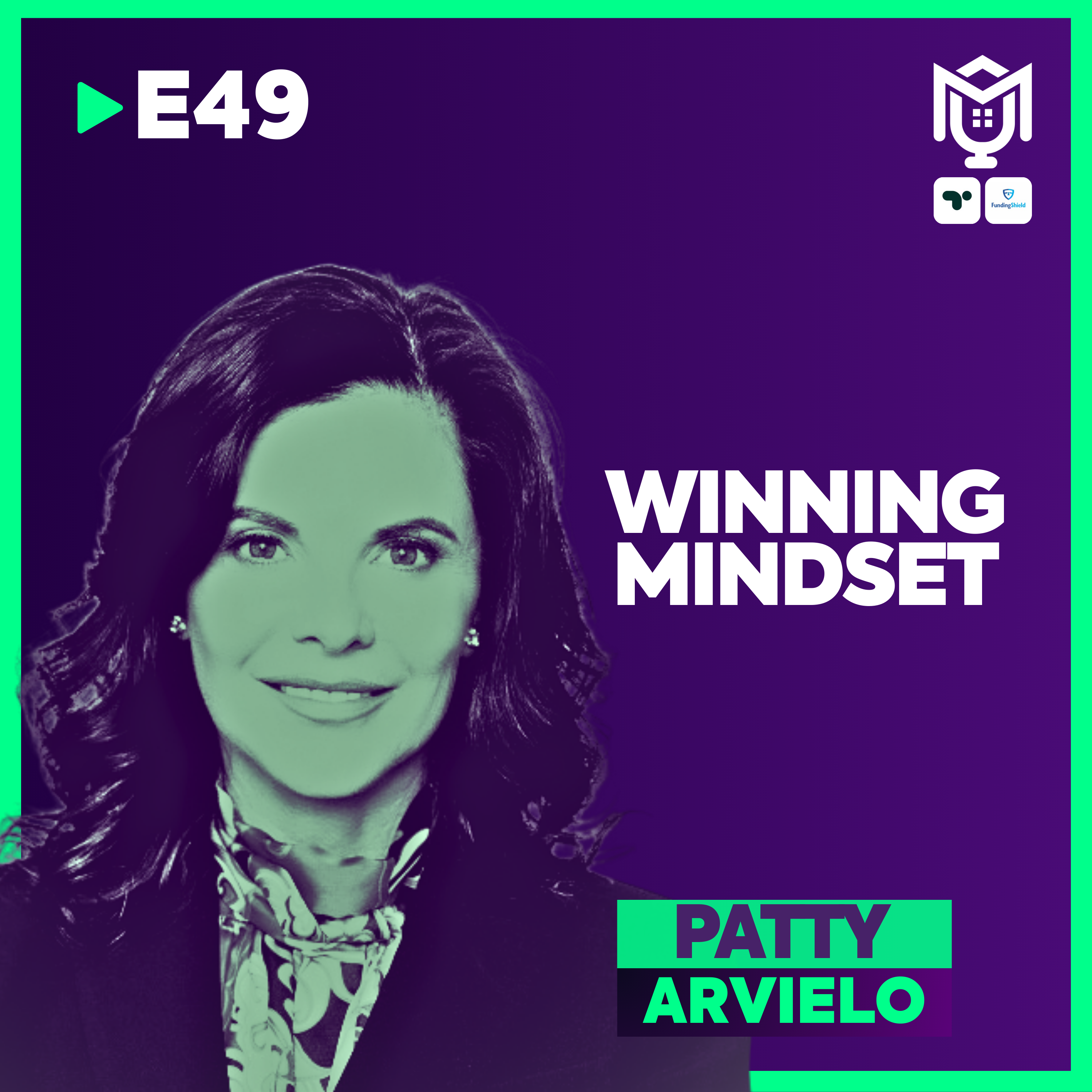
[00:00:14] Speaker A: And in every episode, the Mike's dive deep into the entrepreneurial spirit, the strategic insights and the breakthrough innovations that built the world's greatest mortgage companies. So whether you're advancing your career or scouting for industry leaders or exploring opportunities in fintech and prop tech, you're in the right place. So get ready to unlock the story behind every mortgage. Let's dive in today with Patty Arviello, CEO and co founder of New American Funding, which is one of the largest mortgage companies in the country. Not just from an origination standpoint, they also service their loans to and are able to help homeowners with the life cycle journey of owning a home.
She's also a returning guest on our show. So thank you for coming back, Patty. We appreciate it.
[00:01:03] Speaker C: Thanks for having me.
[00:01:04] Speaker A: We decided the theme of this show or the central message would be sort of pick up where we left off on the last show. Mike, do you want to kind of touch on where you came up with that, that theme, that idea?
[00:01:18] Speaker B: Absolutely. Patty, I'm, I'm impressed by a number of, of things that you've touched in a few interviews that you've had actually. And one of the things I've noticed is, is that you talk about adversity, but really I, I don't really believe that you're, you're looking as in, as adversity as the catalyst as much as it is that you just have the desire to win.
And I think that really changes the narrative, especially because you coach so many different people the, in not only in the mortgage space, but in other facets. As we'll dive deep into realizing in this conversation, the, the desire to win is not just for winning, for the purpose of winning, it's for the development and growth of the winning team concept in itself.
Because once you win, that's great, but then how do you develop that? So in a very similar way, you know, you, in, in your interview with Diego, you talked about your own adult children and you see how they go to, from university and then they move on. So you know, it's like you don't just win the super bowl and you move on. You win and then you develop that and so it becomes dynastic, if you could say that. And so I want to be able to say that what, when you're whether you're coaching people or as you're in your continued growth of New American funding, it is not just about winning. It is also about creating legacy, dynasty, and continued growth, not only from a business standpoint and also from an internal standpoint. Whether it's family or whether it's personal or whether it's some other type of growth in someone's life, it's way deeper than just winning. And so as we dive deep today, I'd really like to go deeper into not only the mindset behind winning, and also the growth of an individual and their business as well.
[00:03:22] Speaker A: With Mike setting that table, we wanted to connect with loan officers. So we said, imagine every loan officer in America starts at the same starting line today. Same rate, same product, same technology. Even though we know that's not the case. But what mindset do you. You believe allows someone to get out of the gates faster and run further than everyone else?
[00:03:43] Speaker C: You know, I think for me, when you find your true passion, no matter what it is, you know, it makes it so that waking up in the morning isn't going to work. It's like delivering on your dreams. So for me, the mortgage industry has been a passion. It still is, I think, for most people, because nobody gets into it on purpose. Everybody will give you their story of how they fell into it. I think honestly, the reason why we a lot of excitement in this business is because finally people are like, found a passion. I found something I'm really interested in. I found something I love and that really drives the behavior. So if you're coming into this industry looking at it as a job, you're going to fight the ones that are doing it because they love it and they have passion. You will never match their energy.
[00:04:31] Speaker B: Yeah. So how do you take somebody to say, I'm going to be a salesperson to being a business owner to then understanding and realizing that owning a business is not just making the best pies and create and then opening up your pie shop and then selling them, but you become the master of all as a result. It's something that you. You've mastered not alone, but also with your partner, husband Rick, in him running other facets of new American funding.
So how do you go from teach someone to say, I'm okay with success to let's, let's not divide and conquer, but let's actually create a whole wellness in the way that we conduct our business. How do you teach that? Because I actually don't know from your standpoint.
[00:05:21] Speaker C: I mean, I think it definitely is a Mindset. You know, a lot of people don't know that when Rick met me, I was a loan processor. I was a contract loan processor. So I was running my own business. I was doing very, very well at a team of high producing loan officers. And I didn't see myself as an entrepreneur. I saw myself as I was working and relying on them. So my mindset was that of an employee mindset.
Rick came in and met me and he had an entrepreneurial mindset, meaning that entrepreneurial mindsets very, very comfortable with risk, where somebody like me was not comfortable with risk. So it is a, it can be a taught asset, just like I was taught how to be an entrepreneur. I think that there can be baby steps, though. There can be baby steps. Just like we climb the rungs on the ladder in corporate America, you can climb the rungs on the ladder and developing and growing your own platform and then internally growing your own business, whether it's a broker shop or an independent mortgage company. None of us just showed up open business and we're in business. Right. Even took us many, many years to figure out all facets of the business to really be able to sit down and say, wow, we did the whole realm of imb, right? It was like capital markets, the servicing piece. So there are rungs on the ladder. But it is first shifting that mindset and making sure that you're, you have the ability to invest in yourself because it's really your own money investing yourself, Right. So you're not able to just take money home and spend it. It takes money to build a company. It takes money to invest in a company to build as you're making.
[00:06:59] Speaker A: And you just summed up that passion. Part of the loan officer I was going to ask about, as you're taking those baby steps and taking your passion into the community, how do you encourage loan officers to build themselves up while also contributing to the company brand, whether it's a regional or it's a powerful national brand like yours?
[00:07:21] Speaker C: Yeah. So the way I, I coach loan officers is that NAF is the platform, okay. The originator is the business.
So I have a large platform. But the loan originators that decide to come join our team, they are the business, they are my client.
So you have, I have that mindset, maybe others don't, but I significantly treat that part of our business that way. Every loan originator, they're very mobile, as we know, the turnover is really, really high in this business. So they have to build their own personal brand and their own database and they need to Own it like an entrepreneur. They should have an entrepreneurial mindset. Even though they work for platforms like us. I find the most successful people are spirited in a way that they're going to take risk in doing things maybe differently than a competitor or really owning their database and really working it much better than most people.
[00:08:21] Speaker B: What's your definition of celebrating success when you win? And I'm not going to say in the sense of how an originator would do it. An originator says, oh, I just closed this loan or I just closed my first one with the realtor, or I closed my biggest loan or this purchase transaction with the first time. But how do you define success as a business owner where all of a sudden they went from you know what I want to grow to an assistant because the productivity is higher and people just look at that as another stepping stone. But really it's a business success.
How do you.
But so how do you teach that to someone that it's not just about the loans that you close for income, it's also about the stepping stone from originator to assistant, from assistant to marketing, from marketing. And as you've grown your business.
[00:09:11] Speaker C: I started in this business when I was 16 years old and so I've been chasing the almighty dollar my entire career. So I just look at every single person, every department that made more money than I did. And I took the steps to learn whatever, you know, I was a, I worked at the credit bureaus, you know, inputting data on the mortgage factual reports when I first started. Then I figured out the loan openers made more money than me inputting data on a mortgage factual report. So I went to look for a loan opener job. Then the loan opener job, I figured out the processor made more, you know, it's just knowing your value, knowing your self worth and having realistic goals. But I, you know, listen, I'm a person that shows up for work to make the most money I can. I've always worked that way. That's my mindset, mindset. I'm not going to show up to make less than what I feel my value is. So I was looking upwards to figure out where, where do I fit in, where's my knowledge base, where can I learn to advance my career? And I always knew how much money every single facet of this business offered as far as either corporate jobs or sales jobs. I knew the opportunity I was going
[00:10:16] Speaker A: to ask it kind of taking that and, and chasing because the money does determine what loan officers want to do and the more money they have, I guess the More they can reinvest in themselves. And I think there's a huge opportunity to reinvest locally in just marketing in the brand. These platforms have not existed like before. I always say own your own zip code. So New American funding gives you the platform, but they can only take the baton so far into that specific zip code. That's where your passion can take over.
Can a loan officer, in addition to this great servicing platform you have, so they can say we keep these loans, but can a loan officer build something similar to a servicing portfolio just through relationships where over time the clients and their community be become that foundation of business? Today?
[00:11:05] Speaker C: Absolutely.
Today the top originators at NAF own the most massive databases you have ever seen.
One of our ellos, about 68 years old, consistent President's Council winners, she just works her database. She doesn't leave her house, you know, she doesn't go call on offices anymore. She's been doing it for years, consistently has been a President's council winner for 30 years. She is a database queen.
So this has been going on for the, you know, for, for however long we've been in the business. I think fundamentally the differences now is AI, right, and how you're able to monitor and build that database. So I would, you know, it's a starting lo number one, I would build my database, right? And with AI it can become easier to do that. But it. Literally every single person you went to college with, every single high school friend, every family relative goes in this database to start.
So really building your value and building your tiny little business within a platform like NAF is very valuable. It's one thing I don't think AI is going to take away is the human capital around relationships and how people make you feel when they walk into a room.
[00:12:18] Speaker B: How does the originator communicate internally at NAF with. With operations, whether it's at Docs funding? Because I know that there was a point in time 15 years ago where originators would hover over the cubicle of the processor because of technology. They don't need to do that anymore. It's all via email and text. But how does the, how does an originator communicate internally with Docs processing? Maybe not capital markets, but lock desktop so that there's more communication internally at naf.
[00:12:47] Speaker C: Yeah, so we, we built our AI technology already developed around our LOS and pos. So we have NAF link.
But I will tell you that this, this business is slow moving, right? You have originators still. Most of the top originators are that late 40, late 50, age range still. Yeah, you know, they've been working their databases, they're well known in their communities, they've built their relationships for many, many years.
A lot of them still don't want to be told how the new way. So they'll still, you know, do it the old way. We're not going to force anybody to change what they're doing, especially those that are successful as we move through time. Yeah, I mean it's, it's everything in communic communication wise is it be delivered through AI.
I mean AI can scan your emails and, and go to the originator and say your processor is asking for this, this, this, this and this on every single file. Highlight it by color. I mean it's just, it's crazy.
[00:13:46] Speaker B: Those success leaving clues. Patty, I want to go back and, and talk about what you have done, what other people have done within NAF and, and the success and the clues that have been left by you. And I don't, and I don't know how to say the not predecessors, but people who have trailed within NAF behind you in success.
And you've already mentioned that you went and learned. Well, I want to learn about this person who's in, in docs and this person in processing and this person who may be desk and this person, someone who's in their 30s and 40s as an originator in my experience in talking to people is they haven't, they haven't grasped that they need to, they need to learn and understand that. And it's something that you've already established a track record for. And if they would just say Patty has already done that, why can't I, and my question to you is why can't they internally? Do you ask them that and, or do you ask them that at all?
[00:14:48] Speaker C: I mean I was a top producing originator.
I worked at Countrywide. I was like number two branch in the country at 25 years old with a baby at home and one on the way. So I think the reason why I was such a great loan originator was because I knew every guideline about every single program I could offer. Right? Many, many times I will find loan originators even today. They'll be like, oh, I only do fha. I don't really know non qm or I only non qm. I don't really do FHA or VA because I don't really understand the guidelines or I don't do bond loans because I don't really understand them every single time you don't understand cost you money.
So every Top performer here. If I go to President's Council, I can ask every top performer a underwriting question about any loan program available today. I will guarantee you they'll be able to answer it because they are professed in their career, they're passionate about what they do and they don't want to lose money every time you don't know something about a loan program that is money out of your pocket.
[00:15:51] Speaker A: And I think I has sort of re engineered how people have to look at what loyalty is and decide where that loyalty lies. You know, I think you just have to think about, obviously you're loyal to your community.
Loyalty doesn't mean hovering over your past clients. At some point you have to be loyal to the lender you work with and come up with this plan together because it is a new world. How are we going to tackle it together and how am I still going to be the perception that I'm loyal to the clients and to me loyalty screams knowing the guidelines when they need them. As you were saying, knowing the programs, making sure I don't go into the wrong program because you didn't know about the right program.
So how do you balance this great NAF platform and how loan officers are working within their community to get repeat business and referrals?
[00:16:45] Speaker C: You know, Listen, we're almost 6,000 team members across the country. I will tell you, like I said, there's a shift between the new ways way of originating and the old ways. I'm not going to tell the old ways that are successful how to do their business.
Right. I'm going to try to enhance what they're doing by the platform that I built. I'm hoping they plug into it to make their lives easier. But if they don't, they continue to be successful and they're happy. I'm not one to change it. Remember, I'm the platform, they're the business.
Right. If you want to come to naft, you want to learn, then you're going to grasp everything that we built, which is already AI infused technology, AI infused email, anything to enhance that communication between sales and ops.
It's moving so fast that whatever I say to you guys today is going to be irrelevant next week. I mean, it's just moving that fast. It's crazy.
So originators starting out, I will tell you that I think my prediction is, is the LOS who figure out how to use AI in the next 12 to 24 months will have the unfair advantage even to those top producers. I mean, they're just going to have an unfair advantage yeah.
[00:17:55] Speaker A: And I think as somebody who talks to a lot of executives in this industry, I think those that figure out to use AI top of the funnel and let your company figure out how to use AI in operations like, because no one, I don't see anybody at a loan officer level separating at a point where everybody else is copying that. And it will happen soon because AI is becoming that powerful to create your own marketing system, to plug into your parent company's marketing system. But it's tough for a big company like yours because I'm hearing it from you and I know it. Our industry is so fragmented. The loan officers are. Some are old school, some are new school, some love doing four deals a month and some need, if they do 100, they need 150. And so you've obviously a lot of winning in this industry comes with experience. And so can you just talk about new American funding and over the years how experience has helped you build the platform?
[00:18:54] Speaker C: I think mistakes have helped me built the platform. I mean, every time I have a mistake, that's a time to learn and change, shift, redirect. Right. I think if everything's going good, people like me are like, it's going good. But anytime there's disruption and adversity, you've got to hone in to issues. AI has been a, an enhancement for sure, but a complete disruption in just the way we think. Just because. Listen, I just told this story about an hour ago. I was a lone originator when the Internet came out. I'm like aging myself. So sad. But I was a processor that was being told, you know, oh no, now you need to input that 1003 into this computer system and then you need to plug into a dial up. And then. Yeah, I mean, and I was like fighting it.
I was like in my 20s, early 30s, I was fighting it, same as some people are fighting AI right now.
That moved much slower than what we're dealing with right now. I mean, I think we're all sick of the AI. AI, AI.
Right. It's much scarier sounding than it really, really is. It's just a formulative way to communicate data at a much quicker pace.
So I think you want to. I've been talking a lot here at NAF is that human capital is so important. I think what you, you're hearing from IMDs is one of the largest costs to owning an IMB is the cost to originate the process, the loan. Right. So I think the first thing that it's going to disrupt is that part of origination, not the Salesperson. But the actual part of getting that loan from sales to closing, that middle part is where we're going to figure out and we have already how much AI speeds that up and cost. You know, we have cost cutting situations going on. But as far as integration of AI, if all the, I'm sure all the top 10 we already have it, it's already in everything we do, every email, we have teams, everything we do has AI just sitting there listening, getting the data and delivering in a way that it's in a much more efficient Pl, you know, platform and manner.
[00:21:05] Speaker A: I'm glad you said mistakes though like as somebody who totally. Yeah. At a company we mobilize 50 billion and there's so many edge cases and there's so many fat fingering that it's no one's fault. But the technology can only do what you can input.
[00:21:20] Speaker C: Yeah, it's through mistakes in which you learn this, you know, conflict causes change.
Disruption gets you to think it really is critical thinking comes in. AI is never going to do that for any business leader really going to get the minds like Rick and I to really think how are we going to pivot? How are we going to change? We can get ideas but it's really, you know, the two of us and our president Chrissy is driving change and integration of different systems and technology into our platform.
So yeah, just conflict causes change, mistakes makes you think it's really an opportunity to learn.
[00:21:55] Speaker A: That's very profound. And I, I always track how good I am at segueing. This is going to be my top maybe segue. We're going to go to our sponsors right now who help make this show possible and the the two sponsors you see actually solve for fat fingering. So. So we'll see Patti on the other end of this break to land this plane and take it home with some more questions.
[00:22:16] Speaker C: Verifying income for all your applicants means you need roughly 23 different vendors and waste hours and hours of your team's time.
But with True Work it's just a single place for all your income verification needs. So you get the most advanced voie solution. Truark combines all all major verification methods into a single easy to use platform to give you a completion rate of 75%, cutting your cost by up to 50% and getting real results for your team. True Work, your one stop shop for income verification, click verify repeats.
Cyber and wire fraud. Can you afford the risk? Today's automation and technology based trends demand solutions to fraud threats. Funding shield provides lenders and investors real time transaction Level verification Certified wire fraud protection to protect loss of funds at closing due to cyber based and other threats. We help improve your bottom line through fraud prevention, risk management and validating the parties and documents involved in mortgage closings. Prevent fraud and theft on your closings.
[00:23:28] Speaker A: Thank you.
Mike, I've stolen the mic from you about eight times, so I'll, I'll let you lead in here.
[00:23:34] Speaker B: Patti. As a, as a, as a mom and a leader, it I, as I listen to talk about AI, what it reminds me of because I'm a, I'm a parent to three adult children and it reminds me of I've been through experiences and change as part of the deal and there's a lot of frustration as a parent when you're watching your children fail and there's joy when we watch them succeed. And what I see in the entire.
As we've interviewed many leaders of different independent mortgage bankers, it seems to be a common thread that the leadership is like a parent. And then the salespeople, regardless of age really seems like they're teaching teenage kids that, hey, look, we've already experienced this up here and for some reason you can't see the forest through the trees.
And I've, and in listening to your stories of how you've been able to lead and your past successes, what do you, what is your opinion on how to tell salespeople? Doesn't matter whether they're 40 years old or 50 years old. Hey, you're, you're being like a teenager and you're not in. And I've seen the success. It doesn't matter. It doesn't matter how old or how much experience you think you might have. We've seen this before. As the leader, how do you teach that up?
[00:24:56] Speaker C: Yeah, I don't know. That's something you can teach.
I mean, human capital is our number one asset at naf. It's, it's the people. Right? And what I as a leader have studied is the different personality types of those I lead. I mean we're not just not all the same. So may I may have the teenager conversation with one, but would probably insult another if I brought up you're acting like a teenager. So I'm very careful how I communicate to the team and I don't really do a broad message outside of I never talk to somebody in particular about themselves in front of others. I respect them enough to honor the fact that they may or may not like what I have to say. I'm very careful about, I mean it may be not hurting feelings I. It's not that I'm afraid to hurt feelings. I think constructive criticism is really great. But in delivering constructive criticism with respect is you will find that the recipient hears you better. So I'm very careful on how I deliver information.
It's kind of like I can lead them, but I can't force them to drink mentality. So we consistently work on leadership in leading them. Some will drink the water, some won't.
So that will then dictate to us as we watch the team members win or not win.
What works and what doesn't work is really the collection of data, attitudes, and watching what the rest of the team is doing. You know, I don't know if most companies will tell you this, that every single year you go to a president's council, pretty much every year it's the same people.
Even though there's so many new team members that have been added to the team or so many people that have been here for many, many years that don't reach that level. Why is that?
Really? Why is that? That's the true question of leadership is figuring out how your top talent works, what's working for them, and try to coach the, the ones that are in the middle or at the bottom on the mindsets of those at the top.
[00:26:56] Speaker A: That's a fascinating. It's like the same people every time. I need to digest that. But I reached out to some of your human capital to see if anybody wanted to ask you an anonymous question. And to me it's no, no surprise what they asked actually. And I think the entire industry is wondering it. I don't know if any leader has actually spoken on the topic, but it's. It should be at every conference. But I, I'll give you a chance to either answer it from a new American funding standpoint or just general because everybody's wondering.
You have built an amazing servicing platform before it became hot to go out and buy a bunch of servicing. But everybody now is buying servicing a lot to do with AI. These loan officers are very smart ones I reached out to. They know with AI, the ability to recapture is just going to keep getting better and better. And obviously they'd rather it come from their own company than another company.
But you have different lenders all across the country wondering this. Some keep their own, some don't. Some are subservice. But I think they're all nervous or they all want to hear from leaders what they think over the next five or ten years that interaction will look like, should look like, does their role change you know, what is going on there and, and there's probably nothing you can do about it. So how should you work with it? How should you adapt?
[00:28:16] Speaker C: Well, first, I mean I, I'm very driven by fear. I'm always have the mentality somebody's something's going to be built to take me out, right? Because then what am I doing? I'm continually learning. If you become complacent in a business like this, you're going to get knocked out by those that are continually evolving and learning.
As far as servicing goes, this has been a 10 year convers at NAF, right? Rick was, you know, newer to the business than I was. The minute he got in it he's like, this is ridiculous. Why would you get rid of your biggest asset which is your customer? So this, this vision of retaining servicing and using it as a hedge, especially for the last three years we've had that servicing has been the hedge. And what significantly sets NAF apart from some of our competitors is that hedge.
But Rick, rick saw that 10 years now here we are today, the vision was executed. We have a lot of security with our servicing portfolio. But now you have the behemoth of the mortgage industry go in and buy the biggest behemoth in the servicing industry. And then you created this like ginormous monster that everybody's afraid of because oh my God, Rocket owns one. And whatever clients, the clients will still choose and still will shop.
The ability to shop is so much easier now with the Internet and social media. So I don't know that if I'm a loan originator, I'm scared. I definitely would look to work with platforms that control their customers because remember, I'm the platform. Our loan originators are my business, they are my customers. My servicing portfolio is built to protect them. So if I'm a large producing loan officer, I don't want to work for a company that's selling my loans to Rocket and uwm because then you just lost your client. So I'm a new loan originator. I'm going to be like, huh, who am I going to go work with? What platform? I'm going to go to the one that's going to support me to keep my database intact and communicate with my clients and deliver that lead right back to me when they're ready to buy, sell or refinance. So that's what I would be thinking about.
[00:30:28] Speaker B: This past few weeks has been the World Baseball Classic in Major League Baseball and I'm a big sports fan and I watch every single team If I. If I'm able to. One of the predominant, dominating things I notice about the Mexican baseball team versus the other baseball teams from other countries is that if even including the United States, if the fans go up to the players and any in the other countries, there's there, you know, they may ask for an autograph or whatever, but the Mexican players actually are.
They're communicating, they're interacting. There's a lot more love, if I can use that word, in that. And I don't think what the unseen portion of what you provide in your other interview in what you do is that there's a sense of love. Because when you can say that you provide your cell phone number to the originator so that you can provide that support, when you can say that you can go out, whether it's president's club or going out to the other branches or doing those things, the culture that you have inherently, not only as a mom and also as a business person, as a Latina in this space, is providing.
Maybe you're not. Maybe it's not talked about as much, but it's definitely shown by action and as a compliment in telling you this is because originators don't necessarily see it until they're inside the NAF system. I don't think.
[00:32:02] Speaker C: Yeah.
[00:32:03] Speaker B: And I'm mentioning this so that those who are out there, whether you're a leader of an independent mortgage banker or whether you're an originator looking at NAF and the known portion of naf, but maybe not talked about as often, is action in leadership by accessibility.
And again, I don't know if love is the right adjective or not.
[00:32:26] Speaker C: I say this company is driven by love.
I'm Mexican American, so maybe it's like I'm like the Mexican baseball team.
I honor. I'm. I'm just so honored that people choose to work for our platform. I mean, I was a loan processor in 2004. I'm completely humbled by the fact that people choose to be led by myself, Christy and Rick, and I think the three of us are exactly the same. I literally pinch myself when I walk into a room that has people that are wearing our jersey. Right.
I don't take it. I don't take it for granted. I feel like every day I could lose them. I literally had to work on my emotional mindset because every time somebody would quit, I literally would feel like, be really, really sad and realize that that's just part of this business. I wish it wasn't. It's not a fun part of the Business.
But for every person who leaves, I get 10 that come.
And NAF was a huge secret for a long, long time. I think a lot of it is, is that Rick is very internal. He's a little bit of an introvert. A little bit. Till you get him in a room. I'm not an introvert. But we, we were so focused on internally on building NAF and our family and our kids. I mean I was very much a working mother.
I wasn't able to give up being a mother to build NAF and I wasn't able to give up NAF to be a mom. So I've been doing, being. I've been a mother and now a grandmother for 36 years running this company, building this company. I went into labor two out of three kids at work. I mean I definitely married to my career, I'm definitely married to my family and, but I just don't take it for granted because when I do, somebody else will win. I, I think that the heart driven leadership today is very much wanted because our country sits at a very ugly time right now. And the younger generation didn't, aren't growing up the way I did. They're growing up very divisive and with very negative rhetoric. When you come to naft, I don't talk ever negative, negatively about the industry, about themselves, nothing. Because this needs to be a place where they come and they good about themselves and I think we do a really good job. That mean it's really my main role. I am the people person. I'm the heart. That's what they call me. Christy and Rick run the day to day. I take care of our most important asset and that's human capital.
[00:34:56] Speaker A: I mean I, I don't know what to say. I mean that's just such a, a loving vibe to come and work for and be part of. And I think sometimes people need that support just mentally, especially in this industry.
You have people that have always been disciplined and they, they believe they've been drilled into them. The best way to succeed is you make the calls. You go to the open houses, you do this many meetings a month and then it will, it'll result in business. But I see a lot of hard working and even disciplined people that aren't the ones going to president's club. They're, they're struggling right now.
Which leads me to ask a question. What part of the old school mortgage playbook you believe is broken now or, or is about to be broken?
[00:35:42] Speaker C: I don't know that, that I see the old school Playbook of loan origination being broken. I think that the relationship is one thing that will not be replaced. We're already seeking validity on what we're seeing in social media. Is that fake or is it real? We're searching for the realness, right? We're almost like if we see a fake ad on social media, we're swiping right through it because we're like, oh, I don't want to look at fake.
A loan officer is not fake. That's true relationship. I think one simple thing that loan originators forget they are is friends.
Some of the best loan originators, best realtors I've ever met, are also very good friends.
These people have friend.
I call it the roller Rolodex, the old school Rolodex, but they have a Rolodex of friends beyond. Everybody's their friend.
But are they.
They are. They're an ex client, someone they sold a house to. These people develop such deep connections with their business partners that there's no way it can be broken by a better rate somewhere else.
So if you find yourself tapped out, you got to look internally and go, am I giving what I'm asking for? I'm asking for business, but what am I offering to my business partner? What am I offering to the consumer? Do I have knowledge around the neighborhoods they're trying to buy? And do I know what the schools are like? Do you? I know the state, Do I know the statistics? Do I even know anything about where they're trying to buy? You have to be vested in their American dream, you know, if you want them to stay with you long term. So I think fundamentally, being a really good friend, I know it sounds funky, but I found and watched these people develop these deep connected relationships with realtor partners. They know they're not going to refer a loan to another loan officer because they were at their wedding, they're at their kid's birthday party, I mean. And my realtor partner set me up on a blind date with Rick.
I'm telling you, it works.
It works.
So I've always been a really good friend. I pick good friends. I'm around people who do the right things. They deliver right back to me. But I show up every day going, what can I do to make their lives easier? What can I do to nurture their lives, their relationships?
Yeah, be a really good friend.
Does it take the. It's not that hard to set yourself from. From competitors, but being and nurturing those relationships, I think is lacking. And AI is not going to take that away how you, how you make people feel. AI is not going to make them feel the way you can.
[00:38:16] Speaker B: I've said this a few times in our fewer shows that when your values are clear, your decisions are easy. And I think that something that younger originators don't know is actually they know how they feel. But actually, I'm not sure if they actually know what their value system is.
And it's something that you're bringing out at NAF that I can see. I think that though, that sometimes the younger generation, when it comes to developing the deeper relationships, whether it's with their realtor partners or referral partners or internally, it's something that you're consistently asking or saying in the presentation.
But maybe it's not outside of that in the industry itself.
How is that? How, how do you think as an industry, it can be performed or enacted to where we can actually, instead of AI making the process easier, but bring love back again into the relationship between real 14 borrower buyer to realtor to originator and then back to the team. So it could be funded so that it's not so contested on rate or contested on time. So I feel actually could be a smoother process, I think.
[00:39:30] Speaker C: You know, listen, we run 4th largest call center in the country. So these people take call center leads. They don't know the people calling in. Right. There's no relationship. They didn't get referred by a realtor. Again, another relationship. If you come into any of the top call centers in America and you listen to the way they sell loans, they're selling a relationship.
They're not sitting there going, oh, hi, thanks for calling naf. Here's. Here's the break.
Where do you live? Oh, yeah, I have a dog, I have a cat, like you can. It's simple sales and the young generation getting in here. I mean, go, go listen, Anthony Robbins. Go old school, learn how to sell. Everything we're doing in retail is selling. So master the skill set of selling.
Listen to podcasts, watch really great sales leaders sell. When I was a loan originator starting out two years, I made no money.
The second year in, I went and hung out with the girl. She was a top producer. I asked her if I could just go to work with her for a month. I went to work with her for a month and I watched her.
I watched how she spoke, I watched how she developed relationships.
Mentorship is out there. It's free.
You know, there's so much more accessibility to learning now than when I was young. But nothing has changed from fundamental Sales.
Yeah.
[00:40:50] Speaker A: I think probably the biggest inhibitor for some of these loan officers is just they're in a rut and they haven't snapped out of it from a branding perspective. And if you.
And it takes a little bit for people to digest it. So if you can go from just repeating to authenticity of friendship and locally resetting yourself almost as. That's my brand. The world's about to get faker and I'm about to get. Get realer. And I'm here for you.
Thank you for coming on, Patty. We really appreciate it. If you have any final messages for yourself or for the company, happy to hear them. But we really appreciate you coming on.
[00:41:30] Speaker C: I know. Thank you so much. You guys are always so kind about the company, about me. I. I love the.
The support as a woman leader, you know, it really means a lot to me. So thanks for putting my voice on your platform. And no, I look forward to seeing you guys at the next event.
I'm sure I'm speaking at a couple of events in the near future. Mike, I know I saw you the last time. Michael, I don't know if I've seen you before, but yeah, I look forward to running into you guys and keep doing what you're doing. You know, there's a lack of information out there for loan originators. There really is. And so this is a really important platform.
[00:42:05] Speaker A: Thank you so much and thank you for joining us on this journey into the heart of mortgage innovation.
Remember, every mortgage has a story, and we're here to help you write yours. If you enjoyed today's insights, please subscribe, share with your network and connect with us on social media.
Until next time, keep pushing the boundaries and uncovering the stories that drive our industry forward.