Episode Transcript
[00:00:00] Speaker A: Welcome to season four of the Mike Gup show where every mortgage has a story. We are the ultimate hub where the hidden stories behind the mortgage industry come to life. My name is Michael Kelleher.
[00:00:11] Speaker B: Good morning, I am Michael Zhao and
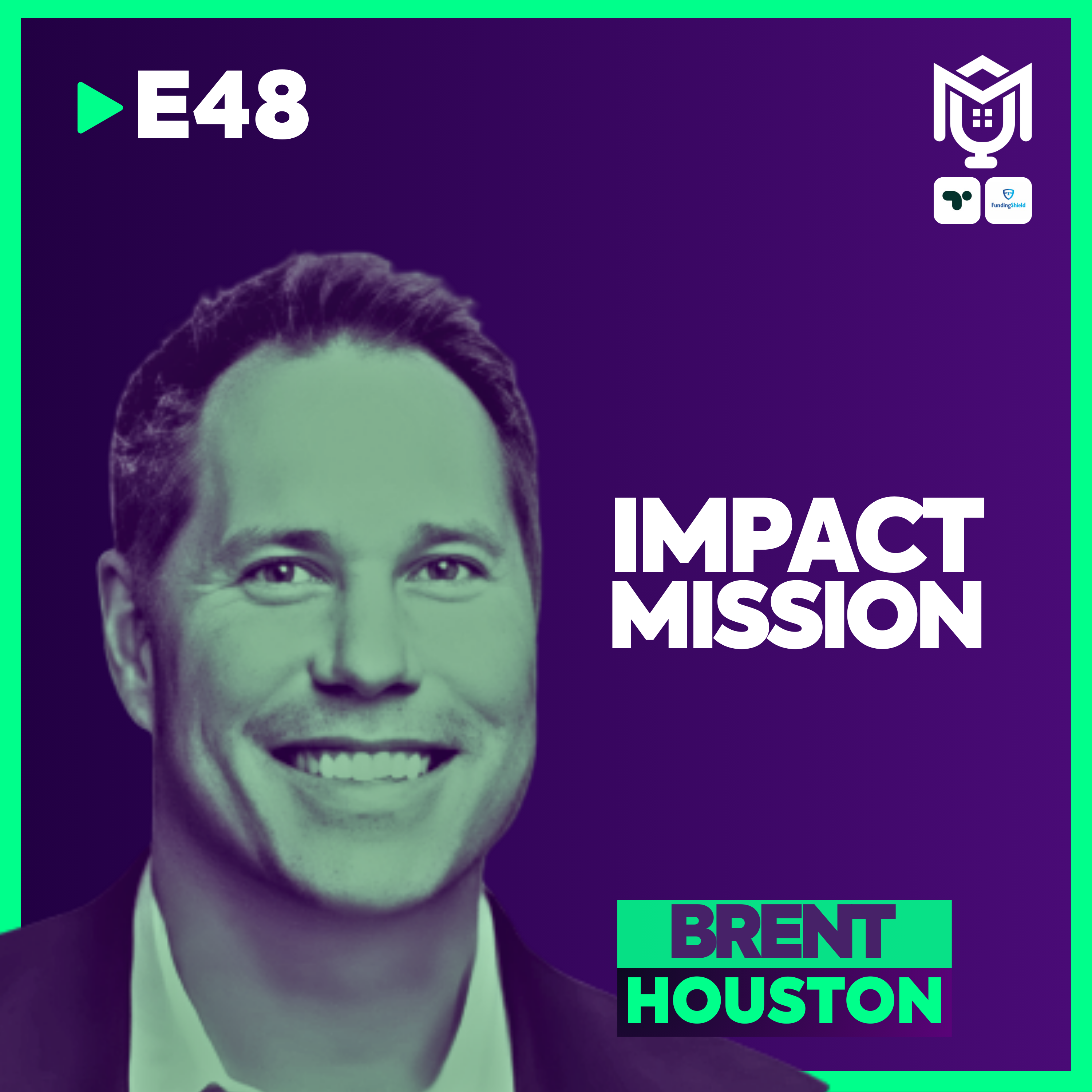
[00:00:14] Speaker A: together the Mike's dive deep into the entrepreneurial spirit, the strategic insights and the breakthrough innovations that build the world's greatest mortgage companies. So whether you're advancing your career, scouting for industry leaders or or exploring opportunities in fintech, prop tech, conventional non qm, you're in the right place. Get ready to unlock the story behind every mortgage. Let's dive in today with our guest Brent Houston who has put together a company, Ardrey which is taking the non QM world by storm.
It is increasing volume not just as a company but in this space we'll dive deep into why these loan types are actually becoming more of an outlet for consumers to access inventory to help them, you know, grow their wealth or just make better financial outlays of what they're doing on a day to day. A lot of the industry, this particular niche in the industry is about education and I think on our show we've had a couple guests in this space and I think Mike Zhao, co host does a great job of pointing out this is sort of how the world was in mortgage a while back and it went on a convention, a government backed binge for a while and it seems as Mike Z would say again makes sense. Lenting has returned. So Brent, do you want to just give us a quick background about yourself and where you are today and then we'll dive deep into with some questions and find out how you got here and where you're going.
[00:01:46] Speaker C: Sure, thanks. Mike and Michael or Michael and Michael or Mike and Mike, you know Eminem, I'm not quite sure.
Thanks for having me on on the show. I appreciate it.
You know my, my, my background is, is a little unique on how I got into the mortgages on that side of it out of college.
You know I've always been an entrepreneur out of college. I started as an option market maker on the P and the cboe.
Just make a Markus for options running the stock desk.
This was back in the mid-90s believe it or not, back when you had a lot of fractionalization between all the different exchanges.
You had multiple exchanges, you didn't have single day to day representation.
Technology was a lot different but I saw where technology was going back in the mid-90s and this was really before the online brokerage kind of popped up to scene.
So I was A young punk, you know, in my 20s was a rebel, like to go against the grain of traditional financing and came up with the idea of starting online brokerage company.
So a partner and I we want to be to the partners of the option market making company and we started an online brokerage company and we were one of the first companies to offer a $9.99 stock trade which was completely unheard of.
So that was my exposure into financing and really technology and automation.
And we quickly grew that over the years.
You know, I think we were one of the first advertisers on, on CBS Market Watch back in the day, back when advertising were just kind of random banners per set.
And you know we really, we really tried to pass the savings over to the consumers with technology and utilizing technology for streamlining, ease of access, simplicity, that type of thing.
And from there, you know, I, I morphed and ended up liquidating out of that company and went to a larger competitor at that time back in New York called daytech.
And they didn't have options at the time, so I helped roll that out with options.
And they also had this electronic communication network where buyers and sellers could match up electronically. And this was right when ice, believe it or not, ICE Mortgage Technologies now they created this online options exchange, a virtual exchange.
And that's sort of when they started coming to the marketplace to try to digitize and try to streamline and automate.
And we grew that business, we ended up selling that business to TD Ameritrade.
And in 01 I moved back to Los Angeles and I started just investing in Visa trusts, mortgages.
I met an individual whose father ran a prominent accounting practice and we just started originating traditional hard money loans and doing multi lender loans, putting individual investors onto mortgages, deeds of trusts. And we grew a decent sized business out of that.
And then we started working with the various warehouse lights and started using own funds right and to for speed of execution.
And then we started selling to history.
And that's really how I got into the mortgage side of it.
Sort of self taught homegrown, but I've always had that, that entrepreneurial edge. I like to do things myself. I don't like to really work for companies. I have a certain way and a certain process as to how I like to see things.
So and that's kind of how I got into mortgages, kind of my background on that side of it, you know, when I'm extremely competitive and when, you know, throughout my college days I I did varsity crew at UCLA and, and whenever we would come in second place and you get that second place medal. The coach would be like, congratulations on becoming the first place loser.
You know, so that's sort of my mentality in, in, in every aspect of business is that you don't want to be second. You really want to build things to, to be number one on that side of it. So yeah, I don't know how, how, how deep do you want me to go into that side of it?
[00:07:08] Speaker B: You're, you're, you're there in crew just before the Winklevoss twins started their crew career at Harvard. Right. So.
[00:07:15] Speaker C: Correct, correct. So, but you do have a lot of, a lot of true entrepreneurials that, that, that do come out of crew just because it is such a disciplined team sport, you know, and only takes 10 strokes to form a good habit and then one stroke to form a bad habit, and then it takes another 10 strokes to rebuild that good habit again.
And you can kind of take that same discipline into businesses and into leadership is that you have to continuously reinforce how to streamline, how to educate, how to process, how to manufacture mortgages on that side of it before we get
[00:08:02] Speaker B: into the, the mortgage side of things. Quick question about crew, is that, do you find that there's a lot of finance bros that come out of crew?
[00:08:10] Speaker C: Absolutely, absolutely. Yeah.
If you, if you look across that spectrum, remember rowing is not, it's not a sport you're going to make a lot of money off of professionally. Right, right. There's, there's really no money to be made.
So most people within crew, they're, they're using it one for, for self discipline, teamwork, camaraderie and, and building those strategic relationships and, and being able to trust one another.
But there's always an end to crew and, and it's always going into the professional aspect. So you have a very well affluent, educated group of people that are highly committed, highly disciplined, highly trustworthy, highly professional who you can count on. Right. Because let's face it, you're only as fast as the weakest link in the boat.
So you don't want to let anybody down. And crew really does a great job teaching that tech or discipline.
[00:09:17] Speaker A: Seems there's some parallels there to your obsession or falling into the fact that you take a fragmented world and you try and bring some uniform parts to it and find some margin for money in there.
Is that, is that just because of the strengths or is there parts of crew where it is fragmented in the beginning of the year and by the end of the year your team is
[00:09:41] Speaker C: all on the same page, it's definitely fragmented throughout, right. Within crew. Right. I mean you, you'll, you'll be in perfect unison and then somebody will be slow at the catch when you're sliding up and getting into the water, or they'll be slow at the release.
And you know, you have a coxswain who sort of navigates the boat and is coaching the teams that, that kind of get people back in line and, and you know, so you may veer off course, but you do quick corrections all the time to get that boat back that in unison.
And it's sort of the same way within businesses. Right.
[00:10:22] Speaker B: So as you, as you move from crew into finance, into options trading, and then you move into the private money space, it actually is a pretty good segue for you to sit there and go, okay, we just, you know, when we're going through 2007 basically to 2012, you know, there's a lot of turmoil in between.
But one of the things that I unfavorably tell people is that when Dodd Frank came out and then the invent of the term QM came out, it actually, it took up all of the miscellaneous bad things that was a part of what private lending was about, right. So you had basically hot breath, get a loan and you could use your bank statements, but you could effectively create your own jobs and do things. But with the invent of the, of the non QM mortgage and with QM rules implemented, it actually created somewhat of a safeguard in private money lending. Meaning that, you know, you actually wanted to create not only the collateral, not only the credit, but the capacity to pay so that you could get your money back.
And in the non QM space, it's very interesting because if you just take common sense lending back into play, then you can create that into it. And with your background now that you have previously in creating various financial options or ways in finance to do that, how has that capital market space affected your ability to lead not only in leadership for the mortgage company, but looking at the products that are available and saying, okay, this is what makes sense and I think we can do something in a profitable way. What does non QM do to favorably benefit the mortgage industry, in your opinion?
[00:12:17] Speaker C: Yeah. So you look back to the pre Dodd Frank days, right. And hard money was really asset based lending because your, your risk was the collateral. Right. So really you made all the decisions of, in the event something goes bad, how do I protect myself? Right. And, and with Dodd Frank that changed that because you, you had to underwrite both from a risk perspective on the collateral side.
But it also had to make sense from the consumer side or from the borrower side financially. Right? So fast forward with the non qml.
You have a lot cleaner loans, you have a lot more safeguards in place, but there still is that common sense. Does this loan make sense?
Is the borrower in a better financial position today than where they were? Because let's face it, things change.
People went through Covid, people lost jobs, they came out, they got back on their feet.
Do they have one year tax returns to show? Did they have two years? No. Did they have three consecutive months to show that they were working again and they were back on the right track? Yes.
And that's really where non true M came into place because you could, you could have alternative types of underwriting. You can look at income differently.
You had a whole new market of Uber drivers, 1099 type of employees where they weren't getting the steady paychecks. They were basically self employed in a lot of ways.
And non really led to that and really opened up the capital markets to those individuals.
But it has to make sense.
[00:14:12] Speaker B: When you say it has to make sense. Hold on, this is important for me to make sure we get this defined.
When I found in the last 10 years, Brent, we've, we had a lot of attrition with NMLS numbers, meaning that the, the, there's an old school of makes sense originators that left the industry as a result of compensation, as a result of higher interest rates and we have a whole bunch of new NMLS numbers and that, that didn't go through 2005 to 2015.
So if you could just please help me explain to our listening audience out there, what is your definition of common sense lending?
[00:14:50] Speaker C: That's a big one, right?
Let's look at the credit risk first. Right? I mean common sense from a, from a credit risk perspective is, you know, is their income self sufficient? Is it stabilized?
Is it on a trajectory going up? Is it flatline? Is it starting to go down?
Maybe they may have had a blip in their credit, maybe they, they may have had a bankruptcy and they're coming out of bankruptcy and they're starting to reestablish their credit and so their FICO stores scores starting to go up. But right now in the, in the conformant arena they can't, they can't qualify for mortgage because of the low FICO score. Although they are making the right progress, you know, what's the purpose of the loan? Are they doing a debt consolidation? Are they paying off a bunch of debt in order to get themselves back on track financially. Right. So those are all things where the story has to make sense from the underwriting standpoint and from the credit standpoint from, from the lender side that on paper one person may see it as, oh, they have a sub 600 FICO.
Somebody else may see it say, okay, they have a sub 600 FICO. However, their FICO dropped back when they lost a job 18 months ago.
They were back on track. They are starting to restabilize themselves. They're paying off all this high interest rate credit card debt of 31%.
They can tap into it and give themselves a new beginning.
You know, so to me that, that's where the common sense underwriting comes into play is, is this loan being structured in a way that's going to help the consumer to get back on track and to reposition themselves to go from a non QM loan to a conformant loan, you know, within a year to two, three years, type of set type of place on the credit or on the, on the asset side, you know, you also need to look at valuations, right?
Are we in the uptrend, are we in the downtrend, are we in a sideways trend?
You know, right now is, is a little bit of an interesting debacle, right? Because when you're getting appraisals coming in, you know, you're in a decline of market.
However, appraisers don't want to admit to it's being into a declining market.
You're having a lot of brokers now wanting to deal directly with the appraisers again. Right. I mean the whole Dodd price, it eliminated that. Right. But the, on the lending side and on the investment side, you're starting to see more issues with brokers trying to push values, doing ROVs requests for, you know, evaluations.
They're just throwing out numbers in order to try to get evaluation and not take them like for, like. Right. So why have an amc, right? And so we're, we're into that quandary right now where, you know, I, I wouldn't say it's going back to 2007ish. Right. But we're, we're starting to see some, some issues on that side of it with valuations, with declining markets and us as a lender and, and as an investor, you know, you, you need to be careful with that. And, and that's where things have to make sense. Right. Go from a credit risk perspective and from also an asset risk perspective on that side Does Divine answer your question?
[00:18:51] Speaker A: Yes, he did. Some of those factors too can be made with with source data these days. So you can make common sense with a little bit of Rails and help. So we will take this time real quick to let our sponsor True Work tell our audience what they do. And then on the other side we will finish up our interview with Brent and find a little bit about what he's doing today.
[00:19:14] Speaker D: Verifying income for all your applicants means you need roughly 23 different vendors and waste hours and hours of your team's time.
But with True Work it's just a single place for all your income verification needs so you get the most advanced VO I solution. Truer combines all major verification methods into a single easy to use platform to give you a completion rate of 75%, cutting your cost by up to 50% and getting real results for your team. TrueWerk your one stop shop for income verification, click Verify, Repeat, Cyber and Wireframe.
Can you afford the risk? Today's automation and technology based trends demand solutions to fraud threats. Funding Shield provides lenders and investors real time transaction level verification. Certified wire fraud protection to protect loss of funds at closing due to cyber based and other threats. We help improve your bottom line through fraud prevention, risk management and validating the parties and documents involved in mortgage closings. Prevent fraud and theft on your closings.
[00:20:26] Speaker A: So you obviously were in a fast paced environment in Wall street or in New York and even when you started in California, you go and you create ultra mortgage capital and you get a chance to build your own culture and then you get another chance with Audrey to take everything you learned in that successful company and say if I could do it all over again, where I am in life now, this is, or where the market is now, this is how I would do it. I've seen just a fun environment there where people are hitting the gong and you're celebrating your victories and your social media is doing a great job of showing milestones. Can you talk about the culture that you're building this time around or even before what you took in for culture that you think works specifically for where you're heading?
[00:21:17] Speaker C: Well, there's a lot of blood, sweat and tears behind it, right? I mean nothing ever goes as planned.
You know when, when you're in a startup you, you start with, with, with a direction, right? And, and you see a very clear path, but that path is not linear. You have troughs, you have valleys, you got peaks, you have a lot of different, a lot of different emotions on that side of it. And, and really what what's difficult is how do you go from a concept to a two person organization to now we're about a 65, 70 person organization. Right. And, and how do you multiply yourself again and again and again and how do you get the right people into the right spots and, and how do you enforce that discipline?
And yeah, so the culture here, we are very competitive, we have high expectations, we are continuously working with our team members, continuously educating, training, enforcing and, and trying to show a different approach, different ways to do things.
And it's all about speed, execution with a high level of service.
Right. So we're really trying to build systems where it makes sense, it's easy, it's self navigation, able with a human touch where we can kind of step in, help out, coach, educate, rinse and repeat type of thing.
As you pull things away and as you try to manufacture the mortgage, you really look to see where things are being wasted. Do you need a manual input to be plugging in these builds or can you extrapolate that data from documents or from broker inputs and populate and then auto run and make decisions off of that data input? Right, but it's the issue is garbage in creates garbage out. And so you're constantly having to educate the community, educate your referral base as to how to use the systems, how to use the pricing engine, how to, how to put in true and accurate data so you can get true and accurate results. And I think that has been some of the hardest aspects of it because they'll put in data to get eligibility but that's not really what matches what they've submitted.
Right.
And, and so we're really trying to come up with how do we just take all that data at the time that they're, that they're submitting, how do we extrapolate it, run it through our pricing engine? How do we create that non QR auspicious to give them an automated output that is a right. Based on the information that you presented, based on all the documents that you're given. This is exactly what can be done and we're not quite there yet. We, we still rely on input from the broker at the time of submission and then you're checking and revalidating what's being provided as opposed to just extracting and just screening it up front automatically.
Right. So that's, that's sort of what we're trying to solve for at this moment in time.
And that I think will take us from where, you know, no is today to where it's going to be you know, in, in, in the next 12 months with us for, for what I
[00:25:09] Speaker B: do, Brent, in, in the, in the private money space, I use AI to, I don't need OCR anymore because I'm using AI. I'll input X amount of financial documents and then I'll, and then I'll ask the AI to analyze, looking for specific data points, looking for things. Is that something yet that you are looking to implement or are you looking to, what are you looking for in creating streamline processes when looking at documents? I, because I don't know.
[00:25:43] Speaker C: Yeah, so, so we do use AI on, on bits and pieces, but not on the entire process yet. All right, so, so you could take bank statements, you can upload the bank statements into our portal. We can have those results back within three to 10 minutes.
Right.
It's going to take all that data, is going to put it into a nice workbook, you know, but there's still some things which you need to look at, right? Because you may have large deposits, you may have transfers between bank accounts trying to increase income going in and out. Our system does a really good job on cashing it and presenting that. Um, but there's also where, you know, we allow the, the, the users to specify what their expense factor ratio is. Right? Because they may have a CPA letter that says my expense factor is going to be 23% as opposed to just 50%.
Right. So we still allow for those variables. So again, garbage in, garbage out. Right? So they may say that their expense factor is 23% and they may have a falsified CPA letter saying 23%. So how do you, how do you catch that?
[00:27:05] Speaker B: Right.
[00:27:05] Speaker C: I mean, the system can only do so much. So when you have people that are using the system in the right way, Right. And, and not trying to push things, you can get really good results. It's when you start trying to formulate differences of opinion or, or trying to push that, it can cause issues within the system.
You know, so credit reports, you can pull in the credit reports, you know, you can get the, the, the lates, the bankruptcies, you know, all that type of stuff.
But they can also make changes and say, oh, this is going to be a, a, a running 30 or a running 60.
But that's not necessarily the case. They may have had a running 30 for two months, then they fell behind 60 days and they caught it, caught back up. So is that really a running 30?
No, it's really a 2 times 30 because they were, they had a running 30, they got caught up Then they went down again, then they had another running 30, you know, so it's, it's stuff like that where you know, you have to try to get the systems to get better and, and get a little bit more intuitive. So just.
[00:28:21] Speaker B: Is there going to be a time in the DSCR product, Brent, that for example, you have a, an investor, Maybe they own three or four investment properties, but the one subject property, let's say their DSCR is at 1.0 or even at 0.99. Right. And normally the price on Wall street the price would be X, but it's a higher rate because of the risk that's involved. But then your AI or your appraisal says well a second, yes, the current income is this, but based upon market conditions and the leases that we've analyzed, it looks like the future income is going to take the DSTR to like 1.2.
Is there going to be a time where you can, where, where pricing exceptions or common sense is going to come into play?
[00:29:08] Speaker C: So yes, Michael, you know the, right now on the dscr, the way the system works, right, is that we will look at whatever the current market rent is and what the market rent is. Right. And so let's say the market rent is less than what the current market, than what the current lease is. We will use what the current lease is depending on how long they have left in the lease.
Does that higher rent make sense?
Are they running to a family member?
Are they running to a true third party person?
That type, that type of thing. Right. Because again, people will play games in order to try to get that DICR up.
On our side, we just want to price risk as to exactly what we're lending on. I mean we, we have a DSCR program that will go down to 0.75 and we have different pricings at 0.75, at one, at 115, at one or quarter, one and a half. Right. But we also have a no ratio program as well where we don't even look at the dscr. Right. So for us we just want to price on what the actual risk is today because we're not lending on a property for tomorrow or the next day or the next day. We're making our decision today on the risk today and we need to be comfortable with that risk today for 30 years.
So we just want to price it accordingly.
[00:30:52] Speaker A: I think in the technology space, running bank statements through a AI engine or tax returns, getting advice that's almost at the consultative level out there, you know, on, I see that advancing in the street where you have more of the, the lenders building it for actual. I think you hinted at this acceptance exception based like here's what we will take, here's what we won't take.
Very difficult to build both and I don't even know if it makes sense to build both. But on that note, you have these consultative people throughout the country. How do you educate them that Ardrey exists? Do you have, is it easier when it's closer to your, your corporate headquarters and harder as it gets away? Is there comfort areas? How is ary expanding in our country, you know, to these people that are consulting and supposed to drive the business to, to outlets like yours?
[00:31:50] Speaker C: Yeah, you know we, so our, our business is a wholesale lender. Right. So we, we deal with mortgage professionals. We don't, we don't have a retail arm on that side of it. So we have our account executives throughout the country.
You know we are, we have our, our corporate office here in Calabasas, California, but we have a workforce that works throughout all the US and we also have offshore in, in India as well. Right. So, so we have a remote workforce, our footprint within Business purpose loans. We're in 49 states, we're currently not lending in Vermont and on our consumer purpose, we are in 20, 25 states now on that side of it. And we'll continuously expand as a broken community requested.
As far as how do we get our word out, we're pretty active. We have a great marketing director, comes with a lot of talent. Sprint in the mortgage space for over 15 plus years.
I don't know if you've seen it on our LinkedIn and our various videos and stuff like that, but we definitely do market to the community, to the brokers.
We have our accounting executives that are, you know, old school, dialing for dollars. Right. How do you, how do you form those relationships? And it's a lot different now because you don't have these headquarters where you can just walk in, sponsor line, ship these officers. I mean everybody's working from home and working remote. So we try to build in that relationship, you know, via email campaigns, text messaging, reaching out, calling, as well as going to various trade shows and conferences. And we're getting much more involved on that side of it as well and doing more speaking engagements, getting more involved.
So wherever we can go that has a large broker community to be able to go reach, shake hands and sort of tell our story on that side of it and being probably one of the better priced lenders out there right now, we have a lot of business that just comes to us because they see us on optimal boom and they're like, you know, how do I get into that? I've been always knocking on the door, how can I access your guys's pricing, maybe guys rates, uh, so you know, but we want to lead them with pricing, treat them with service and have them leave with kindness. Right? And, and just create that raving fan.
[00:34:46] Speaker B: I love that, that in leadership for your AES you have this, this raving fan approach. And throughout this interview I kept thinking that you're making make common sense a greater great again. I mean really in the, in the way that you're looking at the underwriting but bringing that out through your accounting executives and in wholesale and telling them this is how we make common sense great again.
But this is how you get up to the broker base and tell them what we're doing in order to make common sense great again. And in doing so you'll be able to reach out to the broker community and create the ravings fan experience through operations.
So in full circle of this interview we started about, we started out how you are able to take operations into, into a better scalability so that you can create the customer service experience and then go through the underwriting capability of, of making making common sense available again. And then you coming back at the very tail end of this saying today this is all that we've done so that we can create a raving fan experience as the AE go out, create the Raven raving fan experience because we've already created the car in the engine. Please go drive it for us.
[00:36:05] Speaker C: That's the goal. Right? The hard, the hard part is get them in and then getting them trained to the environment. And once they're trained our, our, our top 80s, I mean we have, we have an individual that, that's consistently doing 15 million cost a month.
Do you know how often I, I hear from Matt Ag?
Very little. Very, very little. I, I rarely talk to him because he knows the systems, his clients know the systems, they know the process and they are just in rinse and repeat, high velocity, quick turn times and, and those that understand the system are the ones that are the most successful. And so that's all we're trying to do. We're trying to build a systemic system that's ease of use, that can be replicated over and over and over again that's available for them 24 7.
[00:37:05] Speaker A: Final question Brent. For that loan officer out there that's made a decent living, you know, doing conventional loans and once aspires to be something more, something greater. Take it to the next step, take something new. How can they use Arjrey and how can they use some of the, the loan portfolio that you offer maybe to get jump started on, on a new career? What would you say to that young person out there to get maybe where you are?
[00:37:38] Speaker C: Yeah. So one, make a start by going to our website at Audrey AI It's a R D, R I AI.
You know, Audrey, it's a, it's a Gaelic word. Right. So it actually does have a meaning.
But if they go to our website, we have all of our information on there regarding all of our programs, products, we have our pricing engine, but we also have this cool chatbot, Ask Audrey.
And in the chatbot you can ask any question and she will give you results. We have all of our programs, all of our products, all of our guidelines, all of our policies, procedures.
But you can also ask her, you know, hey, I'm a new loan officer, I live in Texas and I'm looking to get, you know, into the investor community to generate DSCR loans. What should I do?
And she'll actually give you a game plan. She'll map it out. She'll, she'll let you know, you know, who the, you know, who the local investment arenas are within that area. Ev game plan, talk about our products, our processes and, and kind of, and kind of map it out for you. Right. So I would, I would ask her these one, she's not going to complain.
She loves to give responses.
She doesn't talk back.
She's much friendlier than I'm going to be or, or anybody else. Right. So, and, and she'll give you all the time that you need. And she's available 24 7.
[00:39:25] Speaker A: Well, well, yeah, you'll have to check that out. And that's where the puck's going. And it helps that you have the dot AI there shows your, you're willing to leverage what people are using these days to get, get ahead. So thank you again, Brent, for joining us and thank you for joining us on this journey into the heart of mortgage innovation.
Remember, every mortgage has a story and we're here to help you write yours.
If you enjoyed today's insights, please subscribe, share with your network and connect with us on social media.
Until next time, keep pushing the boundaries and uncovering the stories that drive our industry forward.