Episode Transcript
[00:00:00] Speaker A: Welcome to the Mic'd up show. This is the ultimate hub where the hidden stories behind the mortgage industry come to life.
I'm Mike Kelleher.
[00:00:09] Speaker B: And I am Michael Zhao. Good afternoon.
[00:00:12] Speaker A: And in every episode, the Mike's dive deep into the entrepreneurial spirit, the strategic insights and the breakthrough innovations that build the world's greatest mortgage companies.
So whether you're advancing your career, scouting for industry leaders or exploring opportunities in fintech and prop tech, you're in the right place. Get ready to unlock the story behind every mortgage.
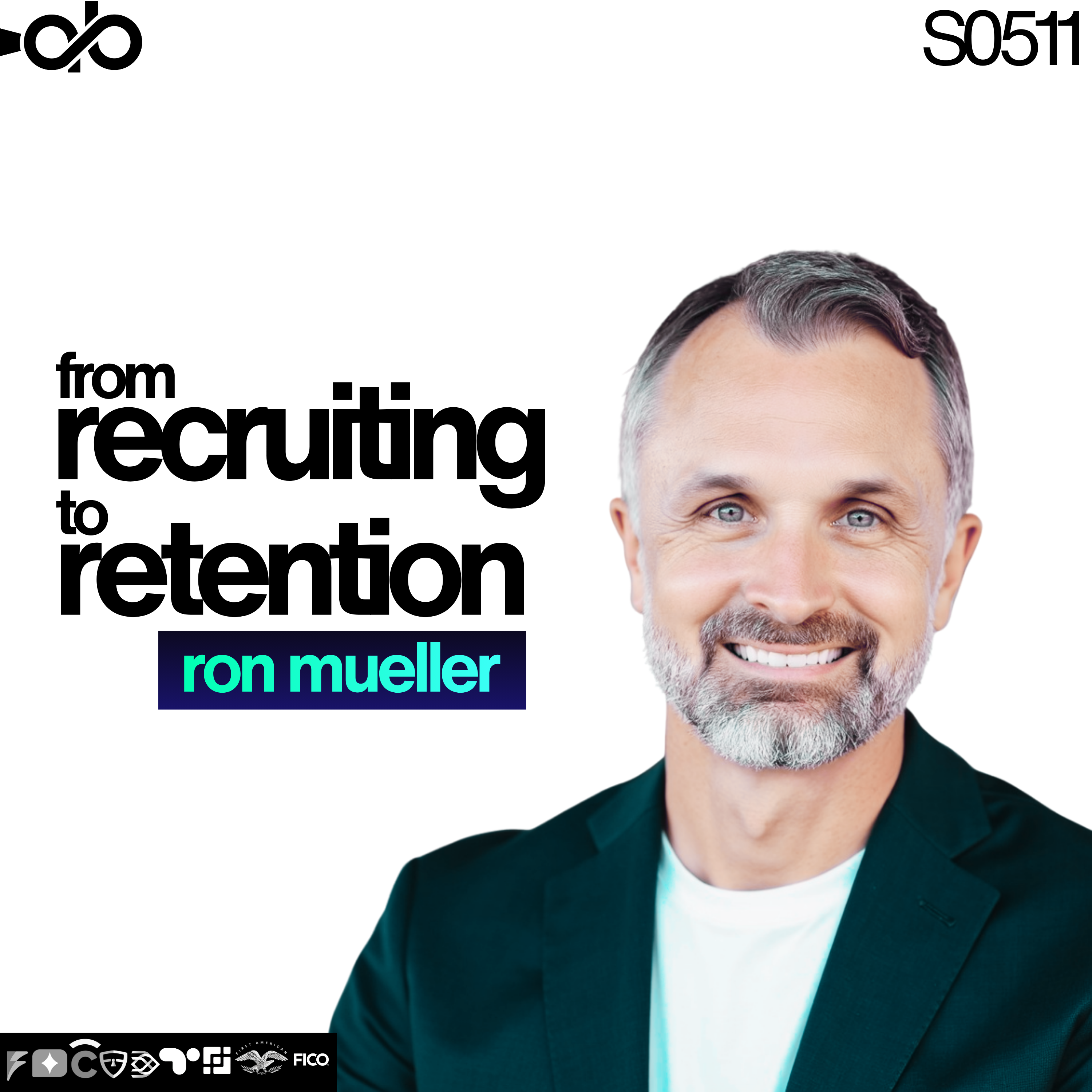
Let's dive in today with Ron Mueller who has spent his entire 25 year career at one company. Though we do have a story about his journey to see it from the outside and then back in.
And he's helped turn it into something almost no one else in Mortgage does. 100% employee owned lender.
And the journey that really our show and our culture is about where we always say I think three of the top 10 lenders in America right now were broker owners of a small branch
[00:01:11] Speaker C: in the late 80s.
[00:01:13] Speaker A: And so every loan officer has a chance to move up the ranks and into leadership. And we have this story here where he was a senior loan officer.
USA Mortgage, if you ever play with the HMDA data is always DAS acquisition.
And actually personally for me, Linda at the company was one of the first people to ever bet on my idea that turned into a product over at Easy mortgage app. So really special place in my heart for USA Mortgage who took a bet on me before everybody else. And I wouldn't be here in front of you if that company didn't at least have the success it did to get me on the national stage. So that's going to be the spine of this story is how in 2018 the founder Doug transferred 100% of the company to employee stock ownership plan. What does that mean? You know, what is that about?
And we'll find out why. Ron's LinkedIn headline reads where lo's own what they build.
So we, we did some homework Ron and you're an easy company to follow. You've been a perennial leader in the IMB space as a company and you as a leader and you know that longevity at one company really stuck out. A journey that we always talk about is loan officer to leadership, which I just said that's going to be the show. So what is it true though that you did leave for one year and came back? I think you had told me that in a past conversation. Did I get that right?
[00:02:53] Speaker D: Yeah, that's right. And you know, thank you guys for having me on.
Definitely an honor to be here. So, yeah, you're right. I did leave for a year.
You know, I was a loan officer for about five years. I came right out of college.
You mentioned Linda earlier.
Just everyone knows that is, that's my mom. And so she's been in mortgage banking for 50 plus years.
[00:03:16] Speaker C: And it's always been a part of my life, even when I was younger.
[00:03:19] Speaker D: So both her and then the founder Doug that you had mentioned, they really started the company. And I was just coming out of college, so it was really always in my path to get into the mortgage business.
And you know, I did it for five years and as I was sitting in my desk one day, I get a recruiting call as a lot of the loan officers probably that are listening get quite a bit these days. And it was a recruiter, but it was for a recruiting company that recruited accountants.
[00:03:52] Speaker C: So it was called Agilent Finance was the company.
[00:03:55] Speaker D: And I will say he was one
[00:03:56] Speaker C: of the best recruiters I've ever talked to.
[00:03:58] Speaker D: I was also probably, you know, you know, we all have these, right? A little bit of a lull month maybe. I wasn't hitting my goals and I was listening and he sold me right there on that day to come do an interview. So I thought, you know what, I've been doing this five years, I've done nothing else out of college.
[00:04:18] Speaker C: Let's try this.
[00:04:18] Speaker D: And so I ended up taking that leap. Now at the time, you know, rewind breed, Frank, you could be a 1099 loan officer. So I actually did leave the company, but the whole time I continued to
[00:04:31] Speaker C: originate just because the loans kept coming in.
[00:04:35] Speaker D: But I did, I recruited accountants. And what I'll say is, you know, Agilent Finance, they were an excellent company. They did really, really good work as
[00:04:43] Speaker C: far as training goes.
[00:04:44] Speaker D: They sent us off for a full week, very intensive recruiting training, which obviously translates to my role and what I'd
[00:04:53] Speaker C: been able to build at usa.
[00:04:55] Speaker D: So, you know, yes, you know, some, sometimes, you know, I have a little bit of regrets of leaving and coming back, but I have no regrets on this move.
[00:05:04] Speaker C: It was a pivotal piece for my career.
[00:05:08] Speaker B: That's a, that's amazing because I think, and by the way, you and Mike have like 750 mutual connections here on LinkedIn. So, like, not only is half of St. Louis going to be listening, probably half the nation is also going to be connected and seeing this. So it's awesome.
Theodore Roosevelt and actually not just theater, but a lot of people have this, have this quote it's like people really don't know how much you know until they know how much you care.
And one of the things that we, I can see based upon this 20, 20 year or almost 20, actually almost 25 year lifespan of being at USA Mortgage is, is not just a testament of, of longevity, it's also a testament of showing that you have an ownership into everybody here. So I think that when we have the, the willingness to own the business, what you're showing right now is an, is a willingness to not only own their own origination business, but to actually own the business in a literal sense. And I think that, that it's, it's not only that testament, it's also the, this showing of the willingness to work together. Can you tell us a little bit more about how you connect with your, your operations team and your origination team so that, you know, what do you do to build this camaraderie for connection in at usa?
[00:06:43] Speaker D: Yeah, so I mean, I think it's always been there in the company. But I will say, you know, you mentioned in 2017 we became an ESOP. So we are 100% employee own.
Doug Shukar founded the company, sold 100%
[00:06:55] Speaker C: of the shares in 2017.
[00:06:58] Speaker D: You know, a lot of ESOPs out
[00:06:59] Speaker C: there, still retained 51% for control and he made the decision to give it all to the employees.
[00:07:05] Speaker B: Wow.
[00:07:06] Speaker D: Which I think was, it was pivotal for our company. And I think when that happened we did see a pretty major shift in culture just in that everyone does have a piece of ownership, an investment in, not just in getting shares each year, but also what they do day to day, how they can impact the company, how they can impact the bottom line,
[00:07:29] Speaker C: which ultimately impacts our value.
[00:07:31] Speaker D: So I think just that kind of intrinsic ownership really comes out in people and really has impacted the connection that we all have. Even though we're spread across the United States. Everyone has kind of that, that thread,
[00:07:47] Speaker A: if you will, within that connection. And we have Adopt the Brand day coming up. I'm lucky enough to sit on the panel. Perhaps one of them is about leadership. Where you have Mark from Silk Title, you have Jeremy who runs Truist, Mike Malloy who was top five over at Rocket. And when they were talking about leadership, a lot of it came up about how important, how they connect with their employees right now, where the market is not easy, where it is tough, and the different disciplines or the different strategies to connect are going to be so important now.
How are you connecting with your team today and how do you think it'll make you better, you know, when business starts to grow again.
[00:08:31] Speaker C: Yeah.
[00:08:31] Speaker D: So obviously we do a lot of virtual stuff similar to this. Right. A lot of teams meetings on the
[00:08:37] Speaker C: day, day to day, just to keep
[00:08:39] Speaker D: connected, but nothing replaces get getting belly
[00:08:42] Speaker C: to belly with in person.
[00:08:44] Speaker D: So I would say our executive team, sometimes we can't all go, sometimes we divide and conquer. But we really do try to make in person visits a priority. I would say that we are doing those quite often regardless of the location we try to visit. You know, if there's special events or if it's just kind of a general connection just to get in front of people, I would say that's one of the things that we really put high value on.
[00:09:15] Speaker B: Can you tell us a story of how you're able to connect with, with various teams? Or maybe you said you were recruiting accountants at one point in time. Can you tell us about bringing a board of team and, and connecting with them, whether it's and I don't know what it is. You gave us some examples, an email, but give us, can you tell us about some of some story of connection of recruiting and then connecting with them in person?
[00:09:40] Speaker D: Yeah.
So just rewinding back to when I was a regional manager. Me and I had a partner, Jim Moxa, he's still with the organization and
[00:09:48] Speaker C: runs that region for us.
[00:09:50] Speaker D: You know, we started a branch in Springfield, Missouri. So if you're familiar with Springfield, Missouri, it's about three hours from St. Louis.
And you know, we decided, hey, we're gonna, we're gonna see if we can plant a flag in Springfield. We had no one at the time and you know, we, we hired, ended
[00:10:08] Speaker C: up hiring our first person who ended
[00:10:10] Speaker D: up being a manager. We actually ended up relocating someone that was on our St. Louis team there because we really believed in that market.
You know, kind of fast forward to today.
It's a thriving branch for us. It's one of our most successful branches.
Even though fairly small town, it really
[00:10:28] Speaker C: has a lot of reach with you
[00:10:29] Speaker D: know, Branson not too far and you know, there's just a lot of really great opportunity in that area. You've got the college there, Missouri State. So you know, it's just one of those branches that has really just stood the test of time.
You know, it's 10 plus years in existence and just is, is very successful. So we always make an, an effort.
[00:10:52] Speaker C: We just went there.
[00:10:54] Speaker D: So you know, Jim, who I mentioned, he has a lake house pretty close about 45 minutes from the office.
So we went, had an office meeting On a Friday and then Saturday, and
[00:11:06] Speaker C: this was probably on one of my
[00:11:07] Speaker D: LinkedIn posts, we had a lake day with everyone. And I'll say six different boats showed up. All of the groups came, including spouses.
And we all tied up for an afternoon and just floated in the lake and had fun. And so those are, I think, kind of things that you really, you know, you can't really replace those, those connections, especially when you get first significant others and you kind of get involved in that. Then I think it just really helps strengthen the company that someone works for.
[00:11:39] Speaker A: I'm sensing a real family theme. I actually didn't know Linda was your mother, but you have that family theme. You just said spouses like your company. They feel comfortable bringing their. Their spouses there.
And then you have the ownership too, where it probably drives you closer as a family.
And I think family really starts with trust, especially when you're bringing family.
Can you did some research again and you have a great line, which I agree with. The industry is notorious for telling producers everything they want to hear.
And I know with you, you try and have that upfront contract with them so that years later what you tell them still holds up.
Do you have something that you refuse to promise a recruit that you wish other lenders weren't out there promising that that maybe blurs the line of what's realistic when you're looking for your next home and mortgage?
[00:12:38] Speaker D: Yeah. You know, I say this a lot. Sometimes I feel like we're overly transparent or in our recruiting process.
But I do think that leads to longevity and that's what's the most important for us. I would rather someone not just sign on and become an employee just to work here for a year or two. You see a lot of that right in our industry.
And so we're not really looking for that. We'd rather not have that year or two if that's all it's going to be. And so I've always believed in just being extremely transparent. And sometimes they choose not to come
[00:13:12] Speaker C: with us because of it. Just. Because it just.
They're just not sure, I guess if that if another lender, if they're comparing
[00:13:21] Speaker D: us against someone else and maybe they're showing pricing. Right. Pricing comes up a lot in recruiting.
You know, we don't play games with pricing. The pricing is the pricing.
[00:13:31] Speaker C: Here you go.
[00:13:32] Speaker D: We'll show you our raw pricing.
[00:13:33] Speaker C: It's very transparent. Everyone knows that.
[00:13:36] Speaker D: And so because I think that's, you know, if you're not transparent up front, I think long term, eventually it always comes out and then the trust degrades and that's when you end up, end
[00:13:47] Speaker C: up losing the employees.
[00:13:48] Speaker D: So, you know, we've just decided to take a different stance in that what you see is what you get.
[00:13:54] Speaker C: And I think long term that leads to success.
[00:13:58] Speaker B: Ron, I'd like to talk about your transparency for a little bit because I've traveled in this last year across the entire United States on a literal basis from Alaska to Florida to, and heading to the East Coast. I live in California. And one of the things I've definitely noticed about Missouri, I was in St. Louis a number of years ago doing some business.
And you get a lot, you get a, in my opinion, you get a strong sense that you meet people who are salt of the earth, meaning that, that, that if you're, if you bring the same type of transparency into California, for example, people are like, nah, no, no, no, no. It just doesn't work like that.
Right, that's right. And I'm just saying that because that's what I believe to be true and just traveling. Right, and so tell me about how you grew up. St. Louis is a very unique city to where, for example, like I was in downtown St. Louis and I was in, I was in that little park area where it's a, it's a fairly nice park and you could have one block where you have million dollar properties and you travel literally 200 yards and you're at like $30,000 properties.
[00:15:02] Speaker D: Yeah, you're, you're talking about Forest park most likely.
It's a massive park. It's actually, it's, I think it's one of the largest parks, city parks in the United States.
And so it's a wonderful park. I run in there most days. I live really close to that park. And you're right, you know, St. Louis has had its issues over the years. They have a street called Del Mar. They call it the Del Mar Divide. And so on one side of Del Mar, you know, it's, it's a lot of poverty and then on the other
[00:15:35] Speaker C: side there's a lot of wealth.
[00:15:37] Speaker D: And you see this in other cities.
[00:15:38] Speaker C: I think Baltimore similar. But you know, we, you know, we
[00:15:42] Speaker D: do have that, those kind of pre
[00:15:46] Speaker C: existing issues, if you will, that have,
[00:15:49] Speaker D: you know, in my opinion, sort of plagued our city. We also have this divide.
[00:15:53] Speaker C: We have St. Louis City, which is
[00:15:56] Speaker D: now under 300,000 residents. And then you have St. Louis County. When you combine it all, it's, you know, 3 million-plus.
[00:16:02] Speaker C: So it's a good size city.
[00:16:04] Speaker D: But when you really look at them
[00:16:05] Speaker C: individually, obviously, St. Louis City really doesn't have enough to sustain.
[00:16:09] Speaker D: And so there's been a lot of talk about that combining, which a lot
[00:16:12] Speaker C: of cities have done in the past to kind of help bring that city, because that's where all of our sporting
[00:16:17] Speaker D: events and, you know, downtown and all of that. So it has a lot of history there, for sure. And so. But I.
[00:16:24] Speaker C: Go ahead.
[00:16:24] Speaker B: Do you believe that growing up in St. Louis brought you to an understanding that you get to see a lot of different types of personality traits in business as well as a personally in your interpersonal relationships with various loan officers around the United States?
[00:16:41] Speaker D: Yeah, I would say So. I mean, St. Louis is a, you know, it. It's one of those towns where everybody knows everybody.
[00:16:50] Speaker C: It's, it's big.
[00:16:51] Speaker D: But I mean, very, very close knit, which, you know, ultimately helped me in my career as a loan officer. Right.
[00:16:57] Speaker C: Like, it was easier for me living
[00:17:00] Speaker D: here and growing up here to network and build my business, especially going to Mizzou, which is an hour and a half away. A lot of people go there and expand their network and then come back here. And so, yeah, it's been, you know, it's definitely a town that I feel like, you know, can, can, can help with that. And, you know, we have a lot of, a lot of diversity as well. And I think that, I think that helps bring a little bit of empathy,
[00:17:26] Speaker C: if you will, to, to people here
[00:17:28] Speaker D: in this, in the town.
And that can obviously translate into business
[00:17:32] Speaker C: and how we approach it.
[00:17:34] Speaker A: And we want the audience obviously to know that you're nearly a nationwide lender.
And with that, there's a lot of talk out there on LinkedIn, similar to my last question, a lot of noise about the flat model.
You know, DL, take out all the costs, don't really need any leadership. And then I talked to my friend, fellow guest on the show, Justin Messer, who runs Prosperity Home Loans. They're going to do over 10 billion.
And he kind of chuckles at it and says, yeah, that works until it doesn't work. And what. So I'm going to reverse this question on you, or you can just answer what I said. But as a loan officers looking out there for their next home and they see this nationwide lender, but telling them, you don't need any management, you know, you, you spend. If you want coaching, if you don't want coaching, what should put their antenna up or what's a good question that they should ask to maybe get the person recruiting them a little bit more transparent? On what goes behind all this great offer, you know, all this flash.
[00:18:47] Speaker D: Yeah, obviously there's a lot of different models that people are trying out there. And you know, even in our board room executive meetings, we talk about our current model and you know, other models that, you know, are they successful, are they not?
You know, what I would say is that, you know, from, from a leadership standpoint, I feel like we invest heavily
[00:19:10] Speaker C: into our loan officers. I think there's power in numbers.
[00:19:14] Speaker D: So when you're designing these contracts, you know, we leverage Xenix for all of our training and coach.
[00:19:22] Speaker C: That's been a fantastic relationship for us with Casey Cunningham.
[00:19:25] Speaker D: And so, you know, we're able to get pricing on technology and all kinds of those types of things because we're
[00:19:33] Speaker C: able to leverage it over so many employees.
[00:19:36] Speaker D: So, you know, Homebot, for instance, you know, we use HomeBot for our, for
[00:19:41] Speaker C: our post close stuff.
[00:19:43] Speaker D: And you know, our loan officers wouldn't be able to get that pricing anywhere else if they were on their own or these kind of a la carte
[00:19:50] Speaker C: models like you're mentioning. So,
[00:19:54] Speaker D: and then, you know, and we talk about this a lot in leadership, especially our regional vice president level, branch manager level, I think we're fairly flat. You know, we don't have a million levels, divisional and all that stuff, but we do have sales leadership that doesn't produce and where, you know, and I used to be in that role where the value I found in that role was creating, creating opportunities for the loan
[00:20:18] Speaker C: officers that work directly for me.
[00:20:20] Speaker D: And I think our regional vice presidents
[00:20:22] Speaker C: do a fantastic job at that.
[00:20:24] Speaker D: Yes, they are recruiting, yes, they're bringing value into the company in those terms, but they're also investing in their people quite a bit and helping them and
[00:20:35] Speaker C: coaching them and helping them move the needle.
[00:20:39] Speaker D: Some originators don't need that. There's a lot of brokers out there that can completely do that on their own.
But what I've seen is that after loan officers have been in the business
[00:20:48] Speaker C: a while, they need help with motivation
[00:20:52] Speaker D: and they bounce around to different coaches and then that coach is trying to recruit them and there's just like a lot of noise there where, like, if they join organization like ours, I just think they get more consistency and I also think they end up with more opportunity.
[00:21:04] Speaker C: At the end of the day, Ron,
[00:21:08] Speaker B: you've been a producer, an originator, and you've been in the trenches much like some, some of the owners and leaders. They might have been producers, but maybe they didn't produce at the level that you Had.
So how do you. I mean, if you're an originator right now and you're at three to four units and you're trying. And I mean, already you're trying to figure out how do you communicate properly with your team as a leader, for you, you're now trying to not only communicate with all of the originators, but also with ops and then on your bio, on the website. So, you know, you have kids, you're coaching soccer, you're running.
That's a lot of stuff that's going on there. Ron, what do you do to effectively communicate what you want to present to the originators who are attempting to go from level A to level B and maybe even level C, and then also leading OPS to say, oh, we're at, you know, XYZ for processing, but we want to bring turn times down from X hours to minus minus two days or something like that. So how do you effectively communicate that in your leadership?
[00:22:13] Speaker D: Yeah, you know, I mentioned this regional vice president level. I would say that we lean on them heavily for that sales coaching and.
[00:22:19] Speaker C: And mentorship and leadership.
[00:22:21] Speaker D: And so, you know, a lot of my direct communication is with them, and then they're kind of putting their own flavor and spin because every team obviously has a different culture, and all of our regions kind of operate semi independently, almost like their own business. And so they're able to handle that sales component for the company. And they all do an excellent job.
On the OP side, I'll.
You know, I can't take any credit for this. Never really been in ops. I do like to dabble in it a little bit when it comes to metrics, because I do think I have some strength there. But I would say both Danny Pluck, who's our coo, and then Lar Taylor, who's our chief credit officer, they're the
[00:23:04] Speaker C: best of the best.
[00:23:05] Speaker D: And so they run what we call our DAS production center that really handles all of the operational flow.
And they do a fantastic job with
[00:23:15] Speaker C: the communication and keeping all of the OPS staff, you know, just up to date.
[00:23:21] Speaker D: It's almost a daily basis. I see them on all group calls
[00:23:25] Speaker C: and keeping everyone really informed because everything's
[00:23:27] Speaker D: changing so fast, especially on the OP side.
[00:23:30] Speaker C: There's this constant need to push information down.
[00:23:33] Speaker D: So it's a team effort, I guess, is what I'm trying to say. We, you know, it's. It's certainly not just myself, but we have a fantastic executive team that is kind of blocking and tackling and getting
[00:23:46] Speaker C: the information out and keeping those connections.
[00:23:48] Speaker B: What Does a day in your life look like
[00:23:52] Speaker D: okay, well, I usually get up early, I work out a lot, just started getting a triathlon. So you know, for those that have, have done those, you know that I historically have been a runner but you
[00:24:06] Speaker C: know, you know, I used to run
[00:24:08] Speaker D: four days a week, work out, whatever, triathlons, a whole nother level because you got three sports and you're trying to fit it all in. So obviously getting up very early for that kind of stuff. So I think, you know, I've always been a morning person so I like
[00:24:19] Speaker C: to get started early,
[00:24:22] Speaker D: you know, obviously taking care of the kids. So I love the mornings where I
[00:24:27] Speaker C: get to take the kids to school.
[00:24:28] Speaker D: Sometimes that happens sometimes depending on work schedule, but sometimes even enjoy picking them up if I can.
So keeping connected with them. Have a 9 and a 14 year old. So one just started high school and so kind of going through those motions. So, you know, obviously family work, taking care of myself and then you know, usually it's into the office, you know, try to get here, you know, fairly early. But you know, not, I'm not, I'm not here at 6am Like I feel like, you know, I always say that mood follows action.
[00:25:07] Speaker C: Sure.
[00:25:08] Speaker D: And so I like to bring a good attitude to work and if I don't get my workout in in the morning, sometimes I'm not my best self. And so I'd rather prioritize a little bit of morning time for that. That way when I show up here, you know, I have a good attitude and I'm in a good space to help lead. And obviously that, that becomes a little bit where the rest of the team starts to model that as well.
[00:25:34] Speaker A: So that's amazing. And I keep hearing you push on support so much and whether it's family in the, in the company or your vendors and technology providers, I think in this industry it's so cyclical. As much support as you can get is the better. And these same partners that support you, some of them support our show, allow us to keep it going and have the opportunity to have a high production show and interview people like you. So we're gonna hear from some of those sponsors that have bought into Adopt the brand and on the other side we're gonna take it home and sort of learn a little bit more about USA Mortgage.
[00:26:25] Speaker E: Verifying income for all your applicants means you need roughly 23 different vendors and waste hours and hours of your team's time.
Truark combines all major verification methods into a single easy to use platform to give you a completion rate of 75%, cutting your cost by up to 50% and getting real results for your team. TrueWerk your one stop shop for income verification, click Verify Repeats. Talk to our team today.
[00:26:59] Speaker F: Cyber and Wire Fraud can you afford the risk? Today's automation and technology based trends demand solutions to fraud threats. Funding Shield provides lenders and investors real time transaction level verification. Certified wire fraud protection to protect loss of funds at climate closing due to cyber based and other threats. We help improve your bottom line through fraud prevention, risk management and validating the parties and documents involved in mortgage closings. Prevent fraud and theft on your closings.
[00:27:27] Speaker G: Covered is the digital insurance agency built into the mortgage platforms you're already using.
Covered compares options from 65 regional and national insurance carriers and delivers the top options to your borrowers right inside your existing workflow.
Visit itscover.com to learn more.
[00:27:55] Speaker H: With True we help you understand borrowers so you can help them as you grow your business.
We stand for truth and trust because our AI powered technology leaves no stone unturned.
No data point unchecked so you can make the right decisions and your customers loans can be approved faster.
Lending Intelligence True.
[00:28:25] Speaker G: 5 minutes that's all Addy AI needs to prep a CTC ready file.
TDS income calcs done w2s 1099s bonuses ot Addi AI handles all of it. Gain hours back, rack up referrals and grow your pipeline faster Funding fatter pipeline addy AI 5 minute processing power. Your shortcut to scale starts now.
[00:28:51] Speaker I: When UAD 3.6 hits November 2nd, your pipeline can't afford probably ACI Sky Workbench gives your appraisal partners one connected cloud based workflow built for the new UAD data set from day one inspection data report all in one place so nothing falls through the cracks.
November 2nd is right around the corner. Don't guess no get your free UAD readiness checklist designed for both lenders and appraisers.
[00:29:28] Speaker B: SA.
[00:29:58] Speaker A: USA Mortgage Run is known as a purchase heavy business. So that's good for right now certainly in that there's always business regardless of where the rates are.
[00:30:09] Speaker C: People need to move.
[00:30:11] Speaker A: My question would be the headlines right now and in some ways I'm getting more skeptical by the day. Even though the headlines would say the opposite.
Say that servicing is going to retain all of this business and maybe you agree but maybe you don't. What is your view on retention at USA Mortgage for the borrowers? And how do you encourage loan officers to get repeat referral business in the door?
[00:30:44] Speaker D: Yeah, I think it's certainly a good point and a potential threat certainly to a business like ours. You know, we do not service currently.
It is something that's on our roadmap.
But you know, you know, we have always been very, very purchase focused. Our loan officers, many of them won't even sniff refis, which is interesting to me because when I originated I just, I just viewed, you know, I would do any loan that came at me and you know, I could kind of juggle both. But we do have a lot of originators that are just very, you know,
[00:31:18] Speaker C: laser focused on purchase, which there's nothing wrong with that.
[00:31:23] Speaker D: So, you know, when it comes to the refi opportunities, I think, I think if originator is a really fantastic job upfront and they're memorable and they stay in front of their client, that trust factor is going to trump any, anyone
[00:31:36] Speaker C: that's servicing your loan.
[00:31:38] Speaker D: Right. I don't think there's that big of
[00:31:40] Speaker C: a connection where you make your payment.
[00:31:43] Speaker D: Certainly, you know, we've even seen, you know, if people credit or anything like, they're certainly trying to continue to retain that, that borrower. But I do believe that, you know, I've seen this time and time again that we continue to, to win those
[00:31:57] Speaker C: deals even when the servicer does come
[00:32:00] Speaker D: after them because they do trust us to get them the best deal and
[00:32:04] Speaker C: get them to the closing table.
[00:32:05] Speaker D: So I do think it'll make an impact for sure. But I also don't think it's going
[00:32:10] Speaker C: to be as drastic as maybe some people state.
[00:32:14] Speaker B: You mentioned that, that you're, you're the, quite the prolific person in exercise, running triathlons. And so you're, you know, when you're an athlete, you want to work on VO2 max, maximizing the amount of oxygen you're bringing in so that you can put out the most amount of output physically.
And when, when we're in the sales business, whether you're in leadership or whether you're in actual production, one of the things you're trying to put out is the, is not only the maximum amount of production in getting out phone calls and face to face appointments and so on and so forth, but there's a certain type of energy that goes out there physically and emotionally. What are some of the activities that you promote internally at USA Mortgage so that the originators can externally put out that energy so they can maximize their productivity?
[00:33:04] Speaker D: Yeah, I would say we do a lot of events both virtual and in person.
You know, we have someone here in St. Louis that handles all of our realtor Relations.
We sponsor a lot when it comes to anything realtor based.
So we especially here in St. Louis, you know, I would say we're one of the main sponsors for a lot of the stuff that goes on here and that gives opportunities for loan officers to get there in person and to
[00:33:32] Speaker C: and to meet people.
[00:33:34] Speaker D: You know, we also do a lot of real estate relationships we always have where we're the in house lender. So that's been part of kind of
[00:33:42] Speaker C: our bread and butter if you will, for many years.
[00:33:46] Speaker D: And so those kind of opportunities again just give our originators a little bit more time to be able to talk about.
You talk about energy and getting out there and just to me it's still a people business.
I think there's way too much text messaging and CRM going on where I think right now, especially post Covid, getting in front of people, even making phone
[00:34:14] Speaker C: calls if you will, that's, you know that can give any originator leg up.
[00:34:22] Speaker D: It seems simple but I think it's effective.
[00:34:26] Speaker A: You have a 9 year old and a 14 year old. So when you're out on your run and you're doing this forward thinking vision of where mortgage is going to, when I say that, because you got the first generation that's had a tablet the whole time, first generation that has technically social media the whole time, what are you learning from maybe the attention spans going down that you think you'll have to deploy at USA Mortgage when you focus on the E for education. So are you, are you at the point yet where you're encouraging loan officers to think shorter versions of what they're educating or do you think in house, sorry in person events sort of negates that attention span problem? Like just what is your holistic view of education today at USA Mortgage for your loan officers to consumers and then where do you see the puck going?
[00:35:22] Speaker D: Yeah, I think everything has to be shorter.
[00:35:24] Speaker C: No doubt. I think that attention span is thing is real.
[00:35:29] Speaker D: So you know, you're not putting out minutes long educational.
[00:35:33] Speaker C: I think it needs to be bite sized for sure.
[00:35:37] Speaker D: You know, that being said, you know,
[00:35:40] Speaker C: I think it will continue to be a relationship business. It's still a very large transaction, very real transaction. Buying a house.
[00:35:48] Speaker D: And I think, you know, not everyone
[00:35:51] Speaker C: but there is a segment of the population that will still want to deal with a person and have a little
[00:35:58] Speaker D: bit of a hand holding, especially in
[00:36:00] Speaker C: that first transaction and hopefully continue on a relationship from there.
[00:36:04] Speaker B: What are some of the things that you're utilizing at USA to stay in front of the Current client or current borrowers. And then how do you stay in front of your originators for, for retention? So it's a downhill, it's uphill, downhill, however you want to say it. The originator retaining their clients and then the company retaining its los.
[00:36:30] Speaker D: So I'll talk about the clients first. You know, I think we have a fantastic technology stack. We use Total Expert for our, our CRM. We've been on Total Expert pretty much since we were one of their first clients.
And so, you know, we, we have
[00:36:45] Speaker C: it really dialed in.
You know, just being on it for
[00:36:48] Speaker D: so long and just watching the evolution
[00:36:51] Speaker C: of Total Expert and all the new
[00:36:52] Speaker D: tools, we tend to leverage those quite a bit. So obviously CRM, I mentioned Homebot for post close.
[00:36:59] Speaker C: I think that is a fantastic tool
[00:37:01] Speaker D: that our originators really like to again,
[00:37:04] Speaker C: stay in front of their clients.
[00:37:05] Speaker D: And that piece we use, we have
[00:37:09] Speaker C: a newer technology called Uplist. If you've heard of Uplist, Jeff Bell,
[00:37:13] Speaker D: we've been testing that.
[00:37:14] Speaker C: I think that has a lot of legs. I think it's pretty fantastic as far
[00:37:17] Speaker D: as communication and identifying opportunities within the,
[00:37:22] Speaker C: within the database and then, you know,
[00:37:28] Speaker D: technologies like MBS highway, where they're able
[00:37:31] Speaker C: to get out there and educate their borrowers on the market and rates.
[00:37:35] Speaker D: So, you know, I feel like we
[00:37:36] Speaker C: have a nice ecosystem when it comes to tech.
[00:37:39] Speaker D: And I think everything I just mentioned,
[00:37:41] Speaker C: you know, also helps retain them.
[00:37:44] Speaker D: They know that we're investing heavily in technology and really specific technology technology that really it models who we are in that we are, you know, here to really serve Realtors, let's say majority of our business come from the Realtor community.
And so, you know, because of that trust, I think originators that really work
[00:38:11] Speaker C: with Realtors, they tend to love it here because our technology also mirrors that.
[00:38:16] Speaker B: I should add, in the context of how we're having this conversation.
You wake up early in the morning, you go and exercise. You're teaching yourself how to stay in the peak physical fitness so that you can exercise. You're being, in my opinion, the best you can to be super dad, taking them to school, coaching, so on and so forth, running your business and in all these types of things. And for any originator that's out there right now, in order to be successful, anything, the implementation of what you learn is actually the key component in what we are trying to accomplish in our sales. And what Ron showing in leadership is that he's showing that not only is he providing the leadership in the tech stack of how he cares about his originators, and also what he's trying to accomplish the, in, in the execution, not only personally and also throughout the business structure in itself.
So Ron, what, what are, what is, do you think is the best way for the originators to get education internally so they actually can own it and then execute as a result?
[00:39:31] Speaker D: Well, you, you mentioned own it, I mentioned Xenix. You know, we've partnered with them.
[00:39:37] Speaker C: We call it our Mortgage Banker Academy or you get your MBA with us.
[00:39:42] Speaker D: You know, they have a lot of different
[00:39:46] Speaker C: modules that you can, can really dig into.
[00:39:49] Speaker D: I would say over the last 12 months it has really helped us move
[00:39:53] Speaker C: the needle, really getting people really reinvigorated on the business is what is one piece.
[00:40:02] Speaker D: And then, you know, we made a big push to hire some new loan
[00:40:07] Speaker C: officers to the business. We've hired over 20 this year.
So these are brand new licensed and we're also leveraging our Mortgage Banker Academy
[00:40:14] Speaker D: for that and putting people through those classes. So you know, I would say right now that's probably the number one piece
[00:40:24] Speaker C: that we're using to get and they even have an elite.
So for our higher end producers that
[00:40:29] Speaker D: are, you know, 20 million plus, they can join elite and really take their
[00:40:34] Speaker C: business to the next level.
[00:40:35] Speaker D: So I feel like that partnership with Casey and Xenex has really helped us
[00:40:40] Speaker C: dig in more and give more value to the originator.
[00:40:43] Speaker A: Ron, be remiss if we didn't give you an extra chance to talk about this employee owned model. I mean you and I talked about it and I sort of smiled because about two weeks later at a president's club, I see people are tattooing your logo on them for life. Not like a henna tattoo like really on there. And that says, yeah, they're there for life. And I think the only way you can get there is the employee owned model where they feel like it's part of something.
But let's say AI can't answer this question.
Is that model good or. It's obviously great in all markets, but is it beneficial for times when business is a little slower because of interest rates now? Is it more beneficial when it's booming, is it more beneficial when you retire or does it help complement what you have today?
What are people, do you think, missing about the employee owned model that really you, you wonder sometimes how did they possibly go there when they had the opportunity to own here?
[00:41:42] Speaker D: Yeah, and it's one thing that drew me to that model when I was doing research.
[00:41:48] Speaker C: You know Doug, who mentioned our founder, he was looking for an esque strategy,
[00:41:52] Speaker D: you know, he looked at selling right to big players like Guild, if you will talk to a lot of different companies. It just never felt right to him. He was going to have to let go a tremendous amount of our employees
[00:42:08] Speaker C: because obviously companies like a Guild would be able to absorb a lot of that back end office function.
[00:42:14] Speaker D: And so it just didn't feel right for him.
[00:42:17] Speaker C: And you know, we're one of the large, or a large employer here in St. Louis and they didn't want to, to just let people go.
[00:42:23] Speaker D: So I, you know, I really commend him for, for that. You know, what I would say is,
[00:42:28] Speaker C: you know, whether it's Guild, who's, you know, these public, you know, these publicly
[00:42:33] Speaker D: traded lenders or these privately held, where you have one owner at the top
[00:42:37] Speaker C: or a group or the VC owned,
[00:42:40] Speaker D: you know, those profits are going somewhere, right? And so if it's a profitable organization, they're going somewhere. It's either going to the shareholders if it's publicly traded or it's going to a single owner.
With us, it goes directly back in to our employees, the share price and that's 100%. Right. So no one, our executive team owns any more of the company than anyone
[00:43:07] Speaker C: else in the company. We all receive shares.
[00:43:11] Speaker D: And so I just, you know, what I would say is that, you know,
[00:43:15] Speaker C: it's, it's a huge benefit now. We're a pretty fairly young ESOP, if you will. Right. Like some, there's some ESOPs, some grocery store chains. And we were first looking at this, there's stories of, you know, checkers that are, that are literally retiring with millions of dollars because the ESOPs are much more mature than ours. But we're getting there.
[00:43:36] Speaker D: I mean, 2017, you know, we're definitely progressing. We have seen a little bit of volatility in our stock price just because of, you know, when we, when we started. And then we hit Covid.
[00:43:49] Speaker C: Right. So we shot up 500% in Covid. Right.
[00:43:52] Speaker D: And that's kind of normalized now.
We did see a nice return this
[00:43:56] Speaker C: year, which was always good to see.
[00:43:58] Speaker D: So, you know, it's evaluation once a year, so it's not like a daily stock price, but once a year we release shares to our employees and they
[00:44:09] Speaker C: get them for free.
[00:44:10] Speaker D: So I don't, you know, it's, they're not buying them, you're really just earning them through your efforts here.
[00:44:15] Speaker C: And so I don't, you know, I
[00:44:17] Speaker D: don't know what other model you're getting that extra benefit.
[00:44:20] Speaker C: It's a retirement plan at the End of the day.
[00:44:22] Speaker D: And much like a 401k. And so it's not come here and get rich really quick, it's come here, dig in, build a career and then when you retire, you're going to have this extra cherry on top in the
[00:44:36] Speaker C: form of the ESOP shares.
[00:44:37] Speaker B: I think that's amazing. And for our listeners that don't understand the, the investment model of how Wall street takes up companies public or how companies go, they might, someone will start a company, they might get some angel investors involved and then once it has a certain type of productivity for that product, it moves from angel and then maybe some kind of venture company will come in and take in anywhere between 30 to 60% of that business.
The owners get cash out and they're pretty much left to the wills of whatever Wall street has. And something that is commendable and also transparent in your ESOP is that there's actually, for lack of better words, pot of gold into that rainbow. Meaning that it used to be where if you worked at a company, you get a pension plan. Well, those pension plans as far as tax purposes for companies are kind of out the window. But with your esop, it shows that with ownership in your business, with productivity inside of your business, there, there's ownership in the company at the same time. And that comes back to into the ESOP plan. Now is that only for salespeople or is that for the entire team?
[00:45:52] Speaker D: For the entire team. As long as you're a full time employee, you, you, you get chairs each year. The other thing I'll mention, a lot of people don't know this because we live in a big qualified plan. We pay no federal income tax as a company and we end in most states. Most states are ESOP friendly.
[00:46:10] Speaker C: We pay no state income tax.
[00:46:11] Speaker D: So you know, in a commoditized business
[00:46:14] Speaker C: similar to the mortgages like we, you
[00:46:17] Speaker D: know, it really gives us a nice advantage because we aren't paying a lot of our profits, if you will, out to the government.
[00:46:26] Speaker C: We're retaining those now that you, they do that right, because you're, you're banking
[00:46:30] Speaker D: money for later on and when we're paying people out when they retire.
But it, you know, it gives us
[00:46:36] Speaker C: a huge advantage over most of our competitors.
[00:46:38] Speaker A: Ron, from loan officer to president, the natural arc that all of our listeners, we cater that message to learning how you went there, the type of model you believe loan officers want to own what they build. You're 100 employee owned, you impact 8, 000 families a year, you care for them. You educate them, and you've been doing it for a long time now.
Any final thoughts to that loan officer listening out there that wants to be Ron someday, What maybe they should be thinking about as they're originating, what they should be journaling as they originate to end the show?
[00:47:20] Speaker D: Yeah, absolutely. I mean, the one thing I love
[00:47:22] Speaker C: about this company the most is there. There is no ceiling.
[00:47:27] Speaker D: And that's one reason why I rejoined the organization, was to start my branch
[00:47:32] Speaker C: because, you know, I could get that
[00:47:34] Speaker D: opportunity to dive into leadership, of course, make a million mistakes along the way, but continue to build and just dig in.
[00:47:42] Speaker C: If you're someone that likes to build,
[00:47:45] Speaker D: is interested in leadership, and wants to maybe run a region one day for us, we'd love to have that conversation, because that's really what we've done over and over again. I could tell you dozens of stories
[00:47:58] Speaker C: of leaders that are currently running regions and branches that are within the company that started as a loan officer, saw
[00:48:04] Speaker D: that they wanted more, wanted to get
[00:48:07] Speaker C: into leadership, and now are leading big teams within our organization.
[00:48:11] Speaker D: So, you know, we've. We've been doing this for 25 years. We can do this and help you get there.
[00:48:17] Speaker B: Okay, Ron, we have a segment that we're trying to introduce into our show. It's called the Three Quick Questions.
So I'm just gonna. I'm just gonna ask you three quick questions. You can give me a quick answer. So, first question.
Would you rather be Ron Burgundy or Derek Zoolander?
[00:48:36] Speaker D: Well, I was just recently Derek Zoolander. Maybe that's where you're going.
[00:48:40] Speaker C: We do dress up in costume at our annual kickoff party that we. That we throw for all employees.
[00:48:46] Speaker D: It's a fun day, and we like
[00:48:47] Speaker C: to be goofy and fun sometimes. So.
[00:48:50] Speaker D: So, yes, I was. Maybe we'll go with Derek Zoolander.
[00:48:53] Speaker C: Although I do like Ron Burgundy.
[00:48:55] Speaker B: Well, I'm in San Diego, so I got to bring that out.
[00:48:58] Speaker D: All right.
[00:48:58] Speaker C: So, yeah. Yeah.
[00:49:00] Speaker B: What is one thing every loan office should do this week in mortgage? And it should be blank. What?
[00:49:11] Speaker C: Get on the phone, pick up the phone.
Make.
[00:49:15] Speaker D: Make.
[00:49:15] Speaker C: Make sales calls. Go. And, you know, go old school, I think.
[00:49:22] Speaker D: Take in person applications.
Create deep relationships up front. That is, I think, was what's missing in a lot of.
[00:49:31] Speaker C: A lot of what loan officers are doing today.
[00:49:33] Speaker B: Okay. And then finish this sentence.
In five years, employee owned in mortgage will be what.
[00:49:50] Speaker D: I would say it would be.
I'd love to say, you know, everyone would think of us when they think of employee ownership.
But I do. I do see more and more companies. There are other companies that are doing that. So, you know, maybe it would become
[00:50:08] Speaker C: a prevalent model and within the industry.
[00:50:11] Speaker B: Very good. Thank you.
[00:50:12] Speaker A: Those were off the cuff, too. You answered them really good.
[00:50:16] Speaker D: Thanks.
[00:50:17] Speaker A: Mike was like Colombo there waiting for the end. One more thing. Hit you with those three. Thank you very much. We appreciate you coming on the show and really enjoyed having you.
[00:50:26] Speaker C: Ron, thank you. Really appreciate being here. Thanks, guys.
[00:50:28] Speaker A: Thank you for joining us on this journey into the heart of mortgage innovation. Every mortgage has a story, and we're here to help you write yours. If you enjoyed today's insights, please subscribe, leave a comment, share it with your network and connect with us on social media.
Until next time, keep pushing the boundaries and uncovering the the stories that drive our industry forward.