Episode Transcript
[00:00:00] Speaker A: Hello and welcome to the Mike Dupp show. This is the ultimate hub where the hidden stories behind the mortgage industry come to life. I am Michael Kelleher.
[00:00:09] Speaker B: And I am Michael Zhou. Good afternoon.
[00:00:11] Speaker A: Good afternoon, Mike. And in every episode, we dive deep into the entrepreneurial spirit, the strategic insights and the breakthrough innovations that build the world's greatest mortgage companies.
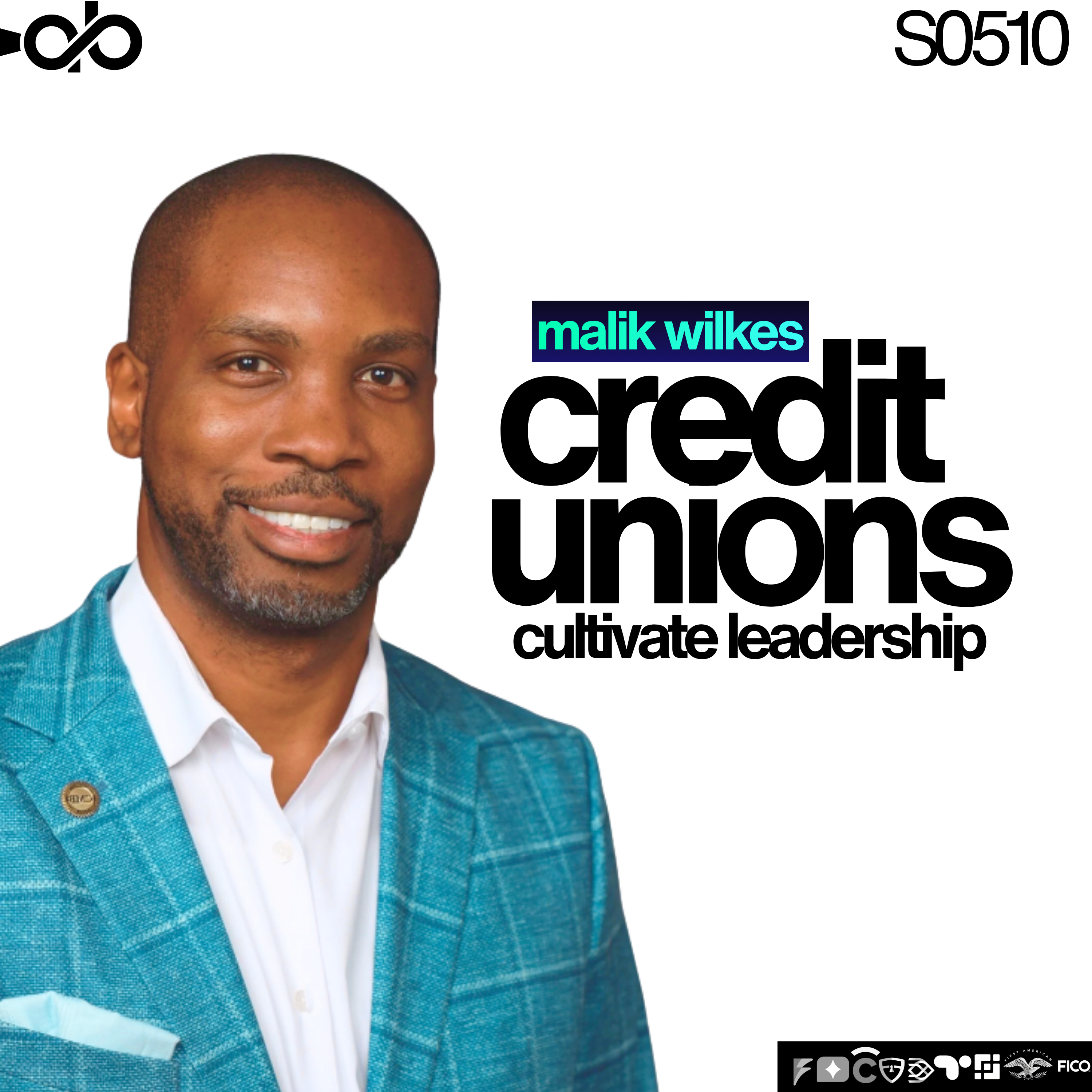
Whether you're advancing your career, scouting for industry leaders or exploring opportunities in fintech or prop tech, you're in the right place. Get ready to unlock the story behind every mortgage. Let's dive in today with Malik Wilkes, who is AVP of product marketing for mortgages at Space Coast Credit Union.
And he is the perfect story for our listening audience. And if you are listening on our audio podcast, please give us a subscribe and a follow so you can hear great stories like this of someone who crossed the wall between production and marketing and who has won on both sides. So he's eight years as a loan officer, as a fellow loan officer that the mics are here on the show.
We understand leading with knowledge of being in the streets is a significant advantage. And he had six years of leading the mortgage origination team as a mortgage manager. We talk a lot about this show, about management.
And then In May of 2025, he made a leap into a brand new seat, the AVP of product marketing role for mortgages. And that has been lucky for me. It's given me access to him. He is out at the conferences and as you know, I always say this show is for those that for budget reasons or maybe the leaders don't want you getting recruited. You can't get out to these national shows. So we bring these national people to you to tell their story. You, you have a great resume and I'll try and get into it further.
But just to welcome you to the show, I think everybody should know beforehand. Your Instagram handle is Malik. You are everywhere with underscore. So it's Malik U Y O U R A R ere everywhere. And that checks out. Like I said, I see you everywhere.
You are very present on the MBA Education Network. And so having credit unions be big part of the Mortgage Bankers association is very important.
You also participate in Namba South Florida where I believe you work with Roy George who's a fellow guest on our show.
And you also participate at FIU on the alumni board. And you're a CMB, an AMP and the Housing Wire 2026 marketing leader in your first year running mortgage marketing at the Space Coast Credit Union. So you started out as a loan Officer and those people who are not loan officer. I'm sorry, those people. Loan officers today not going to the national conventions. You end up with your AMP and your CMB and we have a new rule, no acronym. So can you explain the amb, the CMB and what you wish you could tell loan officers today about that you wish you knew sooner and why it's so hard to figure out that these things are available?
[00:03:23] Speaker C: Yeah. First of all, thank you for the introduction and for that.
That bio makes me seem like I do more than I actually do.
I appreciate the, the kind words but. Yeah. So I'll start off with the, the, the AMP at CMD conversation.
I love the fact that you're going away from the acronyms. So the AMP is the Accredited Mortgage Professional.
That is what I got first before the cmb the Accredited Mortgage professional requires. It's done through the Mortgage Bankers Association. I was going to say mba but I didn't. But it goes through the Mortgage Bankers Association.
You it is a designation that you receive after going through a series of courses that gives you a well rounded view of the mortgage industry as a whole.
I loved it as a loan officer because it really gives you an understanding of what's happening after you're done with your piece of the puzzle. And it makes you a better loan officer because you can understand the mechanics behind the mortgage.
At the time when I was a loan officer, I had no understand understanding of capital markets, no understanding of servicing really. So I did not really understand all those things that happen once the loans closed. And it made, it made me a much better loan officer.
Being able to have those conversations and understand that perspective of them as I'm having conversations with our customers.
I followed that up with CMB process.
The CMB is a certified mortgage banker.
I'm sure you had plenty of guests who have that designation.
It is a more intense deep dive into the industry.
It tests the knowledge overall of the mortgage industry.
It set up to elevate those who are the industry leaders, the industry voices, the industry experts to really display their knowledge and join a society of like minded mortgage leaders who are looking to be big things for the mortgage industry as a whole. So three daughter becoming a certified mortgage banker, I was able to achieve that in 2023 I would. My wife was pregnant and I had to get it done because if the baby got here it would have been a little bit of a challenge just to do the kind of studying that I needed to do to get the temporary mortgage back for designation. So in 2023 I got it done. And I was very proud to walk the stage in Philadelphia at the Mortar Connect association convention that year.
[00:06:20] Speaker B: That's great. I think that it.
Having that type of experience behind you is not only uplifting for. Not only for yourself and for all the knowledge that you're building, but also for our listeners that are out there that are not yet cmbs that would like to try and figure out, you know, what do I want, you know, how did I start? How do I. Where am I at? How do I get to. To what I want to do?
Can we go back in time a little bit and talk about your experience going to FIU and then going to law school? Because nobody goes to school thinking they're gonna go into the mortgage industry. Well, there might be a few, but they're few and far between. Can we talk about your experience in school, undergraduate school, and then going into law school or becoming a cfe?
[00:07:10] Speaker C: Yeah, yeah.
[00:07:10] Speaker D: I,
[00:07:12] Speaker C: I was very active student at fiu, involved in student government, into the political side of the university and running for office and all that stuff on campus. So I, I had a strong desire to take that into the legal field and go into law. And actually I was really interested in learning the, the nuances that you learned in law school and took the, the all side, got ready, was. Was getting ready to do everything that I took that internship. And it's one of those things that it's not what, what you see in, in the law movies where, you know, the lawyers, the, the glam of the lawyer was a little.
Had the internship and I realized it wasn't for me.
So I had to make a pivot at that point.
And I did.
I, I did take on a job working as a, as a mortgage broker shortly after graduating college. And then I didn't work out.
It wasn't the right.
Wasn't the right time in the, in the industry to be a new loan officer, for sure. So. And again, I had some things that I needed to improve on as a salesperson overall. So then I pivoted and started working for Carnival Cruise Lines in South Florida. Here in South Florida, and did sales there for a while.
[00:08:48] Speaker B: I want to go on to. What was your. What was the emotional impact?
Because I want to make sure that we're connecting with our audience here. What was your emotional impact in going from school to coming a mortgage broker and then having that experience however you thought it was supposed to be? Because a lot of our listeners who are, who are originators are trying to figure out, especially what's happened over the last three years, do I want to advance, like really go forward or do I want to chuck it? And then going from Carnival Cruise Lines and then going to, and then coming back into the board. What was your emotional feeling like at one of those junctures?
[00:09:27] Speaker C: This is a very good question.
It was a difficult time for me because I am, you know, you go to school, you're thinking that you're going to do become a lawyer. You spend all that time doing that and then you decide that hey, this is not for me. It almost, you go through a struggle thinking that I just waste these last four years going to, going to college and doing all that.
Definitely an emotional time. When I got into mortgages that time, it was, it was really about getting a job. It wasn't anything that, hey, this is something that's calling for me or this is speaking to me. I just wanted, I just needed work at that point. You know, not a college that didn't have much money and I was looking for something I can make money on. And then, you know, at the time, everyone's talking about how much money you can make in mortgages and all that and had friends in it and decided to give it a try. So it wasn't, again, it wasn't something that I was looking to make a career out of at that point.
It was just, hey, let me, let me get some work, get a job.
Then, you know, the market started shifting and I, I had to make another change to make money. So I, I, I shipped it over to Carnival Cruise Lines and went and did sales for them.
Learned a lot there. Learned a lot working at Carnival Cruise Lines because it's a different type of sales, right? So you as mortgage originators, you are really helping your consumer have a place to live and actually achieve the American dream.
Selling cruises, this is not something that people need. It was just, this is the luxury, right? So it, it's a much more difficult sale because you really have to connects people to that experience. It's, it's something that really helps me in my current or coming, coming full circle in marketing because of the fact that I was using the experience of the cruise and you know, the things you do and putting people in that place, placing them on that cruise ship. As I was selling those cruises, I really understand, it was starting to understand consumer psychology, which is very important for my current role here as product marketing. ABT is understanding the consumer mentality of what are they thinking of what is going to actually connect with them.
That was really important. Really a good still I developed at
[00:12:18] Speaker A: Cardi B.
I was planning on leaning into that because I do think that is one of your superpowers of going to a place that cares so much about customers and bringing that knowledge into mortgage lending that cares a lot about loan officers being the customers and then letting the loan officers go out there and get their customers right. And we can get into that. But we talked about connection.
I really connected with your story there of.
I was a finance and accounting major and then ended up friends were all making money in mortgage. I went into mortgage right during the financial crisis and you know, you wonder if you wasted the time on all this, the studying, especially when things weren't, weren't going well because the money, the economy was going so bad. And then I had, I mean I don't say this very much but like I, I would have family talks all the time and they, they would tell me get out of this industry. Like what are you?
Not only the association of it, but the working on drawer and making 25 grand a year. But I was, I was building a book of business and I felt it.
And somewhere along the line in my life I fortunately have fallen in love with the process because if I fell in love with the end piece or, or the position or the title,
[00:13:49] Speaker B: I
[00:13:50] Speaker A: don't know if I'd still be a mortgage. Right.
[00:13:52] Speaker B: So
[00:13:54] Speaker A: did you, when did it click for you, the process? Was it like halfway through Carnival that you said you're acquiring these skills or was it when you went back into getting into the credit union and seeing room for growth in leadership beyond just the sales transaction?
[00:14:11] Speaker C: Yeah, I would say it was. When I came back at Carnival I kind of hit a point where I felt like I wasn't going to grow anymore in that position.
Were there opportunities to grow within the cruise industry? Absolutely.
Just wasn't for me. I just didn't feel like I didn't feel connected enough to, to the process to want to continue.
I really, really honed in my skills at this salesperson at Carnival and I was doing really well and I had some really good years even, even when things were really bad in the economy. I had some really good years at Carnival.
But then I obviously became about. I had a friend who, who worked for the, for their credit union mentioned that they were hiring loan officers. And this is our credit union expanded from central Florida down to South Florida was a privileged merger with a credit union that had some, some struggles post, post financial crisis.
And we expanded down into South Florida where I, where I lived. And they were looking for loan offices in South Florida and friend of mine knew that I did it before, knew I had some experience in it and said hey, you should, you should check it out.
Funny thing is, probably wouldn't have done it but the credit union, Spaceless Credit Union was the official credit union of Carnival Cruise Lines of the time. So I knew other employees of the credit union and they were always, always seem happy where they work. They always seem to be really, really enjoying their work day. And I was, I thought, hey, let me take this opportunity and try it out.
I got in and again coming in I still had the same sales driven mentality and that was my focus.
But then you start to actually, I believe and this is the difference, I think with me being a loan officer at the credit union versus when I was in the broke loan, the connection I had to the leaders and being able to hear their perspective of why we are doing these things, why are we introducing these products, why do we have these rates set at this level?
I did not have that level of access before and I think that's a unique thing about credit unions is the level of access you have to upper level leaders.
And that really gave me that connection, that click that we talked about where I decided, hey, this is what I want to do.
The rest is history.
[00:17:09] Speaker B: Do you think I know that you went and had access to the leaders within the credit union and based upon that I'm sure that it was extended to you to be able to ask questions. However, do you think there for the rest of the originators that are out there, do they ask enough questions for leadership to not only advance themselves but advance things for their customers so they can get well informed and well rounded not only for their trade but for the entire industry?
[00:17:39] Speaker C: I mean, no, I don't, I don't think, I don't think, I don't think we asked enough questions at all. No, I do think that it will benefit them over benefit the consumers will benefit the conversations they have with the referral partners if they did ask the right questions and they asked more questions.
I do think that it also puts you in a good light with leadership because you're curious.
You are someone who is interested in knowing and if you're interested in knowing and you have an understanding, it's going to make you better at your position. So I think if you are looking to advance, move up, build your career, asking questions is very important. And I don't think we as it as loan originators, I don't think we ask enough.
[00:18:27] Speaker B: How do you teach that so you can Effectively communicate with your team.
Because if, because sometimes loan officers, it used to be where you would peer over the cubicle and say, hey, I got a question for my processor, I got a question for the underwriter.
And now we use teams and so on and so forth. How do you effectively draw out better communication for your entire team so they can feel confident in asking questions? And for you, it leads to more questions with the borrower and maybe cross selling CDs or auto loans or this, that and the other. So there's a whole downline of questions and answers in operation. How do you create that environment?
[00:19:07] Speaker C: Yeah, it's way more difficult. Now, to your point, Mike, where we're not in the office together and hey, lean over, or hey, let me walk over to my manager's office and have that conversation. I'm in my office. There's hardly anyone here today. I mean, there's probably one loan officer here in the building right now. So. So it is, it is, it's difficult, it's difficult to have that. And I think it's. It, it may, it's definitely hurt us in developing the newer loan officers. We had a lot of loan officers in this business right now that started during the COVID time where things were kind of relatively easy. And I think not having that mentorship for someone that they can reach out to has made it difficult for them. As far as what I've done, One is as a, as a upper management leader now, I, I make myself very available.
I, I try to be in office as much as I can so I can see different, different loan office officers, different processors, different folks around. I will even go and sit with them and like, watch what they're doing and hear, hear what's going on.
And it's, it's for two reasons. One, I have insight that I can provide, but the other reason is I can run a lot too. I'm hearing what the voice of the consumer is right now because they're still, they're still having those conversations. I haven't originated the loan in years, right?
So they're having those conversations and I need to stay abreast of what's going on, what, what is today's consumer dealing with? So I will sit, listen to conversations, watch them input applications, sit with a process or watch her process.
I've done that, you know, as recently as a couple months ago. So it is something that I think is important.
And if I'm doing that, then they're going to feel very comfortable asking me questions.
[00:21:11] Speaker B: So how do you get that all done. You have your leadership, your MBA coach, Aaron Amba, Florida National University Alumni, young family with kids.
How do you find the time management to get all of this done?
[00:21:24] Speaker C: Yeah, you have to prioritize certain things. And this is to me very important in my role is understanding what our team members are dealing with and what the consumers are dealing with and what's the struggles and what's the pain points in their process and what is going to connect to them. So I mean again, I'm very organized. I stick to my, to my calendar very well. I have a constantly moving task list.
I block out time to. My schedule is generally blocked out between meetings.
Time that I'm going to be doing these observations, time for a personal development training, things of that nature. And just like anything else, you know, again, I try to find this as much time to squeeze as much out of the day as I possibly can.
I'm just, I, I heard a quote the other day that discipline is not something that people are born with. You have to kind of continuously train yourself to be disciplined. And I really believe that something that I have to focus on, it has to be top of mind that you are going to be disciplined, going to continue to try to do things right. I go to the gym at five in the morning to start my day because I want to get that done and be ready to see my kids in the morning before I go off to work. And that's important to me. So I get up and go to the gym at 5. So it's just a matter of trying to squeeze as much out of the day as you can.
[00:22:59] Speaker A: One quote I heard people will forget what you said, people will forget what you did, but people will never forget how you made them feel. By Maya Angelou I think one of the superpowers of making them feel, and I know out on the circuit something that associates with you is core connection, operations, retention and education. If we, if we take that C Connection. I think one of the superpowers of that is perspective. And us three loan officers here during the financial crisis. I think one place we have perspective is knowing what it's like to talk to people that are not using a mortgage to build the American dream but are stuck in their home because of the mortgage. I remember during that time and life gets hard when you can't move and your family's expanding or you have a new job. I think that gave perspective on the importance of mortgages and what it means beyond just the transaction.
What on that C. How do you connect with the members and Build relationships in your perspective for Space Coast Credit unions members?
[00:24:12] Speaker C: Yeah, I think, you know, what you said there was so true.
That time period when I came back into mortis was very difficult on our members. You had a lot of members who were in real, real, real tough times, could not move, could not keep up with payments.
A lot of HARP loans as, as I'm sure you guys had at that time, too, to try to get people into a better situation. I just remember that time being, you know, so that's such a connection to the members at that, at that point and understanding what they're going through.
But, yeah, for me, it's always been something I've been good at is connecting to people.
I said in my original piece when I was a mortgage broker, I was not the best. And the reason that I was not the best is because I was good at connecting. I was always good at that.
I just wasn't good at moving that connection into, you know, a low, a loan application.
I think Carnival helped me in terms of that piece of getting, getting people, getting the conversation to go in that direction. But for. And the difference with the credit union for me was that it wasn't all about.
In terms of my performance, was it all. It wasn't all about, hey, did you get them or did you. Did you close that deal?
It was, did you help that member?
Right? Would you. Did you really get that person into a loan that's really going to help them better themselves and better their financial situation?
And it's okay if it's not right now for that member and if it isn't right now for that member, are you having conversations about how to get them to the point where they can achieve what they're looking to achieve? And for most of, most of the members that I'm feeling at the loan officer, it wasn't about getting wealthy or growing their financial portfolio. It was really, hey, I want a home and a roof over my head for my children. And, you know, as a father, you connect to that. So you just, you really understand it.
You connect with them. And again, you try to do your best to put them in the right situation for them.
[00:26:59] Speaker B: Speaking of good situations and better situations, Mike, of course we can't move on in our show without the love and help from the sponsors that we have supporting us. And I think that this is, this is a great time to go to Segue before we move on to the next part of our show.
[00:27:17] Speaker A: Yeah, let's hear from our sponsors and then on the second half, we will find out some of the tactical ways that Malik is engaging with his members so people can learn. Go to Market Strategies.
[00:27:35] Speaker D: Verifying income for all your applicants means you need roughly 23 different vendors and waste hours and hours of your team's time.
Truart combines all major verification methods into a single easy to use platform to give you a completion rate of 75%, cutting your cost by up to 50% and getting real results for your team. True Work your one stop shop for income verification.
Click Verify Repeats. Talk to our team today.
Cyber and Wire Fraud can you afford the risk? Today's automation and technology based trends demand solutions to fraud threats. Funding Shield provides lenders and investors real time transaction level verification Certified wire fraud protection to protect loss of funds at closing due to cyber based and other threats. We help improve your bottom line through fraud prevention, risk management and validating the parties and documents involved in mortgage closings. Prevent fraud and theft on your closings Covered is the digital insurance agency built into the mortgage platforms you're already using.
Covered compares options from 65 regional and national insurance carriers and delivers the top options to your borrowers right inside your existing workflow.
Visit itscovered.com to learn more.
[00:29:05] Speaker A: With tru, we help you understand borrowers so you can help them as you grow your business.
We stand for truth and trust because our AI powered technology leaves no stone unturned.
No data point unchecked so you can make the right decisions and your customers loans can be approved faster.
Lending Intelligence True.
[00:29:35] Speaker D: 5 minutes that's all Addy AI needs to prep a CTC ready file. TDS income calcs done w2s 1099s bonuses ot Addi AI handles all of it. Gain hours back, rack up referrals and grow your pipeline faster. Funding fatter pipeline addy AI 5 minute processing power. Your shortcut to scale starts now.
[00:30:01] Speaker C: When UAD 3.6 hits November 2nd, your pipeline can't afford probably ACI Sky Workbench gives your appraisal partners one connected cloud based workflow built for the new UAD data set. From day one inspection data report all in one place so nothing falls through the cracks.
November 2nd is right around the corner. Don't guess no get your free UAD readiness checklist designed for both lenders and appraisers.
[00:30:47] Speaker A: Let's jump in with Malik Wilkes on the O in his core operations.
People love to assume operations is just underwriting, but in marketing I think it's one of the most difficult positions right now in mortgage because you have two customers, the loan officers and your members.
You have the old school approach of we need more open house flyers with no data tracking ability. And then you have the new wave which is a couple pieces. One is just getting your face on social media self branding. You have an amazing story walking around and really doing that kind of like we talk about with our podcast. Once you get enough episodes in, it's almost like you can't stop and that's when you, you start to realize the value.
But I did want to give you a chance to just paint the whole canvas. You have an award winning machine where you've been able to look at marketing type data and figure out how to have a an acquisition model.
I think the article said $3.23. Whether that's right or not. You figured out how to help your and monitor your total 24,000 members who I believe own homes and figure out when there's a great tool for them, that the credit union has a great product for them. And you use all the same social media that you're telling people to get their face and personally brand. So it's like reinforcements have arrived.
You talk about managing a lot of things. Can you just talk about the state of marketing today as an industry, what it's like at the credit union and what you think the future focus best use of marketing dollars is in the future?
[00:32:32] Speaker C: Yeah, great question. And I do think the industry, the mortgage industry is developing in this area. There's some really good minds in marketing in the mortgage industry right now.
Way better than what we've had in the past. I really do think that we're seeing some real investment and a lot of these ideas that I implemented in the credit union world is because of the first letter to connections that I was able to get. Being out there, meeting people at these shows and whatnot. But hearing what they do, I'm kind of just taking people's brains and I've been lucky to build a great network of mortgage leaders that I can always rely on for help. But yeah, we really focused on changing what we currently do and what we currently spend on or just getting to the grassroots and actually starting from the beginning. So my position is a little bit different than this. A strict marketing position because of the fact of the product piece of it. Right. So I am still, there's still parts of the product that I have that I touch and that I have controller and it allows me to look at the entire experience that that member is going through.
How are they engaging with us from beginning, what makes them aware of us and that we offer more goodness, how do we get that awareness to them at the right time so that they are open to using us as a mortgage partner?
We did a lot of just kind of what I call spray and pray. Like you just put a bunch of stuff out there and kind of hope. You kind of hope that someone sees it, catches it and just applies and you know, it worked and it was, was it helped. But I do think that with a more focused approach, you can spend less and still drive more, spend less of your marketing dollars and drive more business. And not just any business, but business that are not just clicking because they see an ad and it looks interesting. But people who have the intention of, hey, this is something that I really need.
Let me look into this and dig into it.
So we started to see those numbers and I'm not going to get into the numbers because they're kind of meaningless, but you see those numbers start to tick up and it's viewed because of the fact that we were so focused on things. So we started even from we do some Google Ad marketing, we started looking at what are the keywords that we're using to attract people to are to us and to our websites and to our application pages. And when they're landing on it, what are they reading? What is the information that they're getting? Is it something that they can digest? Is it litten in too jargony away? Is it something that you know is too much into the weeds looking at those things and really trying to figure out how to make that entire experience from start to finish. And when I say through finish, I am focused on even the loans that we service all of our mortgages.
So how are we communicating with those members as well? Because that is, we talk about this in the mortgage industry all the time. But that is an area that as mortgage companies that do servicing the amount of members or consumers or whatever, whatever you, whoever you are, you know, whatever you call your customers, the amount of people that do not come back to you for the next transaction is staggered. And it's because of the fact that we're not communicating to them well.
And we don't know when we're going to transact again. We don't know when to touch touched it again. And it becomes a situation as services where you're only reaching out to them when it's as Robert or something goes wrong and then for that then why would I come back to you? You know, so it's just, it just that whole process is involved in my view of marketing from the product marketing standpoint. So We've done a lot, we've done a lot to try to really engage with our members and try to bring them home in a very easy succinct and something that actually communicates to them and their psychology.
[00:37:34] Speaker A: I'm going to just ask a quick in the weeds question.
Obviously I find like Facebook and Google Ads intimidating.
Do you think more marketers will outsource that or. You're a self learner and we heard all about all the ways you teach yourself and educate yourself. Is it not as hard as you think? Did you teach yourself to use contractors? How do you learn that to do that?
[00:38:02] Speaker C: Yeah, we, we, we have a, an agency that we work with at the credit union that helps us with this.
However, I will say this, agencies are marketers, they're not mortgage professionals. Right. So you have to have an understanding of it in order to direct and use whoever you outsource to the right way because of the fact that they're, they're thinking of it from a marketing perspective which is very, you know, wide standing. There are certain things that the three of us will know from originating mortgages about consumer psychology in mortgages that they will not and they will never.
So if you do not have an understanding of what they're doing, it's going to lead to a lot of wasted funds. And this is what was happening.
They were, there was some spend happening but it wasn't directed in the right direction because they just didn't understand the mortgage product and the mortgage process and the, and the, the mortgage consumer psychology. So it was important for me to learn it myself so that I can help our agency get us to the place that we, we need to get to. So not that hard to learn. Could you do it yourself? Absolutely.
What the agency does is that they spend a lot of time and effort that if that is not your only job, it becomes very difficult to keep up. Right. So you have to make sure that you're constantly watching it. You're watching your cost per click. All those little things that, that can add up in beauty, you know, throw you off. Are you getting the right type of consumer? Are you creating the right type of audience with the ads that you're putting out there? And it's stuff that you can learn but you keep up with it especially if you have a large, a larger shop. It's a lot of work. It's a lot of work. So I did learn a lot of it myself for the purpose of being able to have this compensation.
[00:40:19] Speaker B: There's a lot of self education, personal development when it comes to becoming a great leader.
And as part of being a great leader is also, how do you know, we have marketing, we have sales, we have operations.
How do you keep great people on your team? I mean, as much as you're educating yourself, there needs to be some. You're only as good as your slow person on the team. But how do you also bring your people along for the ride to retain them?
[00:40:51] Speaker C: Yeah, I, I fully believe that. You know, you really have to be able to pour into your people and kind of meet them where they are. Right. So we are, as a, as a workforce, they're, they're just, especially in the mortgage business now.
You know, we have a, some veterans that have been doing mortgages forever, that they just, they have a particular set, set of ways and kind of know how you have to communicate with those folks to kind of help them along the way, you know, and it's. They may not be as eager to learn new things.
Those are the folks that are not as eager to jump on social media.
[00:41:36] Speaker B: Right.
[00:41:37] Speaker C: You know, they may not be as eager to pick up an AI tour. Right. So that you have to kind of really work on showing them how it can be done.
And it doesn't mean that you are completely going away from the person that you are and it could help you be more successful and be giving them, showing them firsthand. So this is why even though I don't originate, I haven't originated loans in a long time. I still post things on social media. I'm posting mortgage updates on my, on my, on my Instagram.
It's not because I need the, you know, the exposure to get more loans. That, that's not my role right now. But I want people in my organization to see me doing it and say, hey, yeah, can do it.
I should be able to do it as well. So that's why I continue to do those types of this.
But then you have your younger generation where they're very eager to learn new things, they're very eager to do that. Just need a little bit more direction.
So you just really understanding who your team is pouring into them, making sure that they understand that you're there for them. You're going to help them get to where they want to go. And if you're focused on that, I think people appreciate it. I do think that, you know, you're going to have people wherever you are that's going to, you know, find something else that they feel is better for them, better fit for them, and they're going to leave and that's, that's, that's okay.
I think most people, if they feel like the organization and the leaders are behind them and support them and they have a voice, they generally are not going to leave. And it's very important for us at the credit union that we retain our team members because again, they understand us, they understand the culture, they understand our members.
And that is an important skill and we need to make sure that we keep those folks happy and motivated.
[00:43:56] Speaker B: I want to go back to comment that you made about eight minutes ago.
It was about following up with customers and I want to talk about something about my personal experience in mortgage originations recently is that I do a lot of follow up after the loan closes. I'm still following up with like a year from now, a year and a half from now. And, and what I've learned about that is that every time I make the follow up post close and I'm, and the, the referrals are much greater. The, in the referral sources become greater and then even more so. My education about what the homeowner has done in debt, in property improvement and the people that I could refer out as a result of the, the post close experience becomes greater. And I think that investment into the education of the homeowner as well as the investment of education to the team becomes important because it shows that you care which is a part of the retention, retention process.
So the question that I have for you, for you in education is in what role does education play when you serve your borrowers through the postcode process and then how do you develop your team through that in education so they can get on board with understanding not just the sale portion, not just, not just with the operations portion, but also post close developing the team.
Now that you have this retention style which I can definitely see in the way that you're running operations, how do you develop that so that you can educate your entire team?
[00:45:34] Speaker C: Yeah, very good feedback, especially with your follow up and the referrals that come from it.
And this is what I tell the loan officers as well is that he, you stay in touch with those folks and maybe that person never buys another house, but they know that you care about them, they know that you took care of them and that that will lead to more referrals. It also keeps you top of mind. And this is the great thing about social media is that if you are putting yourself out there, there are so many loan officers that I know that have so many connections on social media that have no idea what they do for a living. And that's just to me, blows my mind, right?
They should, should know that you, this is what you do. And if they have a question, they should be able to come to you. And it's a trust factor. It is a, that you're just helping out your friends in that situation. If these are people who, your friends, you are, you are a trained professional. You should be able to help them with questions that they have. I have a friend of mine who moved out to Texas and we don't originate in Texas, and called me and asked me questions and was, hey, we're looking at buying this new build. And I ended up answering all her questions and then connected her, connected her to a loan officer that I know and trust in Texas that, that was able to get, get her into her house.
But she will call me if there's someone in Florida that needs a mortgage. She's, she would, she will, she will call me and she will refer it to me.
And that's just because of the fact that I'm putting myself out there and I post myself on social media talking about it. So yeah, it's huge. Educating people is important.
This process is not simple. It's not, it's not easy and there's a lot of misinformation out there and there's a lot of things that scare people about the process.
And when you break it down, it is not that difficult of a process.
We sometimes make a little, make it a little too complicated, but we are able to explain it to people and educate people in a way that they understand it and they feel comfortable through the process. And that I think that is the most beautiful thing about being a mortgage originator is having someone who is so nervous about this process and am I even able to do this? And you can kind of just be that guiding hand.
It's an amazing thing.
As far as the team educating, again, we, I'm a big proponent of that. You know, as Mike mentioned, I'm a co chair of the Mortgage Bankers Association Education Network. I think it's a well educated industry that makes this a better industry as a whole.
And I am a huge proponent of that. So we focus a lot. We have our learning and development areas here at the credit union that has a mortgage division that focuses on mortgage training. They do mortgage training sessions a few times a month, some voluntary, some are not voluntary, but some of the voluntary ones are things about that are not your specific role. So we'll talk about capital markets, we'll talk about servicing, we'll talk about, you know, lost myth and have those conversations and as a loan officer you can go and learn about that and that just makes you better, that makes you more able to provide education. And when you make those follow up calls, if someone's going through a challenging time with servicing or they happen to have some, some issues, you can talk about how to, how to get out of that and how to help them do that. And that really makes you a more valuable asset to your, your customer base. So yeah, huge, huge lever in education and I think what would the resources be I have out there just plenty of room for it.
[00:50:01] Speaker A: And I think that education and the wealth of knowledge of the leaders that we hand pick to be on the Mic Duck show, they are valuable and very educated. So if you're a listener you should like and subscribe to this so that during your mortgage journey, whether you're looking for a mortgage or you have a mortgage and you're you have a question about your servicing statement, a great place to start is just leave a comment on one of the episodes that you connected with somebody on and we'll help get them to you. They are more than willing to educate. And if we have too many questions that's a great problem. Or adopt the brand media.
So two questions to go. One is just tactical and then one will be fun and appreciate you coming on.
My tactical question is as somebody that talks to a lot of executives in mortgage and now a lot of banks and a lot of credit unions, I was stunned early on to see that sometimes the home equity loan department is not even under mortgage. Sometimes it's under consumer lending.
I think we're going to see a shift with equity being there's so much equity right now in America.
There's so many people with rates that they don't want to touch. There's liquidity in Wall street now for second lien. So it's not like you have to portfolio all of them.
Can you just explain to people in the industry or people looking for jobs at credit unions why home equity is not always under mortgage? And do you think it's going to change?
[00:51:46] Speaker C: Yeah, I do expect it to share.
I think home equities have been looked at as an actor God for a very long time and I've obviously that indicated it's a mortgage.
That's what it is. But it is with something that you know you'll, you'll run into a lot of leaders and executives at banks and credit unions that do not view it that way.
I do think we'll start to see, see more of a shift with it.
As, as you said, Wall street gets more involved and you start to see more opportunities. And we even had Freddy with their big stacking product that they have. So it's just like you're starting to see more action in it.
So you're going to see more of a shift. One of the things that we shifted immediately was kind of pulling out that after thought of home equity in our marketing as well, we did not really have any standalone marketing assets for home equity. It was just kind of lumped in as like an almost like an extra, you know, piece. And that was something that we changed as well because there are certain people who really, that's the product for them and we really need to focus on and you have to have someone who is looking at that product as an opportunity for, for growth for you and for your, your membership. So we're kind of lumping in and just, hey, it's a good consumer. Hey, it's a difficult app without mortgage.
You'll start to see that go away, I believe, in the near future. Because record equity, every, every time I, I see the, you know, the, the reports of the, the equity, the nation's equity is just going up and up and up and I, I don't see that changing anytime soon. So you'll start to see more.
[00:53:52] Speaker A: I think that's so relevant.
I'll tell you something else relevant, the dynamic part of this show. I actually am lining this up as soon as I get off. I have family coming over. We have some family in town that we haven't seen in a while. And we did a little research ourselves and we saw on one of the shows you said ham over turkey, sweet potato pie with Cool Whip and Mac and cheese is a holiday dish.
Can you defend one of those three in 10 seconds. And any final thoughts and anything you want to tell us about Space Coast Credit Union or our listeners?
[00:54:30] Speaker C: Yeah, I'll, I'll, I'll run through that quick. I'm going to say I'm going to do the Mac and cheese. I said if you don't have Mac and cheese, it's not a holiday, in my opinion. You got to have it. You know, it's, it's a staple.
Got it. It's got to be there. Or if you don't, then we're not really, they're not really eating. Right. So that's just to speak.
[00:54:48] Speaker A: Well, like with some, maybe some toppings or just straight Mac.
[00:54:54] Speaker C: No, you have to have, well, I
[00:54:56] Speaker A: mean, or anything like that.
[00:54:59] Speaker C: It's up to you. Whatever your, your, your what you like.
As long as you have at least a basic Mac and cheese then, then I, I can be invited. Otherwise, just don't, don't both just don't call me, you know, so, you know, if you don't have the Mac and cheese.
But yeah. So last words about the credit union again.
And I go to a lot of the credit union leadership events before the curate and we just had the conference in July here in Florida. Beautiful conference. Best attendance that I've seen at the Florida Curian since I've been going. And that shows that the credit unions are really focused and, and are pushing in the mortgage world and really focus on the mortgage, mortgage verticals and that's important.
We need to continue to see that.
And I'll be at Acuma next month and I'll be speaking about leading in the remote world. I have a session that I'll be doing with Ralph Remy. Ralph Remy running the session. But we are, we're getting more active, activated. We're focused on it. We're getting specialized leaders in credit unions for mortgages. You're starting to see more mortgage elite credit unions taking education very seriously. More cmbs in the credit union space. So I'm excited, I'm excited for what we're doing here at the credit union. We're just starting again with me being in this role. There's a lot of things that I want to see us do.
So there's going to be lots of changes that we're going to be implementing. So the next time I'm on I'll have some more, more things I can tell you.
[00:56:49] Speaker B: Malik, I have one final question.
Just finish this sentence.
Five years from now, Malik Wils is everywhere and also that, that, that. Finish that sentence in less than five seconds.
[00:57:04] Speaker C: Malik Wilson is everywhere and also at every one of my child's events.
[00:57:16] Speaker A: Beautiful answer. Thank you to the audience. You get to see the great people we have on here. Thank you Malik. And tune in and again give us a like and a follow.
[00:57:26] Speaker C: Thank you.
Appreciate it guys.
[00:57:29] Speaker A: Thank you for joining us on this journey into the heart of mortgage innovation. Every mortgage has a story and we're here to help you write yours. If you enjoyed today's insights, please subscribe, leave a comment, share it with your network and connect with us on social media.
Until next time, keep pushing the boundaries and uncovering the stories that drive our industry forward.