Episode Transcript
[00:00:00] Speaker A: Hello and welcome to season four of the Mic'd up show, where every mortgage has a story.
This is the ultimate hub where the hidden stories behind the mortgage industry come to life.
[00:00:11] Speaker B: I am Michael Kelleher and good morning from where I am. I am Michael Zhao.
[00:00:15] Speaker A: And in every episode, Mike and I, we dive deep into the entrepreneurial spirit, the strategic insights and the breakthrough innovations that built the world's greatest mortgage companies.
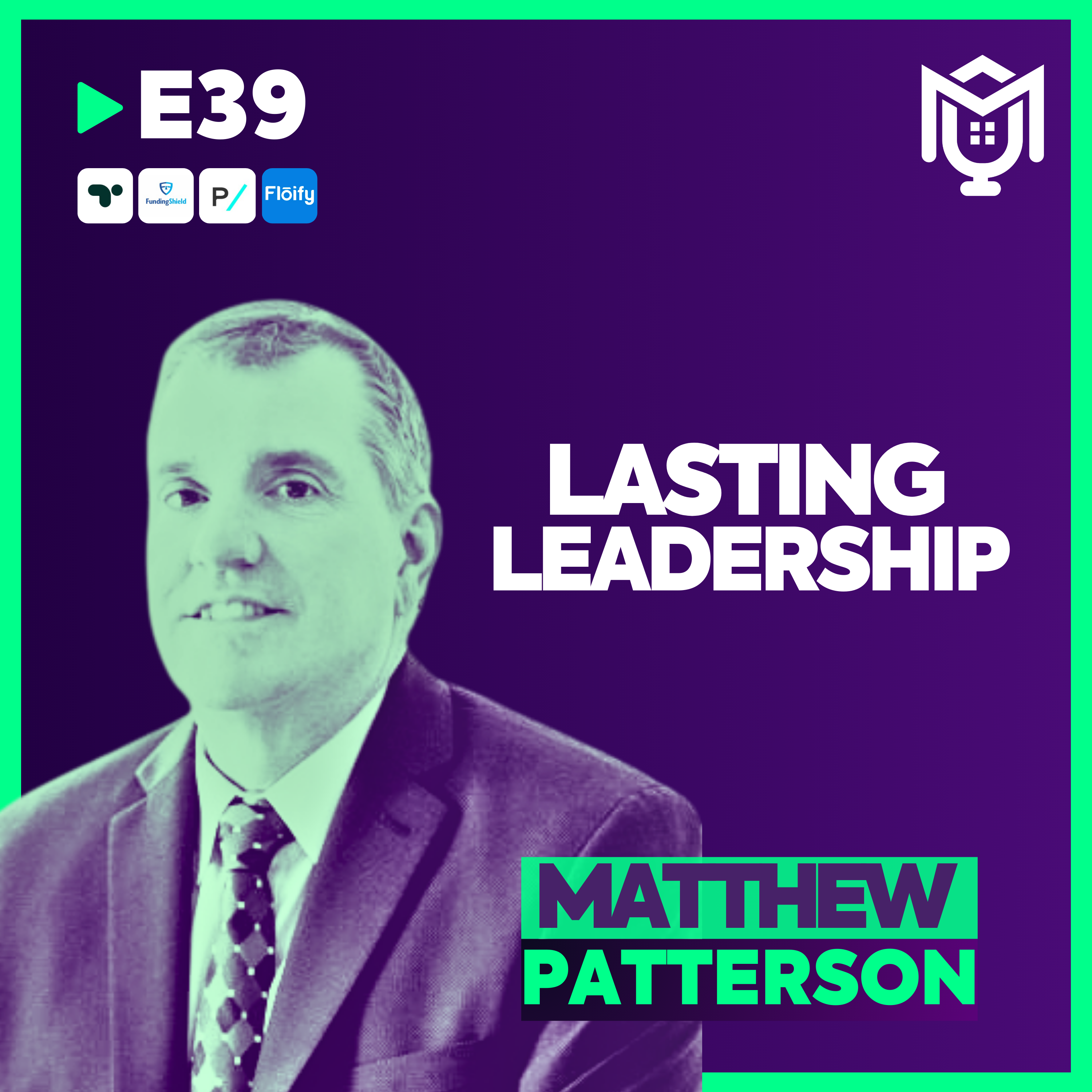
So whether you're advancing your career, scouting for industry leaders, or exploring opportunities in fintech and prop tech, you're in the right place. So get ready to unlock the story behind every mortgage. Let's dive in with Matthew Patterson from First Alliance Mortgage.
And before we begin today, Matthew, I said the, the industry that has not seen enough of you. So I'm glad you came on the show.
I said that you spoke at the New England conference up in Newport with a great panel.
So maybe via that conference and, and via that panel, do you want to just quickly introduce yourself who you are and remember our target audience? If you listen, and we know our listeners down the road, and even listening today on the podcast and all the streaming, it's that loan officer processor that says, one day I'm going to run a branch, one day I'm going to region or one day I'm going to be a top 10 lender. We have shown on this show it is all possible.
I think you're a great example of consistency matters in this and patience matters. But do you want to talk about.
[00:01:33] Speaker C: Just.
[00:01:36] Speaker A: Who you are, where you are and maybe a little bit about that New England conference to get us warmed up?
[00:01:41] Speaker C: Yeah. Well, thank you for the opportunity to speak today. I definitely appreciate it.
Where I met today is at First Alliance Home Mortgage in Cranford, New Jersey. I've been here for about a year and a half. Where I've come from is I started in the industry in the early 80s. You know, Wells Fargo and a subsidiary of them is where I started. And then I progress through a few companies over time and, you know, it's kind of led me to a position where I've done almost every position in the mortgage industry other than secondary trading. But, you know, key for me is really trying to help sales growth, company growth and thinking about the industry more from a three dimensional aspect than just a straight line between the borrower, you know, and a closed loan.
[00:02:24] Speaker A: And 40 years is a long time. You've actually been in leadership for a long time.
What has made you stay and what drives you like over the next five, ten years? What, what has you with as much energy as is really anybody. That's what I noticed about you. You got a lot of energy in this and you think you've kind of just begun with, with where you see expansion going.
[00:02:47] Speaker C: Yeah, I was at a roundtable a few weeks ago and somebody that worked with a while ago came up to me and said, man, you just blow me away. Like your energy kind of keeps rolling. So I guess I have to be thankful that I have that energy. But you know, sometimes in life there's just something that really fits your Persona. And so more each has really fit my Persona. You know, I, when I started, I literally was successful immediately, which was really cool. I mean, I took a few brazen chances.
So like I, I went into real estate office that was one of these big mega offices in the very beginning of when mega offices were coming out in the 80s. And I went in there and I wasn't getting any business and I was like bothered at myself. I'm like, I'm calling on this office for like five months and I'm alone. This is ridiculous. How can they not ask me to do a transaction for them?
So I literally walked in the office one day, stood on one of the desks in the middle of this like 60 desk office and yelled out, hey, if you think I'm crazy, send me a loan. Because as crazy it is for me to do this, you know, I'll be that crazy for your borrower to make sure they get to the table. So it led to a kind of a healthy and interesting conversation with the broker owner. But then I started to get referrals, so it kind of, it kind of paid off. So I would say that, you know, being a little bit brazen sometimes, I don't know if I would recommend that in today's. I don't telling my salespeople to do that today. But I do think you have to have a bold energy about yourself that makes people want to use you, whether it's to be your mentor, your leader, your loan officer, you know, et cetera. And so in each phase of my career of what I have done when I was an originator is really poor energy into the borrowers, the referral sources and those around me. And then I translated that as I went into working to work with sales staff in different departments, running a company, etc.
[00:04:37] Speaker B: What do you think it takes today for the, for the salesperson to go okay? You know, we've just experienced X amount of issues or problems and I'm somewhat successful at getting apps into the door, but they're just not taking it to the finish line for one reason or another. And I think that right now there being there's so much emphasis by the borrower. This is a tail wagging the dog situation where the borrower is being told that hey, I want the best rate, best rate, best rate.
Take today. If an originator is just sick of selling rate, how do you get them to the door on the value proposition for the company they work for?
[00:05:15] Speaker C: Well, there are some loan officers that do sell rate and in case like that, when I get a loan officer like that, then I have to just say to them, look, maybe the realization is you need to match your commission level to win on rate. Like if you can't win because your knowledge is stronger, your enthusiasm is stronger, your insight is stronger, your leadership inside the file is stronger, and you've got to win on rate, then I would say to a loan officer like that, then you need to not decide that you need a really high commission, you need a really low commission where you're going to win the transaction because of your rate price point, not because of your other diversified loan officer skill set.
For the loan officers that are trying to win on delivery, you know, knowledge is absolutely a power piece that you have to have. Diligent follow up is absolutely a power piece that you have to have. Likability is clearly a power piece that you have to have. And so many loan officers can make the mistake of having likability inside their organization, but they need to show it outside or sometimes they have it outside the organization with the bar and then they turn around and they get like not nice to the underwriter. So likability is a huge factor that they need to focus in on.
Maybe it shouldn't have to be that much of a focus. Maybe it should be more natural to you. But likability is a key piece also. So knowledge, determination, follow up, likability, there's many facets that makes a great loan officer. And if you don't have a lot of skills, maybe you do have to go with a sharp price and win on price only.
[00:06:47] Speaker A: I would actually say, Matt, you're winning a ton because I looked at it, you started off in towns like Tuckertown and Hamilton and Mariton. So the, the, you've dominated the TNs there at the end. And I talk a lot about winning your zip code. I think the dynamic to win the zip code is about to change.
[00:07:09] Speaker C: I think it's, you have a lot.
[00:07:11] Speaker A: Of tech moving forward, but I think you have a lot of People that are tired, you know, it's been a long three years. So it's a chance to get the market without that competitive loan officer in your area that was once there knowing all this. What are some of the maybe pattern interrupts, referral strategies? How do you help get that personalized in the, in the area?
[00:07:38] Speaker C: Well, I love, I love your win the zip code logic. I call it like your yellow atmosphere or your yellow universe. So you know, when you look at a transaction, I think as I mentioned earlier, we use it so single line instead of three dimensional. You do a transaction, you might have a selling agent, you might have a, you have a buyer's agent, you have a closing person, whether it's an attorney or a title company, you may have a gift owner, you may have an accountant, you may have a bank, you have all these different other individuals that are involved in the transaction. And I believe that you've got to first look at that like, hey, I got this whole three dimensional universe and am I marketing myself? Am I making myself knowledgeable to all those spaces in the universe? Like, one of the greatest ways to get the energy back is to go ahead and make sure more people know what you're doing. Because what's going to happen, you're going to get that referral that's going to come to you, you're going to get that phone call asking you to answer a question about your industry. And, and there's nothing more invigorating if you're truly a salesperson and you truly love mortgages and you truly want to succeed. Look, it's an interactive sport, it's an interactive industry. And so I believe moving forward, immersing yourself in that marketplace is, is a real key. You know, I did this session recently called Selling is Power with our loan officers. And I went to 12 items that they can use to make themselves more known in their marketplace. But it starts with a mindset. The mindset is today, if I'm not working for a gigantic servicer that has a bunch of loans for me to work on retention, if I'm not working for a gigantic lender that's maybe got some joint ventures or some other opportunities for me to get loan, and if I'm waking up every day and I work for a lender that executes the file with grace and gets the deal done, but I just need to get more referrals, then it comes to you and you've got to say, as the originator, what can I do? Well, I've got to make myself know, known in a market space and there's a million ways to do it. But it does take a plan and then it takes an execution and then it takes consistency and then you can go ahead and have yourself well known. It also takes diversity of what you're doing. Some loan officers say, well, I'll do a mailer. Well, a mailer helps, but maybe you didn't do a mailer, but maybe you need to walk into a restaurant and make sure that your business card is posted on the wall. Or maybe you've got to advertise the first time home buyer seminar. Maybe you've got to be on the little league field. Maybe you've got to use a product like Remine or something else that gives you data on that neighborhood so you can make reach outs to go ahead and try and get lending opportunities. But I think it starts with recognition, like any great thing in life is what's my plan, what do I recognize, what do I have to do? And then build it from there. I call the Loan Officer universe or the Loan Officer atmosphere. And if you go ahead and take your technology products and look at them on how one influences the other and then how my actions inside my local community account and how the rolling of different diversified actions will occur, I will become very well known in my area. And that is how I'm going to out compete my competitors and that's how I'm going to take technology to back me. But I've got to bring my Persona into that space.
So that, that is my push. That's my own. Your zip code.
You know, look, I could talk in this topic forever and I'm not going to do that obviously. But Mike, I love, I love that message that you've been sending Matthew.
[00:11:13] Speaker B: What I think that we're going to talk about the story within the story just for a few moments here. And I think that it's important that not only do we get the point of view of owning your zip code, but we get some context of some of the history that you've gone through so that we, that originators who are in their zip code area, they don't get caught up in the minutiae of national news, but it's important for us to know what was going on. So when you were in high school, growing up, during that time period that was around in the 70ish time ish or so, the United States had just come off the gold standard and it probably didn't mean much to you when you were 18 years old.
Right.
But you know, you had, we had lines for gas, hyperinflation of all things, inflation. And you're just now, you know, into the 80s entering into real estate. What were your thoughts and feelings of inflation during that time period? Because there's been a lot of talk about it lately.
And so what was your mindset in entering into real estate with inflation? And then as you entered into the 80s, it's very similar to what we experienced in the last few years in housing demand.
So can you go back in time and kind of give some thoughts and opinions of what happened and how, how that affected you? And then the follow up question to that is going to be how we're going to be working with originators and borrowers and buyers and sellers and so on and so forth for the future. So go into the 70s and 80s, go into that and then we'll lead it into the 90s and 2000s.
[00:12:39] Speaker C: Well, in the 70s I was still in school, elementary school, middle school, then high school.
So, you know, all inflation meant to me was it cost more to put gas in the car to go out on a date where I had to wait longer in line to get the gas in the car to go out in the date. So the 70s is kind of not something I was really heavily thinking about at that point in time. The 80s, when I entered the industry in the 80s, you know, a prime rate of hit 18 and quarter in June of 1982. I started in the industry that fall. And so, you know, high interest rates, although prime, came down a lot that year. You know, I basically, you know, remember going home, say, hey, I'm going to start a job in the mortgage industry. And my grandfather said, boy, like, what a great time to pick because rates are like through the roof. And I was just like, like, well, whatever they are, I'm going to sell it three weeks later. I had like four loans, so I was kind of oblivious to it. I just went out and said, look, if there, if a house is going to sell and there's a mortgage contingency in that contract, then there's a lender that needs to fulfill that contract. And I always took from the very beginning, like the loan officer to me is the center of the universe. If there's a mortgage contract and that mortgage or that real estate contract has a mortgage contingency, then that loan officer in my opinion becomes the center of the universe. Because if that mortgage contingency is not executed on, then that transaction does not close. So I didn't take it from an egotistical standpoint. I just took it From a natural standpoint to say, I'm the doctor in this transaction, in this operation, and I've got to execute for that transaction to close.
So I just looked at it as opportunity. Somebody's got to do it. That should be me. That's just the way it's going. It's going to be. Now, I took some risky chances, like I share with you about going into that real estate office, and I took a few other risky chances.
One of the most risky chances I took was the first loan I turned in. I noticed I was just trained on tax returns, and I noticed it was fraud on the tax returns, the very first loan I wrote. So I immediately went to my boss, I called up the borrowers, I drove to the house and sat him down and said, hey, this is like, this is fraud. And just confronted them face to face. And right from there, it won me a lot of unexpected dividends inside my organization that I just started for, which was always really helpful to me, kind of put some wind behind my sales. Obviously, those buyers weren't, you know, they weren't going to close the transaction with false accents, but there was just some occurrences that occurred and they all worked in my favor. Now, what happened to that time frame is basically, you know, rates came down and about 1985, 86 rates were, you know, very reasonable. And I was just calling up people and trying to sell loans, and one time I miscalled a person and the guy listened to me and he said, okay, you called the wrong guy, but I do need a refinance. We show up at my house tomorrow night and, like, write my loan. I was like, sure, what the heck, I'll do it. You know, to this day, I don't know the guy that called the office that I miscalled back, but, you know, so goes my sloppy handwriting. But I'm, you know, and then we hit the SNL crisis at the end of that. At the end of that decade, and, you know, that was an interesting time. I was at that time now not in a bank. I wasn't working for Wells Fargo anymore. I was working for an independent mortgage banker. And that led me, you know, right to the space of. Did that affect me? No, it didn't really affect us as an independent mortgage banker, but where positive for us was. It was positive because I then started mining other loan officers that were at savings and loans, bank and other executives that had knowledge in the industry that our company, at that point in time, Superior Mortgage, did not have. And that allowed us to bring in talent set because unfortunately, because of their occurrence, they were displaced and that was an opportunity for us to move and take advantage of it. So through that crisis, what happened is some of my competition fell away. Some of the local savings banks, I was able to hire some of those originators and then I was able to bring in some executive talent that helped us and kind of move through that time. I think it was a little scarier time than it probably needed to be.
You know, I think The Resolution Trust Co. Probably, you know, maybe closed a few too early in my opinion. But hey, I wasn't behind their wall. I was on the outside, so. But that's kind of how it worked from my side of the perspective.
[00:16:58] Speaker A: You could tell you're a sales first leader and that is so appreciated in this industry.
[00:17:05] Speaker A: Where did the line first start? Where you're producing and you're leading and you realize you're sort of giving advice to one person to. Now there is some hierarchy just so our listeners may be in a, in a similar position when they're always trying to, they feel like they hit a ceiling, they need to get to that next part. Is a lot of that have to do with routine and like leading the weekly monthly check ins or is it something more in the trenches?
You know, I don't see.
[00:17:37] Speaker C: Well, sometimes things in life happen by evolution and you don't really realize they're happening. So in my case by, for example, that savings and loan opportunity, it allowed us to start to a little build a bigger salesforce. And I, you know, like I got a, I got a gentleman who's helping run a savings and loan bank and then he's an originator for me, like, you know, three weeks later. He was the most overqualified person I ever hired and I learned a lot from him. So his name was Kevin and he was phenomenal. And he went to work for another savings bank a few years down the road and led their lending department for years until he retired.
So that started the, hey, I've got a bigger set now. Once you've got a few loan officers now they're showing up at your door. Now they're asking you questions, questions. Now you've got to fulfill that need now. You've got to have more product knowledge. So, you know, back then there wasn't the advantage we have today. I can't log into Fannie Mae, go search out the guidelines and find a guideline. Then I have to read the guidelines. So I, I went to our CEO of our company and I said, hey, I want all the Fannie And Freddie guidelines, when they come in by paper to come to me and I read all the guidelines before they even made it to the underwriters. So I made a commitment myself. The guidelines come in within 48 hours. I read them and they're with the underwriters. Therefore I never, I was never in a contest with an underwriter where I didn't believe there was a condition that I didn't know equal or more than them on the guidelines. So that was probably, Mike, the beginning point of me moving into more management and more knowledge that was going to lead me to a place of success, you know, another place of success in my, in my career. And so that really occurred through the, through the 90s. And I was running a pretty healthy sales staff by the time we hit, you know, the year 2000. And we had very high production per loan officer in that staff.
And I did run, you know, therefore sales meetings, a rapid sales meeting, sales meetings that during the crisis really paid off for me. I would do 15 minute sales meetings where everybody at the stand because I found people listen better when they stood and I found I was tighter to my own agenda when I stood. So we would just congregate somewheres in the building and we had the advantage at that point in time of, you know, 90% of the staff came into the office.
So I just did these quick 15 minute meetings and it was really, it was really successful. And then at the end that, I mean we just did a very quick wrap up with everybody's cause and effect of what they needed to do and they just kind of like a huddle, they just went out and they, they did that. So one of our first we, that evolved to a Wednesday sales meeting that lasted about 20 minutes and the original one was called the lo Huddle. And, and, and that was when we start to now get technology in and we could do, you know, the broadcasting and that worked out really well. But it was the same theory, like a lot of information, very rapid, get it done, move on.
[00:20:33] Speaker B: Matthew, I want to go back to your story when you had first hired Kevin because I found that intriguing. Especially coming out of the economy that we're coming into right now. There's going to be guys that maybe they're good in sales but don't necessarily have a banking base and they're a little bit older, I'd say in their, let's say in their 40ish-40s and stuff. What does it take in order to be successful? Maybe you're overqualified in sales, but you're not overqualified to understand the mortgage industry.
So what does it take to be successful? Do you need that knowledge base or can you just.
Do you just need the hustle?
[00:21:08] Speaker C: Well, very interesting question. Literally right now, this morning, I was talking to a gentleman named Jim who's going to come work for us. No mortgage background, went out and got his licensing. He owned automobile dealerships. So, you know, that's a high pressure, high execution, you know, high sales, concentration.
And he sold his company a few years ago and his wife's a doctor and he's just going, I got to do something. You know, Yeah, I want to be my grandchild's, you know, field hockey event or whatever, but the fact is, is that I gotta, gotta do something. So, you know, he's a person I'm gonna bring in after the holidays. He's got great network of people, he's got great thinking, he's got a high work ethic, he's got very good, you know, he's articulate, he's intelligent.
So, you know, my biggest challenge for that person is to go ahead and make sure I give them enough training to know how to execute in an Los Angeles, how to read a guideline, how to price in a pricing engine. But, you know, one of the things I really try and stress every Tuesday, I look at all of our new hires and because we do get people coming into the industry, and today, some of my most successful loan source I literally brought over from outside of the industry. And they're working with me 10, 20, 30 years later. And they were not in the industry when I hired them. So I know how to do it. But I'll tell you the one thing I can't do for them. I can't motivate them. I can, you know, you can talk to somebody. It motivates them for a moment. I should say sustained motivation.
Like, they have to get up every day with their own determination that they want to succeed in their, in their market. That I can't give that to anybody. What I can do is energize them for a moment. I can guide them, I can educate them, I can mentor them, but they got to have that piece. So, you know, today that was a conversation I was having when I was driving up to the office with this gentleman saying, hey, I have this same kind of speech with every Lawrence or that I hire in, that every new loan officer that I hire it in. And here's where I got to count on you and you can count on me.
[00:23:08] Speaker A: Yeah, like, what are you doing when no One's watching, right? Like that's harder for you to control.
One of the things that lenders do control these days is try to make it easier to onboard loan officers by offering better technology.
Some of those best technology experts we actually seek out and try and ask them to sponsor our show. But we're always open for sponsors to reach out to us. Any tech vendor that wants to have someone like Matthew Patterson or our guests see what it is. So whether you're using one of the best pricing, product and eligibility solutions poly that many people are migrating over because of its new tech and ease of use for loan officers or some of the other vendors and sponsors that we have that we'd like to show you quickly. And then on the other side we'll talk to Matt about more present day leadership and what it means and where it's going.
[00:24:03] Speaker C: Verifying income for all your applicants means you need roughly 23 different vendors and waste hours and hours of your team's time.
[00:24:13] Speaker A: But with True Work it's just a.
[00:24:15] Speaker C: Single place for all your income verification needs. So you get the most advanced voie solution. Trueork combines all major verification methods into a single easy to use platform to give you a completion rate of 75%, cutting your cost by up to 50% and getting real results for your team.
[00:24:36] Speaker A: True Work your one stop shop.
[00:24:38] Speaker C: For income verification click Verify repeats where.
[00:24:42] Speaker B: The company can do the configurability so we have no code on this so they can go in their settings, they can set it up all the way down to the loan officer if they want to. We also have a customer support team that's assigned to each account if they want they can overhaul everything if they wanted to. They have a new product especially dynamic apps. With dynamic apps we can fit multiple we can fit the Fannie Freddy loans, we can new construction, one time clothes HELOCs, you know whatever those workflows are, they can design that workflow for each individual app. Now what's going to take it to the next level is the AI and the OCR piece.
[00:25:20] Speaker C: Cyber and wire fraud can you afford the risk?
[00:25:23] Speaker A: Today's automation and technology based trends demand solutions to fraud threats.
[00:25:27] Speaker C: Funding Shield provides lenders and investors real.
[00:25:30] Speaker A: Time transaction level verification.
[00:25:32] Speaker C: Certified wire fraud protection to protect loss of funds at closing due to cyber.
[00:25:36] Speaker A: Based and other threats. We help improve your bottom line through fraud prevention, risk management and validating the.
[00:25:42] Speaker C: Party and documents involved in mortgage closings. Prevent fraud and theft on your closings.
[00:25:48] Speaker A: Yeah, just that you've worn every title in the industry. It seems like here in this story, maybe not every title like Underwriter, but you, you've read enough guidelines to figure that out. In it, it seems that there's going to be a shift moving forward where people might have to wear multiple hats, they might have to produce while they're.
They're in certain roles.
Do you see any of, maybe not in the next year, but in the next couple years where the lending industry might actually have to just do some sort of small change to make sure they're keeping up with the times?
[00:26:24] Speaker C: Well, I would say that I have done every position with secondary trading in a company or being the cfo, but I certainly understand the financials, so it does give me a broad base. I really.
The change I would love to see is for the first time in the industry that we actually see a cost savings from technology, because I really believe that all the technology advances we have thus far have come with a few other pieces. Human validation is something that at some point in time we've got to get comfortable with trusting the technology on the decision fully.
You know, I see where we've taken technology, whether it's marketing pieces, and we see how we can layer that into the execution of the loans there for higher selling, which is all good. All this stuff's good, but it's not really a cost savings. And over the last few years, you know, the challenge of our industry looking backwards so I can get ready to move forward is to say over the last years, it's like catching a falling knife. You've had to have, you've got lowering revenue, you've got lowering fundings, and you've got to cut your cost commensurate with that. So as an organization, you are stable enough to continue and meet your requirements to stay in the marketplace. So moving forward, I would love to see over the next years technology that provides a true cost savings. And I think we're on the brink of it. I think it's just about there with AI and new structures that will come along. I do think that the structures will change the dynamic of items if they're effective enough.
So, you know, I do believe there'll be a transition in, you know, what portion of the file is really being underwritten or what portion of the file is just being validated, or is it all just validated? Are there, you know, how deep is underwriting in the future? Is it only in certain products? But the rest are truly accepted as, you know, AI and AUS built and accepted and moving those on. And, you know, some companies are farther than others on this but the cost savings piece to me is really, is really something I hope over the next years, few years does occur. I think from a. Go ahead, Mike, it seems like.
[00:28:38] Speaker A: Can I jump in here, Mike, real quick? This is my world. I, you know, I love playing in it and I think everybody's focused on from lock to close and technology and in the minutia that.
[00:28:50] Speaker C: I just wanted to go back to.
[00:28:51] Speaker A: Your role in secondary and maybe just a brief example of what that is for maybe a listener that. That doesn't know yet. But you have the hedge desks, you have the trading platforms and you have now a huge majority of loans are either Fannie or Freddie Mac.
Do you think that that role now technology has helped it where it's much simpler, or is it, is it about to be much harder? What is your view specifically of secondary and has technology helped there or is that an area where it needs to help more?
[00:29:26] Speaker C: Well, I've never done the secondary trading. That's the one piece I haven't done.
But I would say that, you know, I would, I would say that technology clearly should be able to make a great advancement in this in that area. I also feel like, you know, when sometimes I think the technology, well, let's just make our LOS better, let's make our point of sale better. But the reality is I think the new technology and the AI can help all of our other pieces of the company to be really more efficient. I think that's a large place to attack and I think onboarding of a consumer getting them in is a large place for it to attack.
For me right now, I feel like the larger and the point of sale companies and the LOS companies, they're also managing the regulatory piece of it and make sure that we meet all the trade requirements and all that. So to me, I feel like it's the other products that wrap around that. Ie would be secondary training.
Ie would be the transfer of the transaction out into the secondary market. I. E. Would be accounting department execution or you know, how you build yourself into the marketplace or figuring out, you know, the right way to even solicit a consumer.
You know, you change like we got the recent Fannie Mac, Freddie Mac loan size changes and everybody in the world sends out a social media buy, say the loan size has changed. But you know what, there's a certain part of the marketplace that is so much above that they're a super jumbo buyer or there's some that are so much below it that doesn't really affect them. So I really am looking for over the next years, Mike, to have technology also have us layer into more exacting determination of, of where to market, when to market, what to market and make our activities more pinpointed than they have perhaps been in the past.
[00:31:20] Speaker B: Do you think that.
That if you're looking to pinpoint to either above the amount into the jumbo or high balance space or below that into smaller loan sizes and my definition of that our loan size is below $300,000.
And that's really the, the in other parts of the nation outside of New Jersey. Right. And I think that it's an underserved market. But then how do you, how do you as an imb say I'm. I might want to market those loans because truth be told, from a P and L standpoint, I don't know how much more profitable they could be.
And you know, we're all for profit organizations.
So how do you create that so that, number one, you can hit that borrower, be profitable as a company, or do you make it up by.
By doing an equal, also equal amount of high balance or jumbo loans as well?
[00:32:13] Speaker C: You know, that's always the tug of war right there, right? That you just only go for your most profitable transactions or you do go for transactions. I've always found that having a diversity of transaction was the place I wanted to be. Mike had mentioned earlier, I started out in an area that was near Long Beach Island, New Jersey, Tuckered in Hamilton. One of the blessings of that was, you know, in the summertime, nobody was buying a house on Long beach on because they wanted to already be in their house in the summertime. So I would have that marketplace really strong in the spring. But then my other marketplaces, which were more mainland, they had buyers that wanted to be in their house buy before school started so their kids could be perhaps in a new elementary, middle school or high school. So that difference of the marketplaces for me gave me a strong foundation of transactions. I've always believed as a leader that yes, I have. I don't. If I don't make money, I don't make it. But the other side to that is I also make money because every transaction I have that I can do is to, in my mind, and maybe this is just me personally, is a little bit of a fiduciary obligation to the marketplaces that I work in. So I feel a strong cause and effect that I'm not slicing out any portion of a marketplace, that we should serve all of the marketplace. But every transaction leads to a referral. If you handle that transaction correctly.
So, you know, when mobile apps came out, I had a loan officer that I said, hey, you look at the mobile app on your phone, and the loan officer's like, no, all my clients are, like, older, and they don't use mobile apps. And I'm like, yeah, but what does that mean? It means they've got a bunch of kids that are in their 40s, 30s, or 20s that are going to need to use the mobile app to get a mortgage and day. So at least make me a promise. Do one thing.
Get every client to sign up for the mobile app and teach you how to share the mobile app. And then, like a year later, the loan was just like, wow, you can't believe how many loans I'm getting from the app being shared. You're right. My pocket in the marketplace wasn't using the mobile app, but my pocket's kids were using the mobile app when it was shared.
[00:34:11] Speaker A: Yeah, just understanding consumer behavior. I'm not sure our industry does enough of that.
So you're obviously bringing that. You. You mentioned customer onboarding. Customer experience is something very important to you. You have your DNA. In First Alliance.
What drew you to First Alliance? You were running Draper and Kramer, you know, which is a very respected organization. It was run very well. A lot of production, probably a lot of people reaching out to you to. To have you help them.
You chose First Alliance. I know, Sam, so I think it.
[00:34:48] Speaker C: Was a great call.
[00:34:49] Speaker A: But what drew you to it? What do you. What are you excited about building there and what attracts loan officers now to come under your leadership?
[00:34:58] Speaker C: Well, I appreciate you asking that question. When I was looking to find another organization, I looked for a few key things, some of which were personal to me. I wanted the home office to be within driving distance, so I live, you know, a few hours away. I didn't want a home office in California or in Illinois or in some other state. So that was an item that was important to me. I wanted to be able to look people face to face when it came to harder decisions or items that needed to be. To be done.
So that was important to me. I wanted to look at a company that I could put my fingerprint on and a company that had the opportunity for me to do that. There's lots of really great companies out there that have lots of great leaders today, so they didn't need a map. Patterson. I look forward to an organization that I felt I had a place to bring a value into that organization, because, let's face it, everybody. Everybody wants to be thankful for where they're at, but everybody also wants to feel like they're executing where they're at. So I look for that balance of opportunity, location and ability to execute. And that's worked out, you know, really well for me. The draw and you know, I, I am part of my job here is to recruit and we have doubled our volume since I've arrived and we are looking to also move out into the third party origination space and really starting to build that too. So we believe that this month will be like a keystone month for us to kind of get over the hump in volume and know that we've got that flowing really well.
But part of all that is delivery.
I really believe my job as a leader of a company, as a president of a company and as a president of company who understands the value of, you know, having a loan that is approvable and sellable and going to pay also at the same time knowing that I need loans to be sold, I have a good feel for that balance and I think that that's something that comes across when I meet with individuals is I'm going to, I'm going to listen to you, I'm going to learn from you, I'm going to figure out how I can provide you the best foundation to produce.
And I really feel like it's my obligation to build their trust in me. I don't really feel it's their obligation to have trust in me. I think I need to build it in them. So it's a natural outgrowth of the interaction that we do have. So I spend a lot of emphasis on selling communication, product, knowledge. As an organization, we do a great amount.
Our intranet is really strong at keystoning every single piece of the process and information regarding that.
So it makes it very accessible, very transparent to our loan officers. And when they pick up the phone and they call me or they text me, they know they're going to get a response.
[00:37:43] Speaker B: Matthew I got three kids that are in their early 20s, 25, 23 and 22, and often as any kid in their 20s, they think they're smarter than everybody else.
And but for us that are seasoned in the industry, I think that there's, there's something that we want to be able to legacy the information that we have. And especially for you, with the experience that you have, what's, what kind of legacy would you like to establish for the industry?
Not, not, not just for first alliance, but for the industry that you could pass on, that other leaders could glean and other originators can glean to say, you know what? This was the way that business was done, this is the way that business is going right now. And these are the things we should keep and these are the things that maybe we don't.
[00:38:32] Speaker C: So, boy, there's a lot of rocks that build that castle.
But I really believe we are a misinterpreted industry.
There's so much mistrust for our industry. You know, there was a really great. One of the MI companies put out a bunch of statistics and it showed like consumer confidence in mortgage loan officers and it was frighteningly low.
And I, and I think that, that, you know, that's incumbent on us. You know, you need to be honest with your borrowers. Even if you're pressured, you know, you need to build a good transaction. I tell my salespeople no shortcut goes unpunished. If you write a loan today and you don't put some data into the loan operating system and then you hand it to a processor and the processor's got to go chase it, you just create it. You just created some punishment for somebody else because you weren't thorough enough.
So I believe we've got to be honest, we've got to be hardworking, we've got to be communicating when to the phone call is an important piece of that. And so I would like our industry to be more well respected than it is because we have really absolutely spectacular people in our industry.
When I was at that New England Mortgage Banker conference, it was so invigorating to me. It was maybe the best conference I would was Everett because there was so much collaboration. And I think that that's an important piece moving forward in the industry. And I, and I hope grows in our industry.
And my son, who's a successful owner said this to me one day. He goes, look, when I go to an event, I look at my peers like they are, like they're not competitors, they're peers. Yes, we might compete, but we're peers. We can be friends, we can be collaborative. And you know, that's one of the things I learned from being a runner as I was, you know, highly skilled in that sport in high school and college. And I learned that my competitors, they were my competitors, but they also became my friends. They also, they became part of who I was.
And I really hope that our industry continues to lock arms. And I thought that the collaboration I saw in New England was phenomenal and really an evidence of a really wonderful industry that we're in. And for the 20 somethings year old, I would say, look, you've got three kids, right? Every personality is different. That's one of the best parts about this industry.
Anybody's personality can fit it. You just have to have a good work ethic and have a plan and put yourself, immerse yourself in it, and you can be successful. So for me, I think our industry is absolutely wonderful and should be a great opportunity for many people to shine who they are at their best. Not every industry allows you to be who you are. It may allow you to be successful, but not always who you are.
[00:41:15] Speaker A: And I think what made that conference so great was all of the new speakers. And you're not talking new people into the industry like you, but new speakers up there on, on stage that should have been on a long time ago, in my opinion. There was a lot of them, and I think that everybody was. Gave that feedback, bringing that down to owning the zip code and in your zip code.
Matt, do you think there's something, a little bit of sentiment there for the consumers, like a change of the guard? You know, it's been the same people in their zip code, the same voices, and there's an opportunity now for a new voice, a new look on tech and life to come in there and start winning market share.
[00:41:57] Speaker C: We've got to have tech to move forward. Every Luno series, really, really. Like, if somebody was starting out today, there'd be a few things I'd say to him, like, hey, play golf, because that is so much more important than when I started. But I would say to them, educate, educate, educate. Whether it's educate yourself in the technology, educate yourself in the guidelines, educate yourself in the marketplace so you really know what's going on. But I absolutely, you know, think that.
[00:42:25] Speaker C: If you can get yourself recognized in your area, you can be highly successful.
And I think it's gotta be more than just I'm mailing out a postcard with my picture on it. I think you really got to have a well thought out plan and be active in your community. A loan officer moving forward has to think more like, I'm a boutique store. You know, if you go into.
[00:42:53] Speaker C: All sorts of, you know, successful small towns or resort towns, they've got all boutique and shopping districts and all that and all. And these stores are successful, but they've got, when you walk in that door, you got that personal service. You know, the dress has got to be on the rack, you know, the cash register's got to work, the lighting's got to be right, you know, but you got to have that service and I think that a loan officer should absolutely believe that their personality can shine and they got to go make that happen.
[00:43:24] Speaker B: Do you think that if personality is so important, do you think that there needs to be more in person contact? I think one of the stories that you just said at the beginning of the show was when you got on top of the desk at the that brokerage and he said it basically send me business and social media has replaced the commercial and people use text messages to basically avoid calling or telemarketing nowadays. Or at least that's how I view it. So what, what is your opinion on in person appointments and and collaborative in person meetings?
[00:43:59] Speaker C: I believe in them. I believe that it's not like in person versus tech. I believe it's both of them married together. So an example of that would be, you know, I know, I know if I went to if that conference in New England was a Covid conference and we were all online, it wouldn't have been successful as it was face to face. But it doesn't mean it wouldn't have been successful. It just wouldn't have been as successful. So look, use technology as often as you can. One of the things I shared with on this selling his power session that I recently had was just go to a local business, you go to them, you go eat dinner, you go into the dry cleaners, just walk up, take a little video and say hey, I'm walking into Models Dry Cleaners in Cape May, New Jersey and I've been going here for the last 12 years and support your local businesses. And I this is Matt Patterson from First Line so much and post it what, what it cost you seconds. But you know, go ahead and there's so many things you can do like that. So use, use video, use conferencing, you know, use it as much as you can, but in person is still, is still important.
And I think you should not only use one or the other if you don't have to. I think you should marry both of them together as much as possible.
And on that note, and thank you.
[00:45:07] Speaker A: For coming on, Matt. So in this answer, please give your final answers or take away if you'd like but I'll give you a question to tee up a response.
I'm seeing more lenders have somebody in their company that has taken the time to watch some YouTube on AI or the ability to build something that they're working.
Linda becomes really proud of it. Right.
[00:45:35] Speaker A: You don't see too many people working on scripts. And I know scripts were very important in the 80s 90s I think they're as important today. I just don't think the enthusiasm behind it is there or people will put into a GPT that does not count.
[00:45:47] Speaker C: You should take, if you people are.
[00:45:49] Speaker A: Calling, you should be taking the time to actually think and write how you're going to do pattern interrupts and structure it from a sales perspective.
So I, I, I guess is.
[00:46:01] Speaker C: A.
[00:46:01] Speaker A: Loan officer learning that and trying to help their company in the AI something that stands out or do you think that is.
[00:46:12] Speaker A: It'S getting away from what works which is just smile, dial, follow, script and, and repeat?
[00:46:20] Speaker C: I think, I think it's a great balance. I do think it takes the loan officer immersion. When I look at some of the top producing loan officers in the nation that I know they use a combination of company supported social media and personal stuff that they do. So they, they, they marry. You know, I'll call it the syndicated part that they get from the organization with their own personal and they combine them and they have very high success.
So I do think that a loan officer needs to be active in their marketing, active in their social media presence. And you know, I think that that is a place that they absolutely should, should be. And I think if they just want to get up and let their company do syndicated stuff, I think it's insufficient. I think they need to be a part.
[00:47:08] Speaker A: Yeah, it's kind of like the conference we had what the day we built with everybody coming in nationally, the MBA mmba, it built New England section and so kind of like company personal when you, when you combined it all it really exponentially, one plus one, you know, equals three as they say in technology.
So I, I couldn't agree more.
[00:47:34] Speaker A: Mike, any final questions or thoughts before we take this one home?
[00:47:38] Speaker B: I, I just have one question. Matthew, you said your son's also in the industry and I'm going to ask you as a, as a leader and as a dad, what is maybe one thing that he's not doing that you wish he could do, that you did in the past that is still applicable today when it comes to creating and generating more, much more business.
[00:48:06] Speaker C: Funny you say that because after I did that selling his power session, he called me up and told me how invigorating it was and he realized he wasn't pushing himself enough out into the marketplace and making himself have a better diversified marketing plan. So I would like him to have more sponsorships, have more attendance to community items, you know, have more face to face interaction. I think that counts. And you know, I would definitely say if something is valuable to you. So maybe it's a great way for me to finish up is if something's valuable to you, you will pay attention to it and be involved in it.
[00:48:44] Speaker A: And we hope this is a valuable podcast for our listeners. We hope they pay attention.
Thank you for joining us on this journey into the heart of mortgage innovation.
Remember, every mortgage has a story, and we're here to help you write yours.
If you enjoyed today's insights, please subscribe, share with your network, and connect with us on social media.
Until next time, keep pushing the boundaries and uncovering the stories that drive our industry forward.